Just Had an HIV Exposure? What to Do From the First Hour to 3 Months
If you have just had a possible HIV exposure, take a breath. There are tools that really work, and you still have time. Here is what to do, in order.
Key points
- Within 72 hours: contact a doctor about PEP as soon as possible. Do not wait for test results before asking for advice.
- An HIV test now only shows your status before the exposure. Repeat tests are needed at about 6 weeks and 3 months.
- Do not forget emergency contraception, hepatitis B and other STIs, and plan PrEP if your risk will continue.
If you are reading this right after something has happened, please take a deep breath first. Fear is normal, but the good news is that we have tools that really work, and you still have time to act. This article sets out what to do in order of time. Go through it one step at a time.
Step 1: Straight after the event
- Do not douche the vagina or rectum, and do not use strong antiseptics. They irritate the lining and may increase the risk. Washing the outside with clean water and mild soap is enough.
- If fluid got into your eyes, rinse with plenty of clean water. If it got into your mouth, spit it out and rinse with water.
- If you had a needlestick injury, wash the wound with soap and water. Do not squeeze it.
- If possible, politely ask your partner about their HIV status, and if they have HIV, ask whether they take treatment and when their last viral load test was.
Step 2: Assess how big the risk is
The chance of HIV transmission from one exposure to a partner who has HIV and is not on treatment varies a lot by type of exposure. The US CDC's estimates per 10,000 exposures are:
| Type of exposure | Approximate risk per 10,000 exposures |
|---|---|
| Receptive anal sex | 138 |
| Sharing needles to inject drugs | 63 |
| Insertive anal sex | 11 |
| Receptive vaginal sex | 8 |
| Insertive vaginal sex | 4 |
| Oral sex | Very low |
The risk is higher if there are sores, another STI, or your partner was recently infected, and it falls to practically zero if your partner is on treatment with an undetectable viral load, according to U=U, or if you are already using PrEP correctly. Kissing, hugging, saliva and sweat do not transmit HIV.
Semen in the eye or mouth carries a much lower risk than penetrative sex, but not zero. A doctor will consider each case based on your partner's status and the amount of exposure.
CDC estimates when the partner has untreated HIV. Falls to almost zero if the partner is undetectable (U=U) or you use PrEP correctly.
Step 3: If it has been less than 72 hours, contact a doctor about PEP now
PEP (post-exposure prophylaxis) is a 28-day course of antiretroviral medicine that must be started as soon as possible, ideally within 24 hours, and no later than 72 hours. Do not wait until Monday, and do not wait for a blood test before asking for advice. Read the details in PEP: emergency HIV medicine after exposure.
If you are already on PrEP but are not sure whether you took enough doses, talk to a doctor as well.
Step 4: Test for HIV before starting medicine, but understand what it means
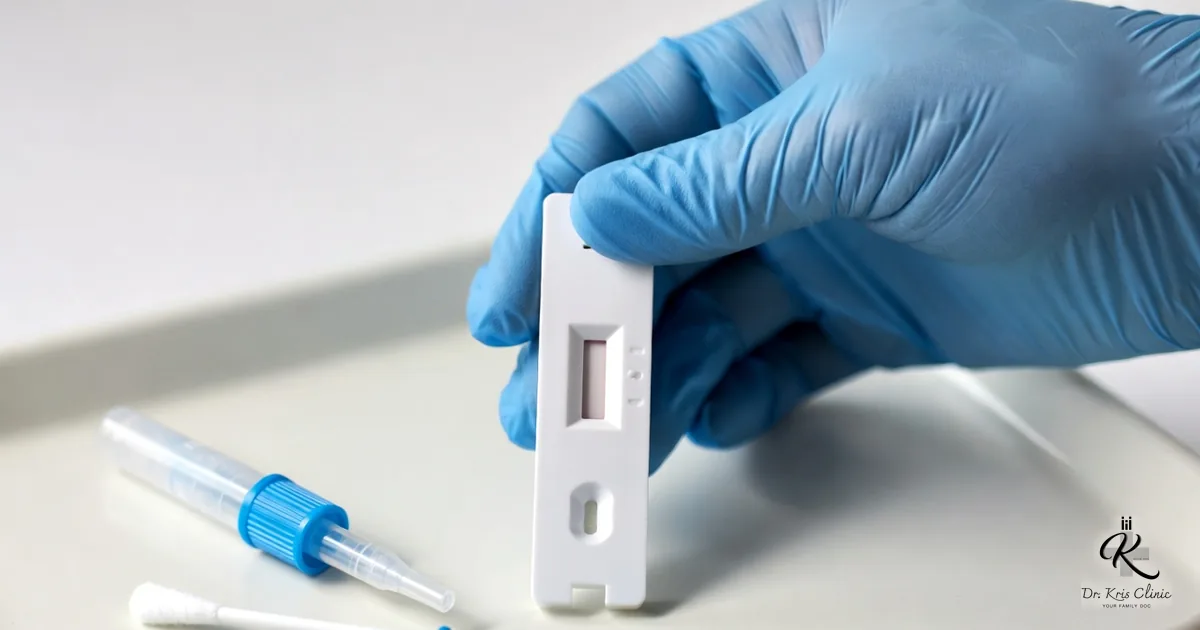
An HIV test today, whether a fingerstick or a lab test, can only show that you did not already have HIV. It cannot tell you whether you were infected this time, because you are still in the period when infection cannot be detected. A negative result today is therefore no reason not to take PEP. Read about test kits in HIV self-test.
Step 5: Other things people often forget
- Emergency contraception if pregnancy is possible. The sooner the better; it should be taken within 72–120 hours depending on the type.
- Hepatitis B: if you have never been vaccinated or do not know whether you are immune, the doctor may start vaccination straight away.
- Doxy-PEP for some groups, such as men who have sex with men or transgender women who have had syphilis or chlamydia in the past year. Taking doxycycline within 72 hours helps reduce bacterial STIs. See Doxy-PEP.
Step 6: If you were sexually assaulted
Go to a hospital as soon as possible for PEP, emergency contraception, medicine to prevent STIs, care for injuries and evidence collection. If you can, try not to shower or change clothes before you go. Thai government hospitals have One Stop Crisis Centres (OSCC). You can call 1300, Thailand's 24-hour social assistance hotline. In an emergency call 1669 (medical) or 191 (police); the Tourist Police on 1155 can help in English. What happened is not your fault.
Step 7: Book your tests at the right times
| Time after exposure | What to test |
|---|---|
| Day of the event | HIV (baseline status), hepatitis B, syphilis, as your doctor advises |
| About 2 weeks | PCR for gonorrhea and chlamydia from the exposed sites, or sooner if you have symptoms |
| About 4–6 weeks | HIV (if on PEP, after finishing the course) and syphilis |
| About 3 months | Confirmatory HIV test, syphilis, and hepatitis C according to risk |
Details of the window period for each test are in HIV window period and when to test, and multi-pathogen STI testing is covered in 14-pathogen STI PCR testing. Use condoms every time while you wait for results.
- 0–72 hContact a doctor about PEP
Best within 24 h; don't wait for a working day
- Day of eventBaseline HIV test
Hepatitis B, syphilis as advised
- ~2 weeksGonorrhea, chlamydia PCR
From exposed sites, or sooner if symptoms
- 4–6 weeksHIV and syphilis tests
If on PEP, after finishing the course
- ~3 monthsConfirmatory HIV test
Syphilis and hepatitis C as risk requires
Use condoms every time while waiting for results.
Step 8: Look after your mind while you wait
The waiting period is when many people worry so much they cannot sleep, search the internet all night, or test again every day. Please stick to the testing schedule your doctor has set, limit the time you spend searching, and talk to someone you trust. If the worry is affecting daily life, read STI anxiety: when the fear keeps you awake or call 1323, Thailand's free 24-hour mental-health hotline (Thai language; ask for English support).
Step 9: Plan for next time
If this kind of risk could happen again, PrEP is a better answer than relying on PEP over and over, and you can start it straight after PEP. Read PrEP vs PEP, and learn about choosing a lubricant that helps prevent condom breakage in Lubricant matters more than you think.
How the clinic can help
At Dr. Kris Clinic, I offer private advice about your risk, both at the clinic and through telemedicine. I assess whether you need PEP, can send a fingerstick test kit and medicine to your home, and set up a complete follow-up testing schedule. English-speaking consultations are available. Every step follows professional guidelines and respects your privacy.
Medicines and services your doctor may consider
- PEP within 72 hours (28 days)฿1,590Details & order →
- HIV self-test kit฿250Details & order →
- STI test, 14 infections (NAAT)฿4,990Details & order →
Prices are per pack. Every medicine is prescribed only after a doctor's assessment; your doctor will advise whether it suits you. See all medicines & services
Want help with this? Three simple steps
Reading is a good start. When you are ready, check where you are, see how a consultation works, then book a time that suits you.
 1Free 2-minute self-checkSexual-health self-check — see your result instantly and send it to the doctor if you like.Start the self-check →
 2See the steps and feesIndividual from 990 THB · couple 1,590 THB · 30–60 minutes, at the clinic or online via MCS Telemedicine.How a consultation works →
 3Book with the doctorPick a time online or message us on LINE. Come on your own or with your partner. Payment confirms the booking.Book online →
Self-checks are a guide only and do not replace a doctor's assessment. Outcomes vary from person to person, depending on the severity of symptoms, the complexity of the problem and other factors.
HIV risk, or want to start PrEP?
Consult in clinic or online. After a recent exposure, PEP works best the sooner it starts — within 72 hours.
Every medicine and service requires a doctor's assessment first.
Frequently asked questions
My HIV test today is negative. Does that mean I was not infected?
You cannot conclude that yet. Today's result only shows your status before the event. You need repeat tests at about 4–6 weeks and 3 months after the exposure.
The condom broke but there was no ejaculation inside. Do I need PEP?
There is still some risk, especially for the receptive partner in anal sex. Talk to a doctor within 72 hours so they can assess it based on your partner's status and the type of exposure.
Semen got into my mouth. Do I need PEP?
The chance of infection from oral sex is very low, and PEP is usually not needed. But if you have sores or bleeding in your mouth, or your partner has untreated HIV, talk to a doctor.
It has been more than 72 hours. What can I still do?
Test for HIV and STIs on schedule, use condoms while waiting for results, and start PrEP if your risk is ongoing.
อ่านบทความนี้เป็นภาษาไทย
เพิ่งมีความเสี่ยง HIV ต้องทำอะไรบ้าง ตั้งแต่ชั่วโมงแรกถึง 3 เดือน →
References
- Centers for Disease Control and Prevention. Estimated HIV Risk per Exposure. HIV Risk Reduction Tool, accessed 2026.
- Tanner MR, et al. Antiretroviral Postexposure Prophylaxis After Sexual, Injection Drug Use, or Other Nonoccupational Exposure to HIV — CDC Recommendations, United States, 2025. MMWR Recomm Rep 2025;74(1).
- Bavinton BR, et al. Viral suppression and HIV transmission in serodiscordant male couples (Opposites Attract). Lancet HIV 2018;5(8):e438-e447.
- Bachmann LH, et al. CDC Clinical Guidelines on the Use of Doxycycline Postexposure Prophylaxis for Bacterial Sexually Transmitted Infection Prevention, United States, 2024. MMWR Recomm Rep 2024;73(2).
This article is for education and does not replace diagnosis or treatment by a doctor. If you have symptoms or concerns, please see a doctor.