HIV Self-Test at Home and Fingerstick Tests: How Accurate Are They?
HIV self-test kits make testing convenient and private. They are accurate once you are past the window period, but a positive result always needs confirming, and a negative result from testing too early proves nothing yet.

Key points
- Most self-test kits detect antibodies; a negative result is reliable when you test about 3 months after the risk.
- A 4th-generation Ag/Ab lab test picks up infection earlier (about 18–45 days), and NAT is the earliest of all.
- A positive self-test must always be confirmed at a clinic, and if your risk was within the last 72 hours, ask about PEP straight away.
Some people never go for an HIV test at a hospital because they are afraid of bumping into someone they know, or of how others will look at them. HIV self-test kits have helped a lot of people take that first step. The World Health Organization recommends self-testing as one of the standard ways to test for HIV, and in Thailand, kits registered with the Thai Food and Drug Administration (Thai FDA) are legal to use. But for the result to mean something, you need to understand how the kit works and when to use it.
What is an HIV self-test?
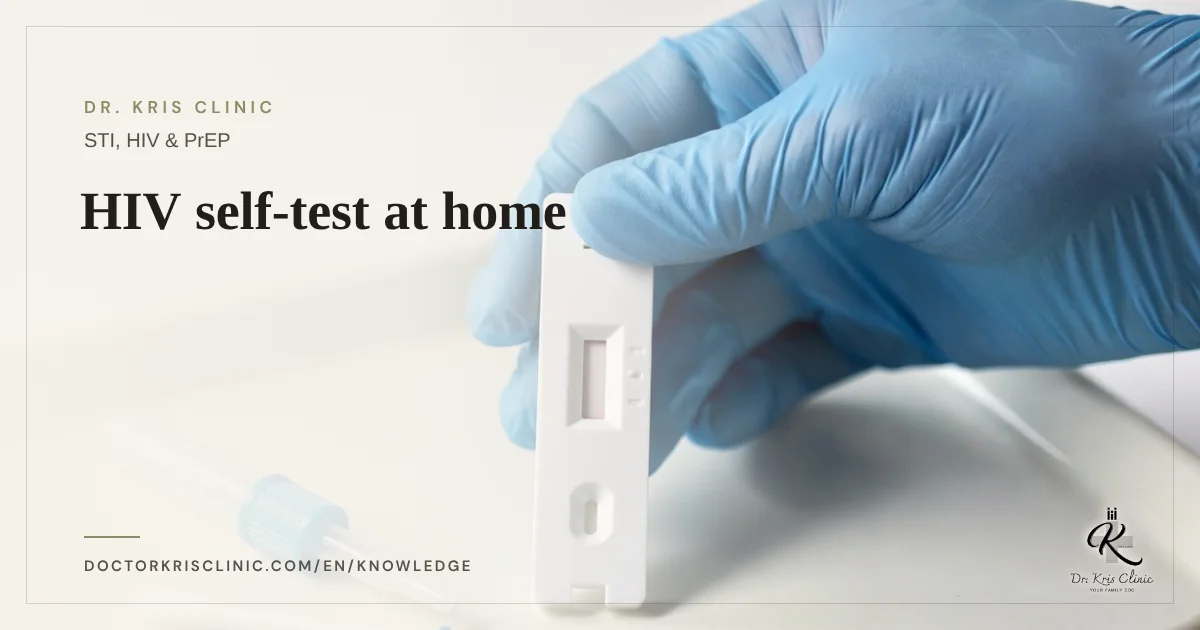
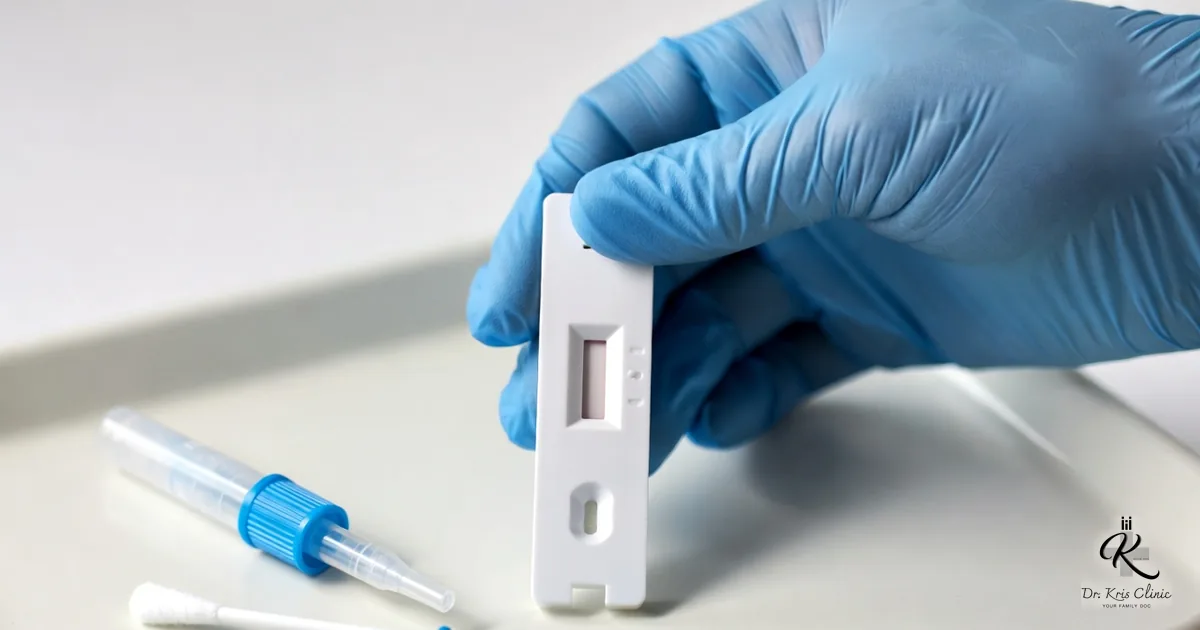
It is a kit you can use yourself at home. There are two types of sample:
- Fingerstick blood. You prick your finger with the spring-loaded lancet in the kit and drop the blood onto the test strip or well. Results take from a few minutes up to 15 minutes, depending on the brand.
- Oral fluid. You swab along your upper and lower gums and wait about 20 minutes for the result.
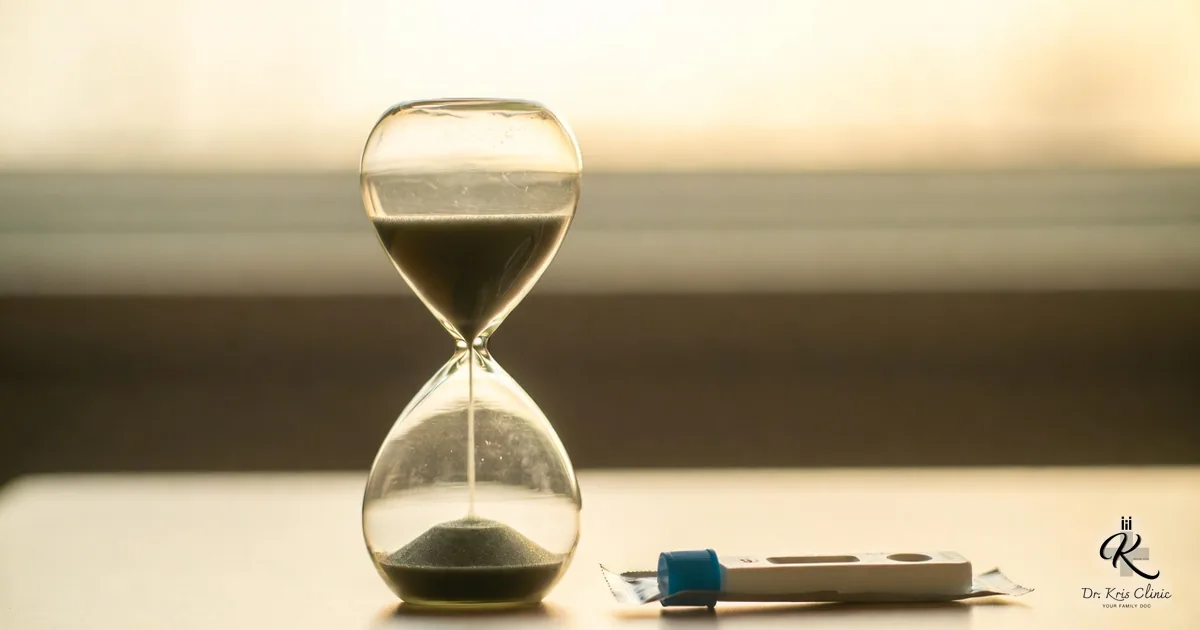
Almost all self-test kits look for antibodies, which your body only makes some time after infection. That means there is a period when someone is infected but the test cannot pick it up yet. This is called the window period. Oral-fluid tests usually turn positive a little later than blood tests.
Comparing the three types of test
| Test | What it detects | Can usually detect infection | Best used for |
|---|---|---|---|
| Self-test / fingerstick rapid test | Antibodies | 23–90 days after exposure | Initial screening, repeat testing while on PrEP |
| 4th-generation Ag/Ab lab test | p24 antigen + antibodies | 18–45 days | Standard testing and diagnosis |
| NAT / HIV RNA PCR | Viral genetic material | 10–33 days | Special situations, e.g. suspected very early infection |
These figures come from the US CDC and cover most people. For the full details, read HIV window period and when to test.
- 10–33 daysNAT / HIV RNA PCR
Detects viral genetic material; used in special cases
- 18–45 daysLab 4th-generation Ag/Ab
p24 antigen + antibodies; standard diagnostic test
- 23–90 daysSelf-test / fingertip
Detects antibodies; suited to initial screening
CDC windows cover most people. Saliva tests tend to detect infection slightly later than blood tests.
Advantages and limitations
Advantages
- Convenient, private, and you can do it at any time
- Fast results, which makes it easier for people who have never tested to get started
- Useful as an initial test before starting PrEP or PEP, together with an online consultation with a doctor
Limitations
- Testing too early can give a false negative
- Mistakes in the steps, such as too little blood or reading the result too early or too late, can make the result wrong
- A positive result is only a reactive result that needs confirming; it is not yet a diagnosis
- It does not test for anything else, such as syphilis or hepatitis
How to get a reliable result
- Choose a kit registered with the Thai FDA (or your country's regulator) that has not expired, and store it at the temperature on the label.
- Read the instructions or watch the manufacturer's video before you start.
- Wash your hands in warm water. Warm fingers bleed more easily.
- Add the sample and the buffer solution in exactly the amounts stated.
- Set a timer and read the result at the time given in the instructions, not before and not long after.
- If the control line does not appear, the test is invalid and you need to test again.
You have your result. What next?
Negative (non-reactive)
- If you tested more than 3 months after your last risk and have had no new risk since, the result is reliable.
- If it has been less than 3 months, a negative result only tells you your status from some time before. Test again on schedule.
- If you have ongoing risk, consider PrEP, the medicine that prevents HIV before exposure.
Positive (reactive)
- Try not to panic. False positives happen, so you need a confirmatory test at a clinic or hospital using standard methods.
- If infection is confirmed, today's antiretroviral treatment gives people a life expectancy close to everyone else's, and once the virus is undetectable, HIV is not passed on through sex. Read HIV treatment and U=U.
- If it all feels overwhelming, you can call 1323, Thailand's free 24-hour mental-health hotline (Thai language; ask for English support).
Things to know if you are on PrEP or PEP
If someone becomes infected while taking antiretroviral medicine, the drugs can slow down antibody production. A self-test may therefore stay negative for longer than usual. People on PrEP should test at every scheduled visit, every 3 months, and tell their doctor straight away if they get a fever, sore throat, rash or swollen lymph nodes, which can be symptoms of early infection.
At Dr. Kris Clinic, for people receiving PrEP or PEP remotely who do not yet have a lab blood result, I ask for a fingerstick test before starting the medicine, then schedule repeat tests according to standard guidelines during and after treatment.
Where can you get tested?
- Thai nationals covered by the Universal Coverage Scheme can get a free HIV test at their registered hospital, and can also get free self-test kits through the Pao Tang app, subject to the conditions of the National Health Security Office (NHSO).
- Anonymous clinics, community organizations and private clinics. Foreign residents and visitors can test at private clinics and hospitals.
- At Dr. Kris Clinic, you can test at the clinic, or we can send you a fingerstick kit together with an online consultation with a doctor. English-speaking consultations are available. See the remote service details in Online PrEP/PEP through telemedicine.
Medicines and services your doctor may consider
Prices are per pack. Every medicine is prescribed only after a doctor's assessment; your doctor will advise whether it suits you. See all medicines & services
Want help with this? Three simple steps
Reading is a good start. When you are ready, check where you are, see how a consultation works, then book a time that suits you.
 1Free 2-minute self-checkSexual-health self-check — see your result instantly and send it to the doctor if you like.Start the self-check →
 2See the steps and feesIndividual from 990 THB · couple 1,590 THB · 30–60 minutes, at the clinic or online via MCS Telemedicine.How a consultation works →
 3Book with the doctorPick a time online or message us on LINE. Come on your own or with your partner. Payment confirms the booking.Book online →
Self-checks are a guide only and do not replace a doctor's assessment. Outcomes vary from person to person, depending on the severity of symptoms, the complexity of the problem and other factors.
Confidential STI testing
Choose the right tests for your risk and timing; the doctor explains the results and next steps.
Every medicine and service requires a doctor's assessment first.
Frequently asked questions
How accurate is an HIV self-test?
When used correctly and after the window period, standard blood-based self-tests have high sensitivity and specificity. A positive result must always be confirmed at a clinic or hospital.
I had a risk 2 weeks ago and my self-test is negative. Can I relax?
Not yet. You are still in the period when antibodies may not have appeared. Test again, or have a 4th-generation Ag/Ab lab test about 6 weeks after the risk, and confirm at 3 months.
Is there a difference between oral and fingerstick tests?
Both detect antibodies. The oral test needs no blood, but it usually turns positive slightly later in early infection.
I see two lines but one is very faint. What does that mean?
If the instructions say a faint line counts, treat it as reactive and get a confirmatory test at a clinic soon. Do not decide for yourself that it is negative.
อ่านบทความนี้เป็นภาษาไทย
HIV Self-Test ตรวจ HIV ด้วยตัวเองที่บ้าน และตรวจปลายนิ้ว แม่นแค่ไหน →
References
- World Health Organization. Consolidated guidelines on differentiated HIV testing services. 2024.
- Centers for Disease Control and Prevention. Getting Tested for HIV: Window Period. cdc.gov/hiv, accessed 2026.
- Department of Disease Control, Ministry of Public Health. Thailand National Guidelines on HIV/AIDS Treatment and Prevention 2021/2022 (in Thai).
- World Health Organization. Guidelines on HIV self-testing and partner notification: supplement to consolidated guidelines on HIV testing services. 2016.
This article is for education and does not replace diagnosis or treatment by a doctor. If you have symptoms or concerns, please see a doctor.