Fasting for an HIV Test? Window Period and Reliable Negative Results
You do not need to fast for an HIV test. Whether a negative result can be trusted depends on how long after the risk you tested and which test you used.

Key points
- You do not need to fast for an HIV test. You can test at any time.
- A negative result can be trusted once you are past the window period, for example a 4th-generation lab test at 45 days, or an antibody or self-test at 90 days.
- If your risk was within the last 72 hours, ask about PEP first. A positive self-test always needs confirming.
"Doctor, do I need to skip breakfast before my HIV test?" and "The test found nothing, so I am safe, right?" are two questions that always come together. The first is easy to answer. The second needs a little explanation, because the answer depends on how long after the risk you tested and which test you used.
Do you need to fast for an HIV test?
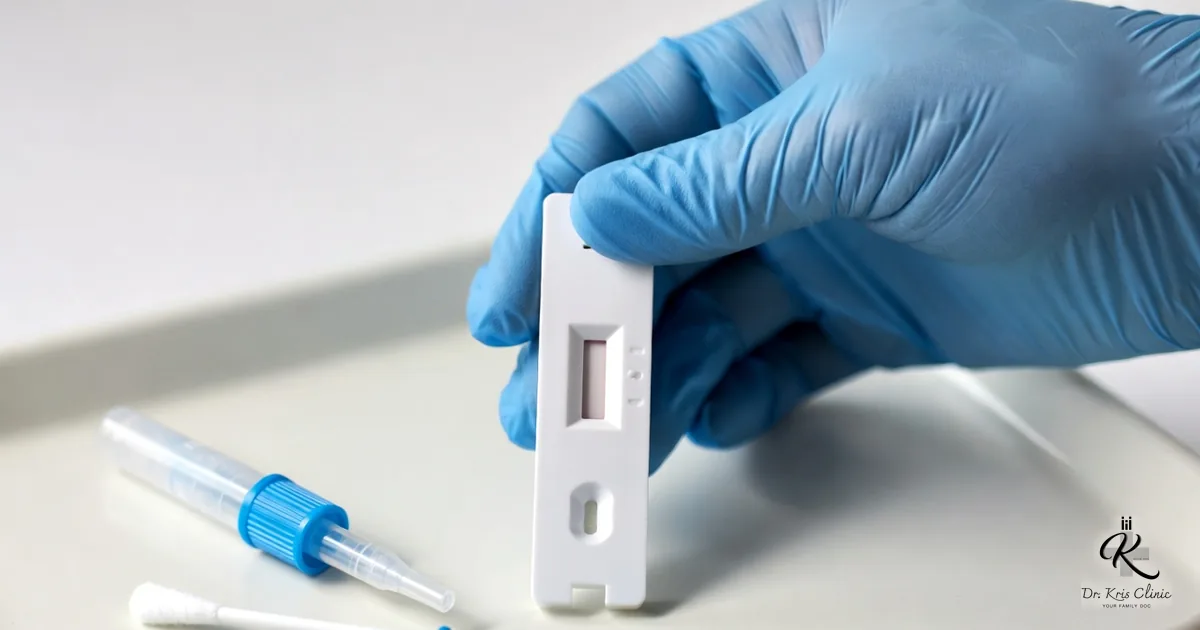
No. An HIV test looks for the virus or antibodies to it in blood or oral fluid. Food, water, coffee and ordinary medicines do not affect the result. You can come for testing at any time, unless you are having other health checks at the same time, such as blood sugar or cholesterol, for which your doctor may ask you to fast for 8–12 hours.
What is the window period?
The window period is the time after exposure when a person is already infected but tests cannot yet detect it, because there is not yet enough virus, antigen or antibody. If you test during this period, the result may be negative even though you are infected. This is called a false negative.
The window period for each type of test, according to the US CDC (HIV.gov):
| Type of test | What it detects | Can detect infection about |
|---|---|---|
| NAT / HIV RNA | The virus directly | 10–33 days after exposure |
| Antigen/antibody (4th generation) blood test from a vein | p24 antigen and antibodies | 18–45 days |
| Fingerstick antigen/antibody test | Antigen and antibodies | 18–90 days |
| Antibody test, including most self-test kits | Antibodies | 23–90 days |
These are ranges because people develop antibodies at different speeds. Most people can be detected early in the range, but a test that can confirm the result with confidence needs to be done after the end of the range.
- 10–33 daysNAT / HIV RNA
Detects the virus directly; earliest
- 18–45 daysLab 4th-generation blood test
p24 antigen and antibodies, from a vein
- 18–90 daysFingertip Ag/Ab
Antigen and antibodies
- 23–90 daysAntibody test kits
Including most self-test kits
Per CDC (HIV.gov). To be certain, test after the end of the window.
When can a negative result be trusted?
- A 4th-generation lab blood test: if you test from 45 days (about 6 weeks) after your last risk and the result is negative, it is highly reliable.
- Antibody tests, fingerstick tests or an HIV self-test: a negative result can be trusted from 90 days (3 months) after the risk.
- NAT detects infection earliest and suits certain situations, such as symptoms suggesting acute infection, but it does not replace confirmatory testing at the times above.
In practice, if your first test was earlier than these times, your doctor will arrange a repeat test once you are past the window period. Testing at about 1 month and 3 months after the risk is a common plan. A negative result at the right time is highly reliable, but no test in the world is "100% accurate". And remember, a result only covers risks that happened before the window period. If you have a new risk while you wait, the clock starts again.
You just had a risk. What should you do first?
The steps in brief:
- Within 72 hours, go to a clinic or hospital to be assessed and get PEP. The doctor will do a baseline HIV test before starting the medicine.
- Take PEP for the full 28 days as prescribed.
- Have follow-up tests as scheduled. The CDC 2025 guideline recommends testing at 4–6 weeks and 12 weeks after the exposure.
- If the risk keeps happening, talk about PrEP for long-term protection.
If more than 72 hours have passed, PEP will not help. Test at the times above, and get tested for other sexually transmitted infections such as syphilis, gonorrhea and chlamydia as well (read 14-pathogen STI PCR testing). See all the steps in Just had an HIV exposure? What to do now.
Situations where results need careful interpretation
- If you are taking PEP or PrEP, the medicine may slow down antibody production, and your doctor may schedule repeat tests later than usual.
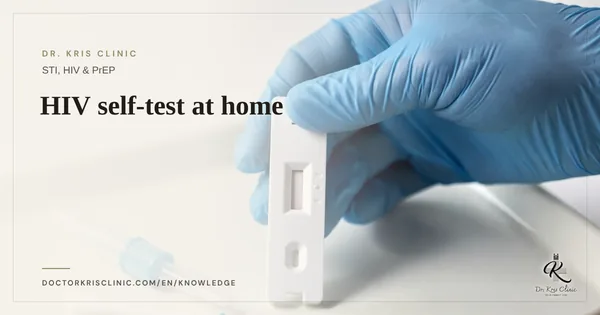
- A positive (reactive) self-test is not yet a diagnosis. It must always be confirmed at a healthcare facility.
- An indeterminate result may mean very recent infection, and needs repeat testing as scheduled.
- Flu-like symptoms, a rash or swollen lymph nodes 2–6 weeks after a risk should be reported to your doctor, because this may be acute infection that should be tested with a method that gives an earlier result.
Several negative tests, but you still cannot relax
If you have tested after the window period and the result is negative, but you are still afraid, keep testing at different places, or watch your body for symptoms all day, the problem may not be the test result but anxiety that deserves care. Read STI anxiety: when the fear keeps you awake.
HIV testing at Dr. Kris Clinic
At Dr. Kris Clinic in Surat Thani, I help assess your actual risk, choose the right test for your timing, plan your repeat test dates, provide PEP and PrEP, and test for other sexually transmitted infections at the same time, privately and without judgment. You can have an online consultation first from anywhere in Thailand, and English-speaking consultations are available.
Medicines and services your doctor may consider
Prices are per pack. Every medicine is prescribed only after a doctor's assessment; your doctor will advise whether it suits you. See all medicines & services
Want help with this? Three simple steps
Reading is a good start. When you are ready, check where you are, see how a consultation works, then book a time that suits you.
 1Free 2-minute self-checkSexual-health self-check — see your result instantly and send it to the doctor if you like.Start the self-check →
 2See the steps and feesIndividual from 990 THB · couple 1,590 THB · 30–60 minutes, at the clinic or online via MCS Telemedicine.How a consultation works →
 3Book with the doctorPick a time online or message us on LINE. Come on your own or with your partner. Payment confirms the booking.Book online →
Self-checks are a guide only and do not replace a doctor's assessment. Outcomes vary from person to person, depending on the severity of symptoms, the complexity of the problem and other factors.
Confidential STI testing
Choose the right tests for your risk and timing; the doctor explains the results and next steps.
Every medicine and service requires a doctor's assessment first.
Frequently asked questions
I tested for HIV 14 days after a risk. Can I trust the result?
It is too early to confirm. Some people can already be detected, but a negative result at 14 days needs repeating, for example a 4th-generation blood test at 45 days or an antibody test at 90 days.
My 4th-generation test at 1 month was negative. Do I need to test again?
A result at 1 month is usually fairly reliable, but confirmation according to guidelines is a test at 45 days or later, or as your doctor schedules, especially if you took PEP or had a high-risk exposure.
How accurate are HIV self-test kits?
They are accurate when used correctly after the window period, which for most kits is 90 days. A positive result must always be confirmed at a healthcare facility.
Does drinking alcohol or taking medicine before an HIV test affect the result?
No, except antiretroviral medicines such as PEP or PrEP, which may delay antibody production. Always tell your doctor about them.
อ่านบทความนี้เป็นภาษาไทย
ตรวจ HIV ต้องอดอาหารไหม และผลลบเชื่อได้แค่ไหน (Window Period) →
References
- Centers for Disease Control and Prevention / HIV.gov. HIV Testing Overview: How soon after an exposure can an HIV test detect HIV? (accessed 2026)
- Tanner MR, et al. Antiretroviral Postexposure Prophylaxis After Sexual, Injection Drug Use, or Other Nonoccupational Exposure to HIV — CDC Recommendations, United States, 2025. MMWR Recomm Rep. 2025;74(1)
- World Health Organization. Consolidated guidelines on HIV testing services. Geneva: WHO; 2019
- Department of Disease Control, Ministry of Public Health. Thailand National Guidelines on HIV/AIDS Diagnosis, Treatment and Prevention 2021/2022 (in Thai)
This article is for education and does not replace diagnosis or treatment by a doctor. If you have symptoms or concerns, please see a doctor.