PrEP for HIV Prevention: Who It Suits, How to Take It, How to Start
PrEP is an antiretroviral medicine taken before exposure that prevents HIV very effectively. It works best when the right person uses it the right way and keeps up with follow-up tests.



Key points
- PrEP suits people who are HIV-negative with repeated risk, of any gender. Taken consistently it prevents about 99% of sexually acquired HIV.
- Before starting you need tests for HIV, kidney function and hepatitis B, then follow-up every 3 months.
- Daily PrEP takes about 7 days to reach full protection. Some men who have sex with men can choose 2-1-1 dosing.
PrEP has changed the lives of many people I care for, from lying awake after every sexual encounter to feeling confident that they are protected. Thailand was one of the first countries in Asia to use PrEP widely, and it has been included in the Universal Coverage Scheme for Thai nationals since 2019. But PrEP only works well when the right person uses it, in the right way, and keeps up with follow-up tests.
What is PrEP and how does it work?
PrEP stands for pre-exposure prophylaxis: taking antiretroviral medicine before a risk, so there is enough drug in the blood and tissues to stop the virus establishing itself. The medicine used in Thailand is a two-drug combination tablet, tenofovir disoproxil fumarate (TDF) with emtricitabine (FTC) or lamivudine (3TC), one tablet a day. There is also tenofovir alafenamide with emtricitabine (F/TAF), which is registered in Thailand and can be used by men who have sex with men and transgender women, but is not yet recommended for people who have vaginal sex.
Taken consistently, PrEP reduces the risk of getting HIV from sex by about 99%. Most cases where it fails are due to missed doses, not to the medicine not working.
Who is PrEP for?
- People with several partners, or a new partner whose HIV status is unknown
- People who do not use condoms consistently
- People whose partner has HIV and is not yet virally suppressed, or whose treatment results are uncertain
- People who have recently had syphilis, gonorrhea or chlamydia
- People who have used PEP before, especially more than once. Read the difference in PrEP vs PEP
- Sex workers, people who use drugs during sex, or people who share needles. See also Sex worker health
- Anyone who asks for PrEP because they feel they are at risk. International guidelines support prescribing it without needing to explain every detail
Tests before starting
- HIV: must always be negative before starting. If you had a risk within the last 72 hours, the doctor will give PEP first and then move on to PrEP.
- Kidney function (creatinine, eGFR)
- Hepatitis B (HBsAg): PrEP medicine is also active against hepatitis B. If you already have it, stopping suddenly can cause a flare of hepatitis. If you are not immune, you should be vaccinated.
- Hepatitis C, syphilis and other STIs according to risk. See STI PCR testing
- Pregnancy for those who could become pregnant. PrEP can be used during pregnancy and breastfeeding, but plan it with your doctor.
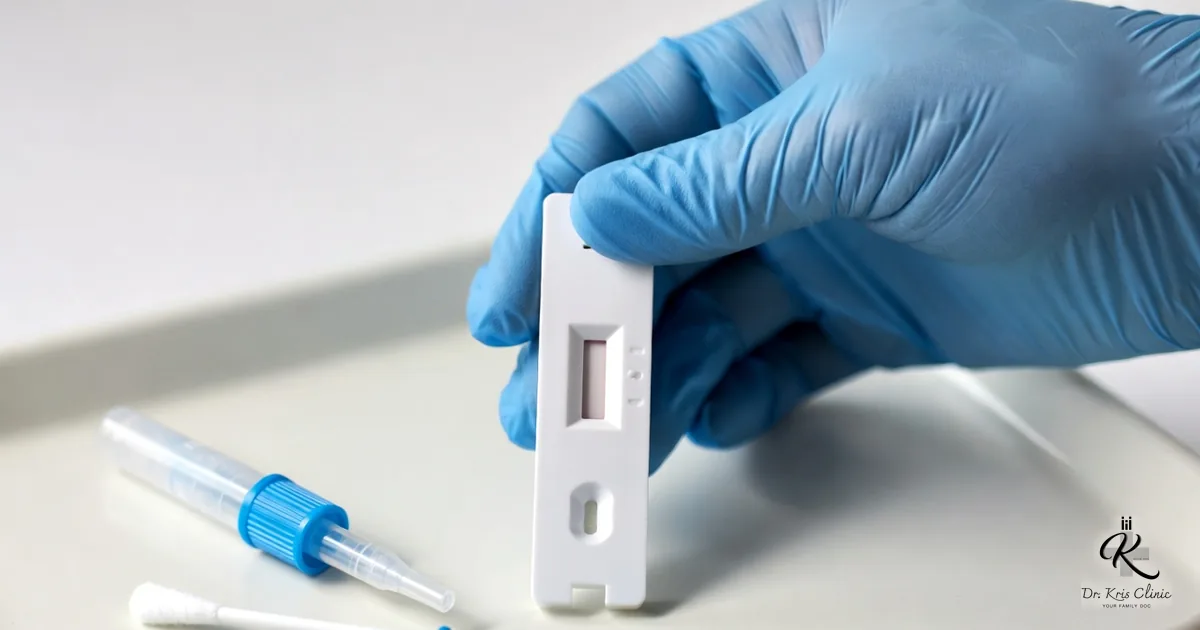
If you do not yet have a lab blood result, I may ask you to do a fingerstick HIV test before starting, with other blood tests to follow. Read about test kits in HIV self-test.
How to take it
Daily PrEP: for all genders
- One tablet a day at about the same time, with or without food
- You need to take it for about 7 days before it counts as full protection. According to WHO guidance, men who have sex with men can start with 2 tablets together 2–24 hours before a risk and then continue daily.
- If you miss a day, take it as soon as you remember and carry on as normal. Do not take two tablets the next day to make up.
On-demand 2-1-1
Suitable for men who have sex with men, and people assigned male at birth who are not taking estrogen, who have sex infrequently and can plan ahead. Read the details in On-demand PrEP (2-1-1).
Injectable
Cabotegravir every 2 months is registered in Thailand but only offered at some services. Lenacapavir twice a year is under review, with pilot projects being prepared. See Injectable PrEP.
Side effects and safety
- At first: some people have mild nausea, bloating, headache or tiredness, which usually goes away by itself within 2–4 weeks.
- Kidneys: kidney function may drop slightly, usually without symptoms, and it recovers when the medicine is stopped. That is why regular tests are needed. People with diabetes, high blood pressure or older age should be tested more often.
- Bones: bone density falls slightly at first. Studies have not shown a meaningful increase in fractures.
- Gender-affirming hormones: can be used together with daily PrEP. Hormone levels are not affected in any important way. See also Gender-affirming hormone therapy.
- Be careful with regular high doses of NSAID painkillers, because they add strain on the kidneys.
How to stop safely
- Keep taking it for 2 days after your last risk if you are a man who has sex with men, and for about 7 days for others, according to WHO guidance.
- If you have hepatitis B, do not stop on your own without talking to your doctor.
- If you want to restart, you always need an HIV test first.
- Before startingHIV test must be negative
Kidney test, hepatitis B and STI tests as risk requires
- First ~7 daysFull protection needs steady dosing
MSM start with 2 pills 2–24 h before exposure (WHO guidance)
- Every 3 monthsFollow-up tests
HIV, STIs, adherence review and periodic kidney check
- When stoppingKeep taking after last exposure
MSM 2 days; others about 7 days; with hepatitis B, never stop alone
Taken consistently, it cuts the risk of sexual HIV infection by about 99%. Always test for HIV before restarting.
Getting PrEP at Dr. Kris Clinic
- History: your risks, health conditions, current medicines and any past PEP, at the clinic or online.
- Blood tests: HIV and baseline tests, or a fingerstick test first if you receive medicine remotely.
- Consultation: choosing the right option, explaining how to take it, side effects and what to watch for. English-speaking consultations are available.
- Medicine: collected at the clinic or delivered to your home in discreet, unlabelled packaging.
- Follow-up every 3 months: HIV and STI tests, a review of how you are taking the medicine, and regular kidney checks.
Details of the remote service are in Online PrEP/PEP through telemedicine.
- 1Medical historyRisks, conditions, medicines, any PEP history
- 2Blood testsHIV and basics; fingertip test first if remote
- 3Doctor consultationChoose form, how to take it, side effects
- 4Receive medicineAt the clinic, or delivered discreetly
- 5Follow up every 3 monthsHIV, STI and kidney checks
When to contact a doctor urgently
If you get fever, sore throat, rash, swollen lymph nodes or flu-like aches while on PrEP, or after missing several days of tablets, this may be early HIV infection and you need testing quickly. Do not just keep taking the medicine without a test, because if you have already been infected, taking only two drugs can lead to drug resistance.
Medicines and services your doctor may consider
- PrEP Teno-EM (30 tabs)฿1,290Details & order →
- PrEP TAF-EM (30 tabs)฿1,290Details & order →
- PrEP Ricovir-EM (30 tabs)฿1,590Details & order →
- HIV self-test kit฿250Details & order →
Prices are per pack. Every medicine is prescribed only after a doctor's assessment; your doctor will advise whether it suits you. See all medicines & services
Want help with this? Three simple steps
Reading is a good start. When you are ready, check where you are, see how a consultation works, then book a time that suits you.
 1Free 2-minute self-checkSexual-health self-check — see your result instantly and send it to the doctor if you like.Start the self-check →
 2See the steps and feesIndividual from 990 THB · couple 1,590 THB · 30–60 minutes, at the clinic or online via MCS Telemedicine.How a consultation works →
 3Book with the doctorPick a time online or message us on LINE. Come on your own or with your partner. Payment confirms the booking.Book online →
Self-checks are a guide only and do not replace a doctor's assessment. Outcomes vary from person to person, depending on the severity of symptoms, the complexity of the problem and other factors.
HIV risk, or want to start PrEP?
Consult in clinic or online. After a recent exposure, PEP works best the sooner it starts — within 72 hours.
Every medicine and service requires a doctor's assessment first.
Frequently asked questions
How many days of PrEP before I am protected?
With daily PrEP, about 7 days. Men who have sex with men can start with 2 tablets 2–24 hours before a risk and then continue daily, which protects anal sex from that first time.
If I take PrEP, can I stop using condoms?
PrEP is very effective against HIV, but it does not prevent other sexually transmitted infections or pregnancy. Using condoms as well is still a good option, and you should test for STIs every 3 months.
Will PrEP damage my kidneys?
In most people the effect on the kidneys is very small and reverses when the medicine is stopped. Your doctor will check kidney function before you start and regularly afterwards.
Can I drink alcohol while on PrEP?
There is no important drug interaction, but heavy drinking makes it easier to forget doses and take more risks. Set up reminders for yourself.
อ่านบทความนี้เป็นภาษาไทย
PrEP ยาป้องกัน HIV ก่อนเสี่ยง เหมาะกับใคร กินอย่างไร และขั้นตอนรับยา →
References
- Centers for Disease Control and Prevention. Preexposure Prophylaxis for the Prevention of HIV Infection in the United States — 2021 Update: A Clinical Practice Guideline.
- World Health Organization. Differentiated and simplified pre-exposure prophylaxis for HIV prevention: update to WHO implementation guidance. Technical brief, 2022.
- Department of Disease Control, Ministry of Public Health. Thailand National Guidelines for PrEP 2021 (in Thai).
- Grant RM, et al. Preexposure chemoprophylaxis for HIV prevention in men who have sex with men. N Engl J Med 2010;363(27):2587-2599.
This article is for education and does not replace diagnosis or treatment by a doctor. If you have symptoms or concerns, please see a doctor.