The 14-Pathogen PCR STI Test: What It Detects and How to Read It
A multi-pathogen PCR urine test is convenient and accurate for gonorrhoea, chlamydia and trichomoniasis, but some organisms on the list are normal residents of the body, and some infections still need a blood test.

Key points
- Urine PCR is very accurate for gonorrhoea, chlamydia, Mycoplasma genitalium and trichomoniasis.
- Ureaplasma, Mycoplasma hominis, Gardnerella, Candida and GBS are found in healthy people; finding them doesn't need treatment if you have no symptoms.
- Syphilis and HIV need a blood test, and if you have oral or anal sex, throat and rectal swabs should be added.
Testing for sexually transmitted infections doesn't have to be painful or embarrassing. These days, many infections can be detected from just a few millilitres of urine using PCR, which looks directly for the organism's genetic material. I use this kind of test very often, both at the clinic and with samples sent by post. But what I want everyone to understand before testing is "what the results mean", because the 14 organisms on the list don't all carry the same weight.
What is a multiplex PCR test?
PCR, or a nucleic acid amplification test (NAAT), copies an organism's genetic material until there's enough to detect. A multiplex test checks for many organisms at once in a single tube. It's highly accurate, picks up infections even without symptoms, and doesn't require culture. CDC and WHO guidelines now consider NAAT the standard method for testing for gonorrhoea and chlamydia.
The 14 organisms, in 3 groups
Group 1: Clear pathogens that need treatment (and partner treatment) if found
- Neisseria gonorrhoeae: gonorrhoea. Read more in gonorrhoea: symptoms, testing and treatment.
- Chlamydia trachomatis: chlamydia, common and often symptom-free.
- Mycoplasma genitalium: one cause of non-gonococcal urethritis that is becoming harder to treat because of antibiotic resistance.
- Trichomonas vaginalis: trichomoniasis; men can be infected too.
Group 2: Results that need to be read alongside symptoms
- Herpes simplex virus 1 and 2: herpes. The most accurate test is a swab taken directly from a sore or blister. A urine test when there are no sores may miss the virus even if you're infected. See more in herpes.
- Treponema pallidum: the syphilis bacterium. PCR works well on a swab from a sore, but it is often not detected in urine. Screening for syphilis always requires a blood test. Read syphilis: symptoms, stages and testing.
- Haemophilus ducreyi: the cause of chancroid, very rare nowadays.
Group 3: Organisms found in healthy people (usually no treatment needed without symptoms)
- Ureaplasma urealyticum, Ureaplasma parvum, Mycoplasma hominis are found in the reproductive tracts of many people without causing disease. European (IUSTI) and CDC guidelines don't recommend testing for or treating them when there are no symptoms.
- Gardnerella vaginalis is associated with bacterial vaginosis (an imbalance of vaginal bacteria), but finding the organism alone is not a diagnosis.
- Candida albicans is a yeast normally present in the body, treated only when there is itching or abnormal discharge.
- Streptococcus agalactiae (Group B Strep) is found in the gut and vagina and matters especially in late pregnancy.
Treat if found
and treat partners
- N. gonorrhoeae (gonorrhea)
- C. trachomatis (chlamydia)
- Mycoplasma genitalium
- Trichomonas vaginalis
Read with symptoms
- HSV-1, HSV-2 (best from a sore swab)
- T. pallidum (syphilis needs a blood test)
- H. ducreyi (chancroid, rare)
Found in healthy people
usually no treatment if no symptoms
- Ureaplasma (2 types), M. hominis
- Gardnerella vaginalis
- Candida albicans
- Group B Strep (matters in pregnancy)
IUSTI and CDC advise against testing or treating group 3 without symptoms. Have a doctor interpret results first.
How to collect urine for accurate results
The sample needed is first-catch urine, not the midstream urine used for routine urine tests.
- Don't urinate for at least 1–2 hours before collecting. First thing in the morning is most convenient, but other times of day are fine.
- Don't wash or wipe your genitals before collecting.
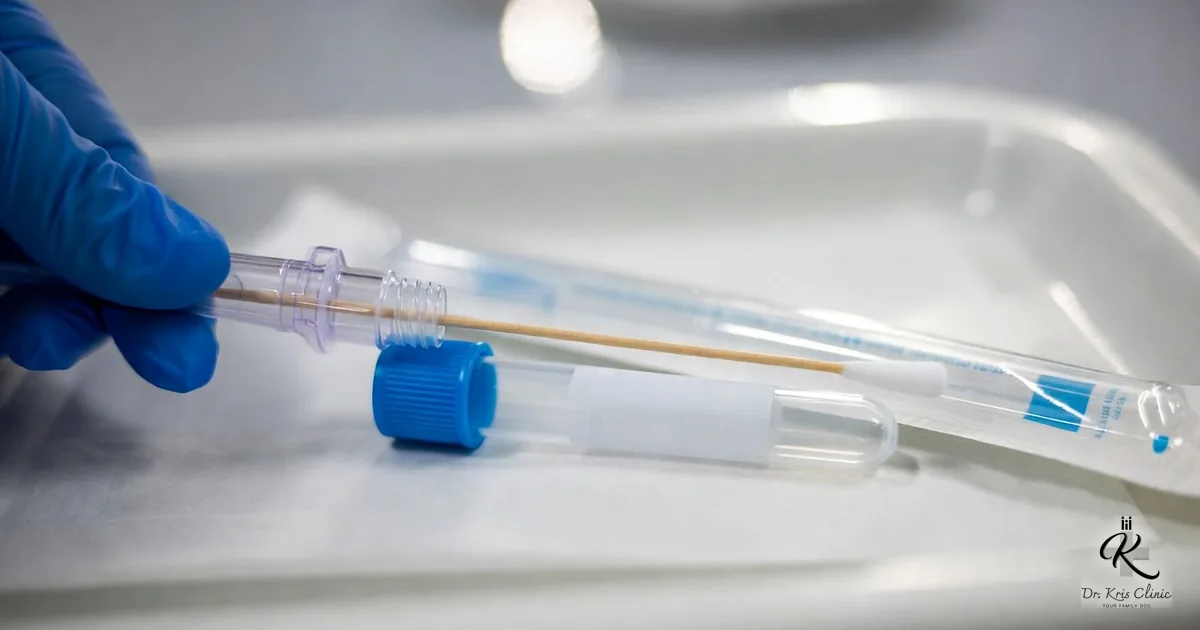
- Collect only the first 10–20 ml of urine into the sterile container the clinic provides. You don't need to fill it.
- Close the lid tightly, label it and send it promptly as the clinic instructs.
- Women may use a self-collected vaginal swab, which is as accurate as or better than urine.
What urine can't test for
- Throat and rectum. If you have oral or anal sex, add throat and rectal swabs, because gonorrhoea and chlamydia at these sites usually cause no symptoms and won't show up in urine.
- HIV, syphilis, hepatitis B and C require a blood test. Read about testing times in HIV incubation and window periods.
- HPV. Women are screened through cervical screening, and some men who have sex with men may consider anal cancer screening.
Can I test too early?
PCR can detect gonorrhoea and chlamydia from about 1–2 weeks after exposure. Testing earlier than that can give a false negative. I usually advise testing about 2 weeks after a risk, or immediately if you have symptoms. After treatment, don't retest too soon, because PCR may still pick up genetic material from dead organisms for about 3–4 weeks.
- < 1 weekToo early
May give a false negative; test now if you have symptoms
- 1–2 weeksCan start to detect
PCR can pick up infection from this point
- ~2 weeksRecommended time to test
After the exposure
- 3–4 weeksAfter treatment, don't retest yet
PCR may still detect dead bacteria
- ~3 monthsRetest after treatment
Because reinfection is common
If your result is positive, what next?
- Your doctor will explain which group the organism belongs to and whether it needs treatment.
- If treatment is needed, sexual partners from the past 60 days should also be tested and treated so you aren't reinfected. Read about talking to your partner in when your partner has an STI.
- Avoid sex during treatment until your doctor says it's safe.
- Retest at about 3 months, because reinfection is common.
Services at Dr. Kris Clinic
The clinic offers multi-pathogen PCR testing both in person and with samples sent by post (within Thailand), processed by a standard laboratory, with a doctor to interpret results and plan treatment. I'll help you choose which additional sites to test and which blood tests to add, so testing is worthwhile and doesn't miss important infections. English-speaking consultations are available. For an overview of common infections, see common sexually transmitted infections.
Related case stories from Dr. Kris
Dr. Kris Case: "I Have Herpes" — Telling a Partner and Living With ItHerpes can be managed with medicine, condoms and honest, blame-free disclosure to a partnerMedicines and services your doctor may consider
Prices are per pack. Every medicine is prescribed only after a doctor's assessment; your doctor will advise whether it suits you. See all medicines & services
Want help with this? Three simple steps
Reading is a good start. When you are ready, check where you are, see how a consultation works, then book a time that suits you.
 1Free 2-minute self-checkSexual-health self-check — see your result instantly and send it to the doctor if you like.Start the self-check →
 2See the steps and feesIndividual from 990 THB · couple 1,590 THB · 30–60 minutes, at the clinic or online via MCS Telemedicine.How a consultation works →
 3Book with the doctorPick a time online or message us on LINE. Come on your own or with your partner. Payment confirms the booking.Book online →
Self-checks are a guide only and do not replace a doctor's assessment. Outcomes vary from person to person, depending on the severity of symptoms, the complexity of the problem and other factors.
Confidential STI testing
Choose the right tests for your risk and timing; the doctor explains the results and next steps.
Every medicine and service requires a doctor's assessment first.
Frequently asked questions
My result shows Ureaplasma. Do I need medication?
If you have no symptoms, usually not, because it's found in healthy people. International guidelines don't recommend treating a positive result alone. Have a doctor assess your symptoms first.
My urine test didn't find syphilis. Does that mean I don't have it?
No. Urine PCR isn't suitable for syphilis screening. You need a blood test, such as RPR together with TPHA or a specific antibody test.
Do I have to collect urine in the morning?
No. What matters is collecting first-catch urine after not urinating for at least 1–2 hours. There's no need to wash your genitals first.
How many days after a risk can I have a PCR test?
Generally about 1–2 weeks after exposure, or immediately if you have symptoms. HIV and syphilis have their own blood test timings.
อ่านบทความนี้เป็นภาษาไทย
ตรวจ STI แบบ PCR 14 เชื้อ ตรวจอะไรบ้าง เก็บปัสสาวะอย่างไร แปลผลยังไง →
References
- Workowski KA, et al. Sexually Transmitted Infections Treatment Guidelines, 2021. MMWR Recomm Rep 2021;70(4).
- Horner PJ, et al. 2016 European guideline on the management of non-gonococcal urethritis. Int J STD AIDS 2016;27(11):928-937.
- Jensen JS, et al. 2021 European guideline on the management of Mycoplasma genitalium infections. J Eur Acad Dermatol Venereol 2022;36(5):641-650.
- World Health Organization. Recommendations for the treatment of Trichomonas vaginalis, Mycoplasma genitalium, Candida albicans, bacterial vaginosis and human papillomavirus (anogenital warts). 2024.
This article is for education and does not replace diagnosis or treatment by a doctor. If you have symptoms or concerns, please see a doctor.