Gonorrhea: Symptoms, Testing, Treatment and Drug Resistance
Gonorrhea can be cured with a single injection, but drug resistance is rising worldwide. Testing the right sites, treating according to guidelines and bringing partners in for treatment matter more than ever.


Key points
- Gonorrhea can infect the urethra, cervix, throat, rectum and eyes. Infections in women and in the throat or rectum often cause no symptoms.
- Standard treatment is a single intramuscular injection of ceftriaxone as prescribed by a doctor. Do not buy antibiotics and treat yourself.
- Avoid sex for 7 days after treatment, treat partners from the past 60 days, and retest at 3 months.
"It burns when I pee and there is discharge. Is it gonorrhea, doctor?" This is one of the questions I am asked most often. In men these symptoms are usually obvious and come on quickly. What worries me more is that many gonorrhea infections cause no symptoms at all, especially in women, in the throat and in the rectum. The good news is that gonorrhea is curable. The thing to watch is that the bacteria are becoming more resistant to antibiotics around the world, so getting the treatment right the first time is very important.
What is gonorrhea?
Gonorrhea is caused by the bacterium Neisseria gonorrhoeae. It spreads through vaginal, anal and oral sex, including oral sex that many people assume is safe. The bacteria can also infect the eye if fluids splash into it, and can pass from mother to baby during birth.
Gonorrhea is different from non-gonococcal urethritis (what Thai people call "false gonorrhea"), which is caused by other organisms such as Chlamydia trachomatis or Mycoplasma genitalium. These need different medicines and often occur together with gonorrhea, so it is best to test for both at the same time. See the details in 14-pathogen STI PCR testing.
Symptoms
In men (usually 2–7 days after exposure)
- Burning or difficulty when passing urine
- Cloudy white, yellow or green discharge from the tip of the penis
- In some men, pain or swelling in one testicle, a sign that the infection has spread to the sperm duct
In women
- Most have no symptoms, or symptoms so mild they go unnoticed
- Increased vaginal discharge, burning when passing urine, spotting between periods or bleeding after sex
- Lower abdominal pain, fever or pain during sex, which may be signs of pelvic inflammatory disease
In the throat and rectum
- Throat infections usually have no symptoms; some people have a long-lasting sore throat
- Rectal infections may cause mucus or pus, itching, a constant urge to pass stool, blood, or no symptoms at all
Men
Usually 2–7 days after exposure
- Burning when passing urine
- Cloudy discharge from the penis
- One-sided painful, swollen testicle (spread)
Women
Mostly no symptoms
- More discharge, burning urine
- Spotting between periods
- Lower abdominal pain, fever (pelvic infection)
Throat and rectum
Often silent
- Long-lasting sore throat, or none
- Mucus, pus, straining, blood
Swab the sites matching your sexual practices. Testing urine alone can miss a lot.
What can happen if it is left untreated?
- Women: pelvic inflammatory disease (PID), blocked fallopian tubes, infertility, ectopic pregnancy and chronic pelvic pain
- Men: inflammation of the sperm duct and testicle (epididymo-orchitis), which in some men affects fertility
- Spread into the bloodstream (disseminated gonococcal infection), causing joint inflammation, tendon pain and pus-filled spots on the skin. This is uncommon but serious
- A higher chance of catching and passing on HIV
Testing
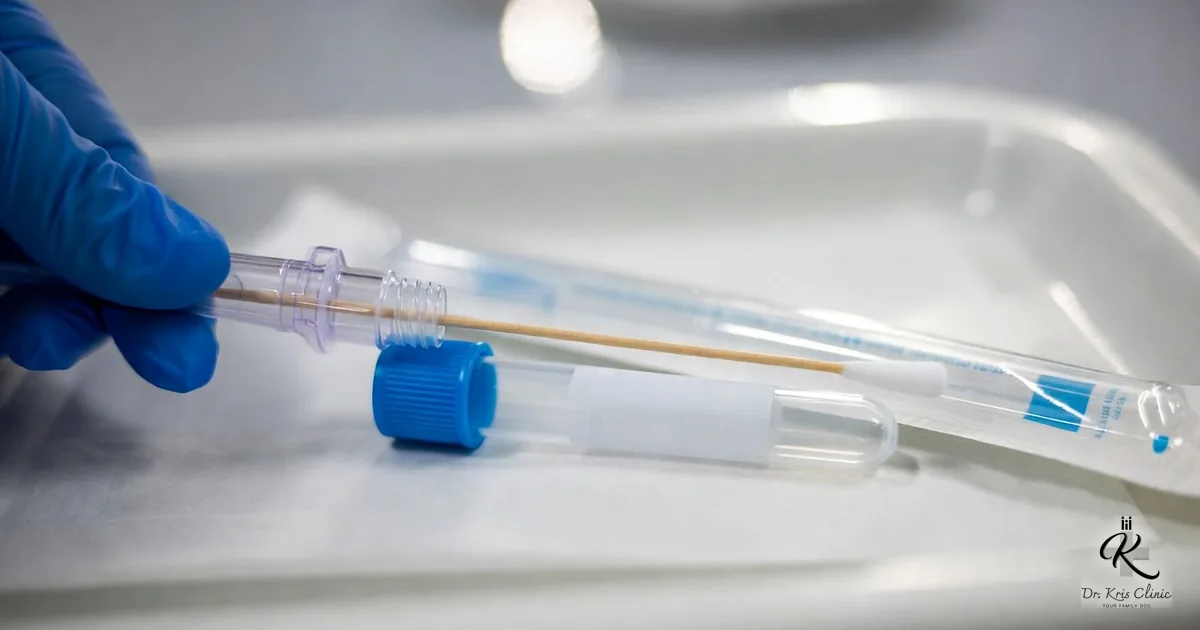
The standard method is a PCR test (NAAT) on first-catch urine or swabs from the vagina, throat or rectum, depending on the kinds of sex each person has. Testing only urine in someone who has oral or anal sex can miss many infections. In some cases the doctor may also send a culture to check which antibiotics will work, especially when treatment has failed.
Treatment
Under current guidelines, gonorrhea is treated with a single intramuscular injection of ceftriaxone. The US CDC recommends 500 mg (1 g for people weighing 150 kg or more), while the WHO 2024 guidelines recommend 1 g. Your doctor will choose based on the guideline in use and local resistance data.
- If chlamydia has not yet been ruled out, the doctor will usually add doxycycline for 7 days.
- Throat gonorrhea is harder to treat, so a test of cure about 7–14 days after treatment is recommended.
- For people with a severe allergy to cephalosporins, there are alternative regimens the doctor will consider case by case.
In 2025 the US Food and Drug Administration approved two new oral medicines, zoliflodacin and gepotidacin, for uncomplicated genital gonorrhea. They offer hope against resistant strains, but they are not yet widely available in Thailand at the time of writing.
- 1No sex for 7 daysAnd until symptoms clear and partners are treated
- 2Tell partners (60 days)They should be tested and treated to stop passing it back
- 3Test HIV, syphilisCheck for other infections too
- 4No better in 3–5 daysSee a doctor; could be another germ or drug resistance
- 5Retest at ~3 monthsBecause reinfection is common
Don't buy antibiotics yourself. Gonorrhea is resistant to several drug classes.
After treatment: what next?
- Avoid sex for 7 days after treatment, and until symptoms have gone and your partners have been treated.
- Tell your sexual partners from the past 60 days so they can be tested and treated. If they are not, the chance of passing it back and forth is very high. For ways to tell a partner, read When your partner has an STI.
- Get tested for HIV and syphilis at the same time. See also Syphilis.
- Retest at about 3 months, because reinfection is common.
- If symptoms have not improved within 3–5 days of treatment, come back to see a doctor. It may be a different infection or a resistant strain.
Prevention
- Use condoms every time, including for oral sex where possible.
- Test every 3–6 months if you have several partners, use PrEP, or are a man who has sex with men.
- Doxy-PEP is good at reducing syphilis and chlamydia but less effective against gonorrhea, because in many areas the bacteria are already resistant to tetracyclines.
- For an overview of prevention, see Common sexually transmitted infections.
When to see a doctor urgently, and how the clinic can help
See a doctor promptly if you have discharge or burning when you urinate, a painful swollen testicle, lower abdominal pain with fever, a red eye with pus, or joint pain with pus-filled spots on the skin. If you have also had an HIV risk within the last 72 hours, ask about PEP at the same visit.
At Dr. Kris Clinic, I take PCR samples from the right sites, give treatment according to guidelines, follow up on the results and care for your partners in confidence. English-speaking consultations are available. There is no need to feel embarrassed. Gonorrhea is a health issue, not something to be ashamed of.
Medicines and services your doctor may consider
Prices are per pack. Every medicine is prescribed only after a doctor's assessment; your doctor will advise whether it suits you. See all medicines & services
Want help with this? Three simple steps
Reading is a good start. When you are ready, check where you are, see how a consultation works, then book a time that suits you.
 1Free 2-minute self-checkSexual-health self-check — see your result instantly and send it to the doctor if you like.Start the self-check →
 2See the steps and feesIndividual from 990 THB · couple 1,590 THB · 30–60 minutes, at the clinic or online via MCS Telemedicine.How a consultation works →
 3Book with the doctorPick a time online or message us on LINE. Come on your own or with your partner. Payment confirms the booking.Book online →
Self-checks are a guide only and do not replace a doctor's assessment. Outcomes vary from person to person, depending on the severity of symptoms, the complexity of the problem and other factors.
Confidential STI testing
Choose the right tests for your risk and timing; the doctor explains the results and next steps.
Every medicine and service requires a doctor's assessment first.
Frequently asked questions
Can gonorrhea go away on its own?
Sometimes symptoms ease by themselves, but the bacteria usually remain, can still be passed on, and can spread to cause complications. It needs the correct medicine.
Why does gonorrhea need an injection? Can't I take tablets?
Because the bacteria are already resistant to many oral antibiotics. Ceftriaxone injection still works well and is the current standard. New oral medicines have only recently been approved abroad and are not yet widely available in Thailand.
Can I get gonorrhea from oral sex?
Yes, from oral contact with the genitals. Throat gonorrhea usually has no symptoms, so ask for a throat swab if you have oral sex with partners whose status you do not know.
How many days after treatment can I have sex?
At least 7 days after taking the medicine, once your symptoms have gone and your partners have also been treated.
อ่านบทความนี้เป็นภาษาไทย
หนองใน (Gonorrhea) อาการ การตรวจ การรักษา และปัญหาเชื้อดื้อยา →
References
- St Cyr S, et al. Update to CDC's Treatment Guidelines for Gonococcal Infection, 2020. MMWR 2020;69(50):1911-1916.
- Workowski KA, et al. Sexually Transmitted Infections Treatment Guidelines, 2021. MMWR Recomm Rep 2021;70(4).
- World Health Organization. Updated recommendations for the treatment of Neisseria gonorrhoeae, Chlamydia trachomatis and Treponema pallidum (syphilis), and new recommendations on syphilis testing and partner services. 2024.
- US Food and Drug Administration. FDA approves two oral therapies to treat gonorrhea (zoliflodacin and gepotidacin). December 12, 2025.
This article is for education and does not replace diagnosis or treatment by a doctor. If you have symptoms or concerns, please see a doctor.