“My result shows chlamydia, but I feel completely fine.” I hear this often. Chlamydia is one of the quietest infections there is: most people feel normal but can still pass it on, and in women it can slowly travel upwards and damage the fallopian tubes. The good news is that chlamydia is simple to test for and is cured with tablets.
What is chlamydia?
Chlamydia is caused by the bacterium Chlamydia trachomatis. It is one of the most common bacterial sexually transmitted infections worldwide and spreads through vaginal, anal and oral sex, and from mother to baby during birth.
In Thai, “nong nai tiam” is sometimes used loosely for any non-gonococcal urethritis, which can also be caused by organisms such as Mycoplasma genitalium. Each needs different treatment, so identifying the organism helps. See the 14-pathogen PCR STI test.
Symptoms
In men
- Many have no symptoms
- Burning when passing urine, a small amount of clear or cloudy discharge, often noticed in the morning
- Itching or irritation at the tip of the penis
- Pain or swelling in one testicle, a sign the infection has spread
In women
- Most have no symptoms
- Changed vaginal discharge, burning when passing urine
- Bleeding after sex or between periods
- Lower abdominal pain or pain during sex, which may signal pelvic inflammatory disease
Throat and rectum
- Throat infection usually causes no symptoms
- Rectal infection may be silent or cause discharge, bleeding or straining. In men who have sex with men some cases are the LGV strain, which causes more inflammation and needs longer treatment
What happens if it is not treated?
- Women: pelvic inflammatory disease, blocked tubes, infertility, ectopic pregnancy and chronic pelvic pain
- Men: inflammation of the epididymis and testicle
- Reactive arthritis in some people
- Infection of the newborn's eyes or lungs during birth
- Higher risk of acquiring and passing on HIV
Testing
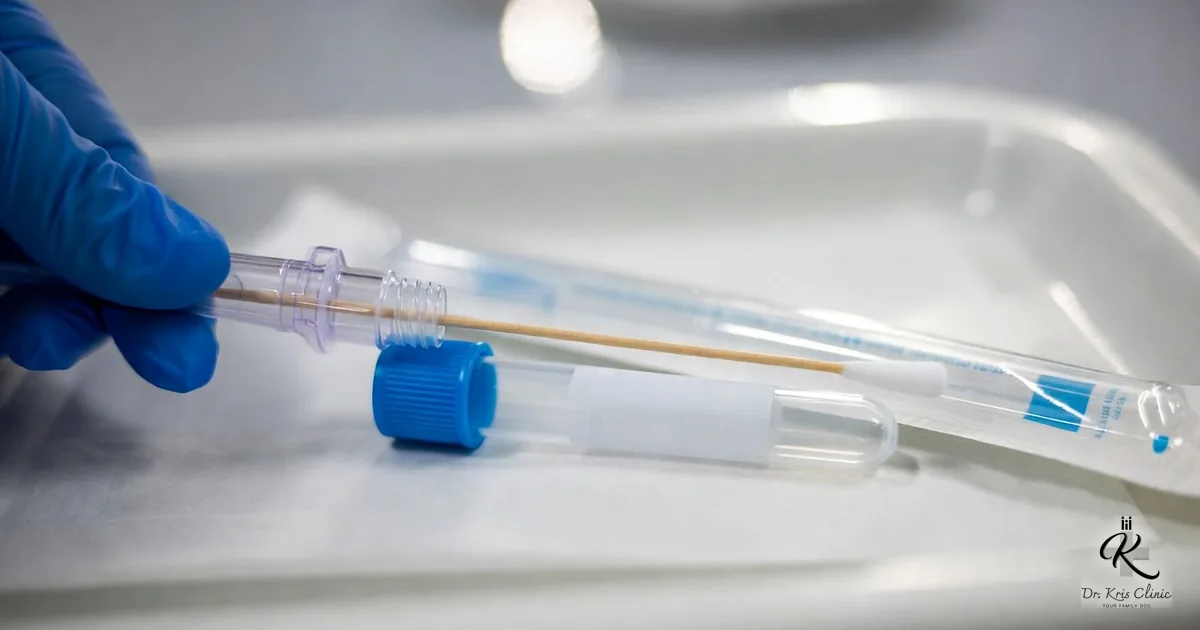
The most accurate test is PCR (NAAT) on first-catch urine, a vaginal swab, or throat and rectal swabs. We choose sites according to the kinds of sex you have, because a urine test alone misses many throat and rectal infections.
- If you have symptoms, test now
- If you have no symptoms after a recent risk, test from about 1–2 weeks afterwards to avoid a false negative
- Test for gonorrhoea, HIV and syphilis at the same time
Who should test without symptoms? Sexually active women under 25 every year; anyone with new or multiple partners; men who have sex with men and people on PrEP every 3–6 months.
Treatment
The CDC (2021) and WHO (2024) recommend doxycycline for 7 days as first-line treatment, as it works better than a single dose, particularly for rectal infection. Single-dose azithromycin is an alternative in some situations, such as pregnancy. Your doctor will choose the right medicine and dose.
- Take doxycycline with a full glass of water and stay upright afterwards to avoid oesophageal irritation
- Avoid taking it with milk, antacids or iron, which reduce absorption
- It makes skin sensitive to sun, so use sunscreen
- Doxycycline is not used in pregnancy
- LGV needs a longer 21-day course
After treatment
- No sex until you have finished 7 days of treatment (or 7 days after a single dose), symptoms have gone and partners are treated
- Tell partners from the last 60 days so they can be tested and treated. See My partner has an STI
- Retest at about 3 months, because reinfection is common
- A routine test of cure is not needed, except in pregnancy, after an incomplete course, or if symptoms persist
Prevention
- Use condoms for vaginal and anal sex, and for oral sex where possible
- Have regular screening based on your risk
- Doxy-PEP greatly reduces chlamydia and syphilis in suitable people, under medical supervision
- See the overview in Common STIs
When to see a doctor, and how we can help
See a doctor if you have discharge, burning when passing urine, testicular pain or swelling, pelvic pain with fever, abnormal vaginal bleeding, or a partner who tested positive. If you had an HIV risk in the last 72 hours, ask about PEP at the same time.
At Dr. Kris Clinic in Surat Thani we test the right sites by PCR, treat according to current guidelines and look after partners confidentially. We also see patients from Koh Samui and Koh Phangan, and online across Thailand. English spoken.
 1
 2
 3