The Enneagram: 9 Personality Types for You and Your Partner
The Enneagram invites you to look beneath behaviour to the fears and desires that drive us. It works well as a conversation starter, but it should never be used to judge anyone.

Key points
- The Enneagram sorts personality into nine types based on motivations, fears and desires that run deeper than behaviour.
- Research on its reliability is mixed, so it is best used as a tool for self-reflection, not as a diagnosis.
- In a relationship, use it to ask 'What makes you feel safe?' rather than to say 'That's just how you are.'
Some couples come to see me holding the results of a personality test: "He's a Type 8 and I'm a Type 9, so we're not compatible, are we?" I love it when couples are curious about understanding each other, but I want to help you use these tools the right way. Used well, the Enneagram opens hearts. Used badly, it can become a label that closes them.
What is the Enneagram?
The Enneagram (pronounced "ANY-a-gram") is a system that describes nine personality types. It is popular in coaching, personal development and relationship work. What makes it different is that it doesn't just look at what we do; it asks "Why do we do it?" It points to each person's basic fears and deepest desires.
The nine types at a glance
| Type | Name | Deepest desire | Common fear |
|---|---|---|---|
| 1 | The Reformer | To do what is right | Being bad or wrong |
| 2 | The Helper | To be loved and needed | Being unwanted |
| 3 | The Achiever | To feel valuable through success | Being worthless |
| 4 | The Individualist | To be truly themselves | Having no identity |
| 5 | The Investigator | To understand and be capable | Being intruded upon or incapable |
| 6 | The Loyalist | Security and support | Being without support |
| 7 | The Enthusiast | Happiness and freedom | Being trapped in pain |
| 8 | The Challenger | To be in control of their own life | Being controlled or harmed |
| 9 | The Peacemaker | Inner and outer peace | Conflict and separation |
Most people recognise themselves in several types, and our behaviour shifts with stress or security at different stages of life.
Gut centre
Focus on control and rightness
- 8 The Challenger
- 9 The Peacemaker
- 1 The Reformer
Heart centre
Focus on value and identity
- 2 The Helper
- 3 The Achiever
- 4 The Individualist
Head centre
Focus on security and understanding
- 5 The Observer
- 6 The Loyalist
- 7 The Adventurer
The three centres are the traditional Enneagram framework. Use it for self-reflection, not diagnosis.
What does the research say?
A systematic review by Hook and colleagues in the Journal of Clinical Psychology (2021) found that some Enneagram measures show a degree of reliability and partly correlate with other personality measures. Overall, however, the evidence is still mixed and of limited quality compared with better-researched personality models such as the Big Five.
How to use it well in a relationship
Use it as a question, not an answer
- Instead of saying "You're a Type 6, that's why you're so suspicious," try asking "When you're anxious, what helps you feel more secure?"
- Instead of saying "I'm a Type 9, so I don't like arguing," try "I'm afraid of conflict, so I go quiet, but there's actually something I want to tell you."
Look for the places where you tend to clash
- One person needs a lot of closeness; the other needs a lot of personal space.
- One person deals with problems head-on; the other avoids them.
- Couple psychology calls this the "pursue–withdraw" pattern, and it can be eased with better communication. Read common couple problems.
Use it for empathy, not as an excuse. Personality is not a licence to hurt each other. Every type can learn and grow.
As a label
- "She's a type 6, so she's suspicious"
- "I'm a 9, so I hate arguing"
- Used to judge you're incompatible
- Used to excuse hurtful behaviour
As a question
- "When you're anxious, what steadies you?"
- "I fear conflict, but there's something I need to say"
- Find where you tend to clash, then talk
- Used to empathise and grow together
No type pairing is forbidden. Respect and handling conflict matter more than the number.
Every type can make it work
No type is "forbidden" from being with another. A good relationship depends far more on respect, trust and how you handle conflict than on your personality numbers. For the bigger picture, read healthy love and relationships.
Using it to understand yourself
Knowing what you fear deep down helps you see why you sometimes react more strongly than a situation calls for. I have shared the story of a patient whose relationship improved once he understood himself better in a relationship can get better when you understand yourself. Practising noticing your own emotions in everyday life helps a lot, too; read mindfulness and sex.
When to seek help
- You keep having the same argument until it feels like your personalities "just don't match".
- You feel you don't know yourself, or you're confused about what you want in life or in your relationship.
- You have symptoms of depression or anxiety, or thoughts of harming yourself. These need a medical assessment. In Thailand you can call 1323, the free 24-hour mental-health hotline (Thai language; ask for English support). In an emergency, call 1669.
At Dr. Kris Clinic and Kris Care Space, we may use tools like the Enneagram as a starting point for conversation in couples counselling, alongside evidence-based approaches, to help you and your partner understand each other better. English-speaking consultations are available in person in Surat Thani or online.
Want help with this? Three simple steps
Reading is a good start. When you are ready, check where you are, see how a consultation works, then book a time that suits you.
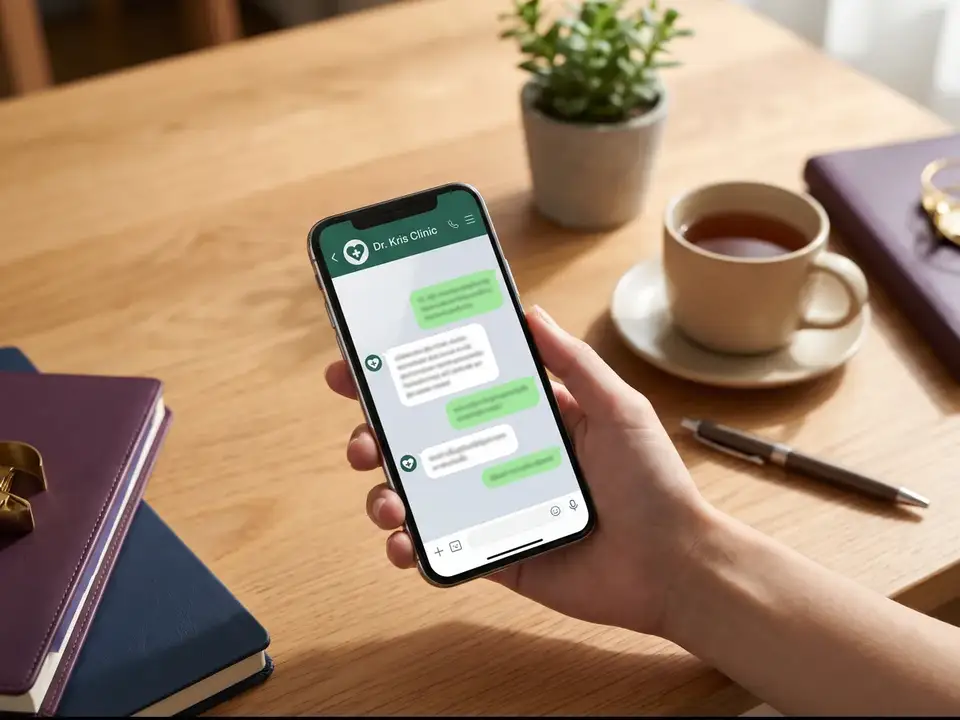 1Free 2-minute self-checkRelationship check (CSI-4) — see your result instantly and send it to the doctor if you like.Start the self-check →
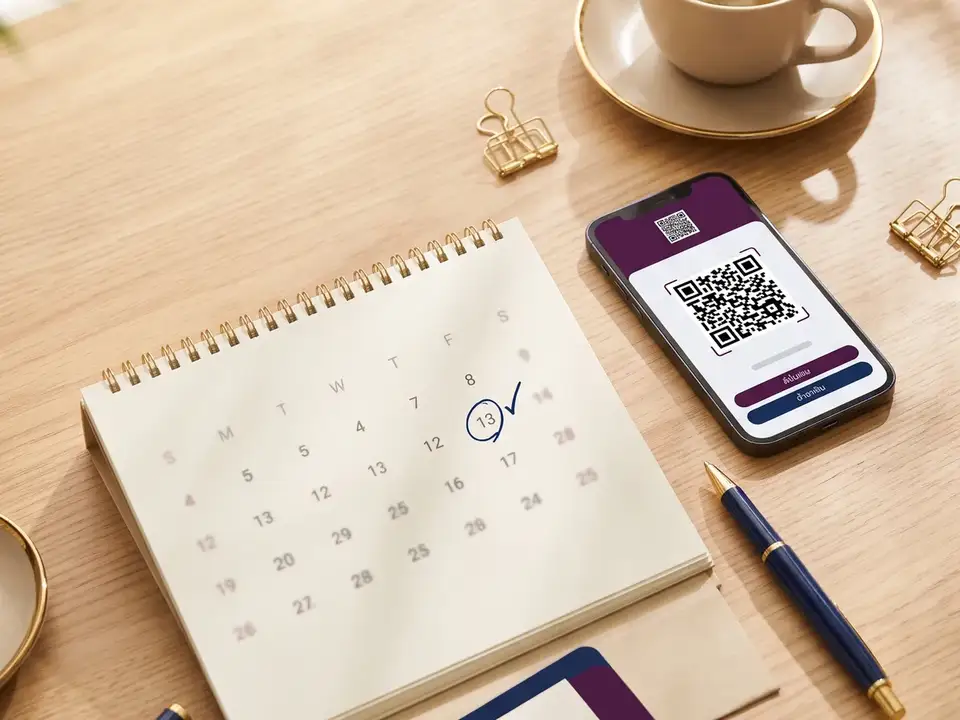 2See the steps and feesIndividual from 990 THB · couple 1,590 THB · 30–60 minutes, at the clinic or online via MCS Telemedicine.How a consultation works →
 3Book with the doctorPick a time online or message us on LINE. Come on your own or with your partner. Payment confirms the booking.Book online →
Self-checks are a guide only and do not replace a doctor's assessment. Outcomes vary from person to person, depending on the severity of symptoms, the complexity of the problem and other factors.
Want your relationship to feel better?
Come alone or as a couple. The doctor helps you talk about what really matters.
Every medicine and service requires a doctor's assessment first.
Frequently asked questions
Are online Enneagram tests reliable?
They are fine as a starting point, but your result may change with your mood on the day. Read the description of each type and reflect on whether it truly matches your motivations.
Which types are most compatible?
There is no evidence that any pairing of types is best. Relationships depend far more on communication, respect and willingness to adapt.
How is the Enneagram different from MBTI?
MBTI focuses on preferences in how you take in information and make decisions, while the Enneagram focuses on underlying motivations and fears. Both systems have weaker evidence than the Big Five.
อ่านบทความนี้เป็นภาษาไทย
Enneagram บุคลิกภาพ 9 แบบ ใช้เข้าใจตัวเองและคนรักอย่างไรให้พอดี →
References
- Hook JN, Hall TW, Davis DE, Van Tongeren DR, Conner M. The Enneagram: A systematic review of the literature and directions for future research. J Clin Psychol. 2021;77(4):865-883.
- Riso DR, Hudson R. The Wisdom of the Enneagram. Bantam; 1999.
- McCrae RR, John OP. An introduction to the five-factor model and its applications. J Pers. 1992;60(2):175-215.
- Christensen A, et al. Traditional versus integrative behavioral couple therapy for significantly and chronically distressed married couples. J Consult Clin Psychol. 2004;72(2):176-191.
This article is for education and does not replace diagnosis or treatment by a doctor. If you have symptoms or concerns, please see a doctor.