Art Therapy: How It Helps the Mind and Who It Suits
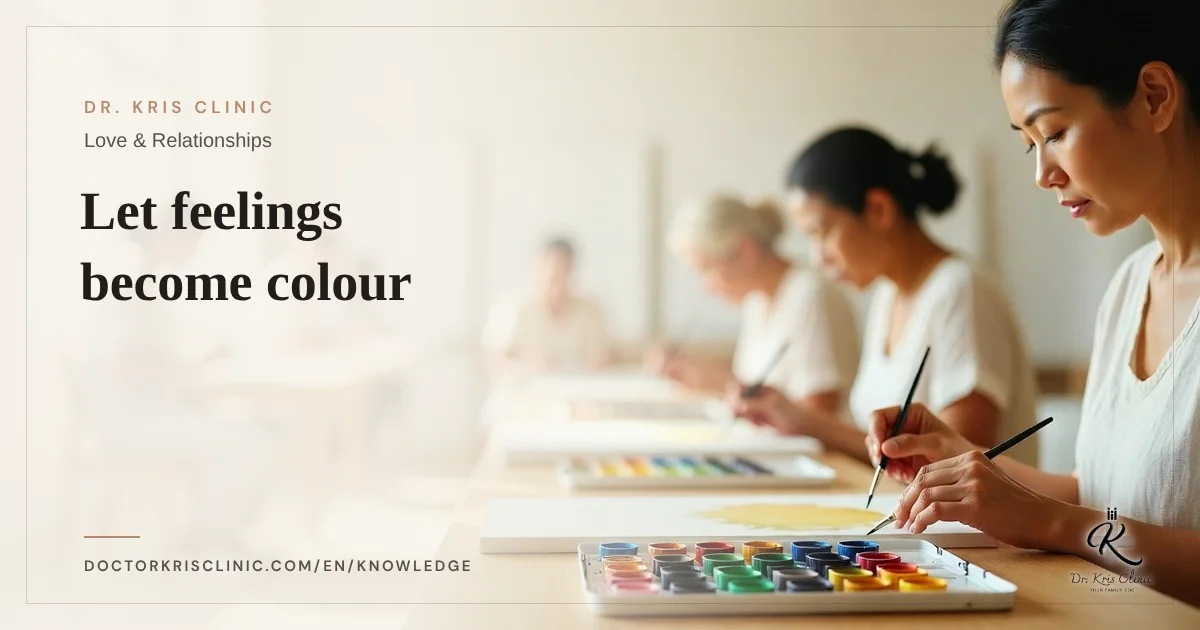
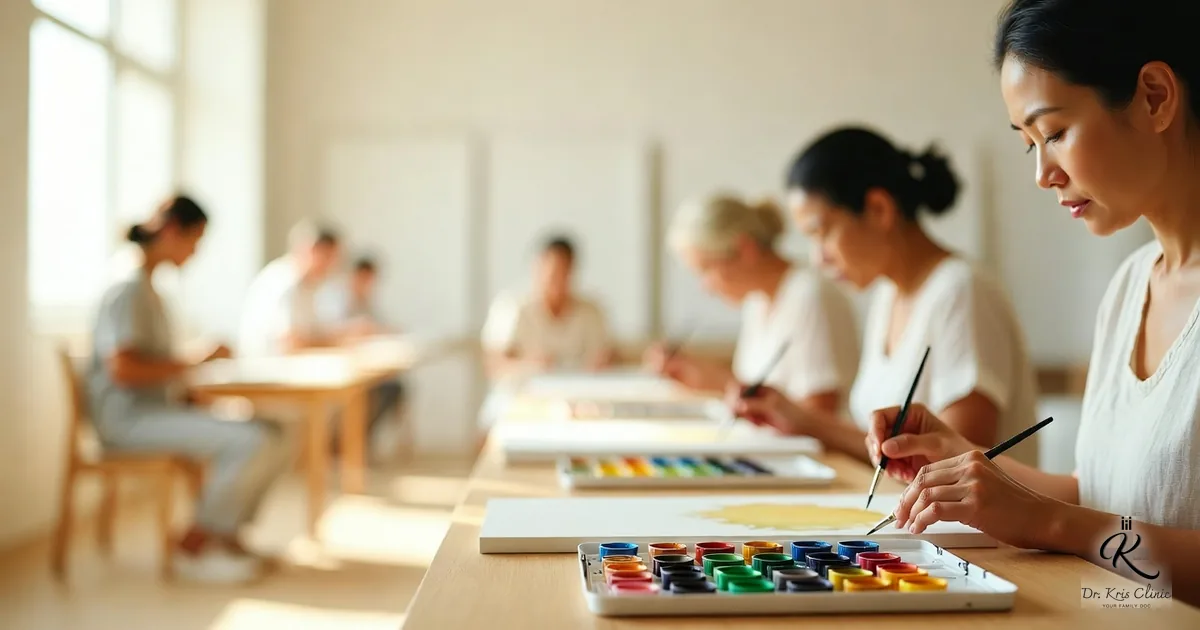
Art therapy is not about making a beautiful picture. It is a space where feelings that are hard to put into words can come out as colour, line and shape.

Key points
- Art therapy uses making art as a way to communicate feelings. No art background is needed.
- Research has found benefits for stress and mood in many groups, but studies are still small, so it should be used alongside other care, not instead of treatment.
- It suits people who find it hard to talk about feelings, children, families, people with chronic illness and carers.
Some feelings cannot be spoken, not because you do not want to say them, but because you cannot find the words. I have seen people sit silently through an entire conversation, then, once they had paints and paper in their hands, tell a story they had kept inside for years. That is the power of art to help heal the mind.
What is art therapy?
Art therapy uses the process of making art, such as drawing, painting, sculpting or collage, within a therapeutic relationship, to help people express themselves, understand themselves and manage their emotions.
- No artistic skill is needed. There is no right or wrong picture.
- The process matters more than the product. What happens inside you while you create matters more than how beautiful the picture is.
- The work is yours. The facilitator will not "read your mind" or interpret the picture for you, but will invite you to say what it means to you.
How does it work?
- It is a way to communicate without words, well suited to complex or painful feelings.
- It creates a safe distance. Talking about a picture is easier than talking directly about yourself.
- It helps you stay in the present. Concentrating on colour, line and texture is similar to mindfulness practice.
- It gives a sense of control. You choose, create and change, which matters a great deal to people who feel their life is out of control.
Wordless communication
- Complex feelings
- Pain too hard to put into words
Safe distance
- Easier to talk about the image than yourself
- Open up at your own pace
Staying in the present
- Focus on colour, line, touch
- Similar to mindfulness
Sense of control
- You choose, create, change
- Matters when life feels out of control
You don't need to draw well; the process matters more than how the picture looks.
What does the evidence say?
- A systematic review by Uttley and colleagues (2015) in Health Technology Assessment found that art therapy was associated with improved symptoms in people with non-psychotic mental health conditions in most studies, though each study was small.
- A study by Kaimal and colleagues (2016) found that 45 minutes of making art was associated with lower levels of the stress hormone cortisol in most participants, even those with no art background.
- In severe mental illness such as schizophrenia, the evidence is still unclear.
Can help
- Reduces stress and helps relaxation
- Helps express feelings
- Symptom improvement in non-psychotic mental health problems
- Can be used alongside main treatment
Not a substitute for
- Medicine or psychotherapy in severe depression
- Treatment of bipolar disorder
- Treatment of schizophrenia (evidence unclear)
- Assessment when having thoughts of self-harm
Based on Uttley et al. (2015) and Kaimal et al. (2016). Most studies are small.
Who leads the process?
In many countries, art therapists must complete postgraduate training in both art and psychology. In Thailand the profession is still growing. There are also therapeutic art activities run by trained health professionals, which focus on relaxation and self-expression. Before joining, ask what training the facilitator has and what the activity aims to do.
Example activities
- Draw today's mood: use colours and shapes to represent your feelings.
- A picture of yourself in the past, present and future.
- A family map: draw the people at home as symbols, which helps open up conversation within the family. Read more in family therapy.
- A couple's shared picture: draw on the same sheet of paper without talking, then discuss how it felt. It helps reveal the couple's communication patterns. Read common couple problems.
- Clay modelling: for people who need a physical outlet for anger or pent-up feelings.
- A memory box: for families facing loss or caring for someone at the end of life. Read palliative care.
Who is it for?
- People who are stressed, emotionally drained or burnt out and want time to rest their mind
- People who find it hard to talk about feelings
- Children and teenagers, who often communicate more easily through pictures than words
- People with chronic illness and their carers
- People with repeated health worries after a risk exposure; read STI anxiety
- Couples and families who want a new way of communicating
Art for wellbeing at Kris Care Space
Kris Care Space is a service of Dr. Kris Clinic that offers a safe space to express feelings through art and activity therapy, alongside couples and family counselling. The focus is not on skill but on expressing yourself and being yourself, whether on that day you feel happy, sad, stressed or just want to rest your mind. Sessions can be held in English.
If you have symptoms of depression, ongoing insomnia or thoughts of harming yourself, see a doctor for an assessment first. You can also call 1323, Thailand's free 24-hour mental-health hotline (Thai language; ask for English support).
Medicines and services your doctor may consider
- Doctor consultation, 30–60 min฿990Details & order →
- Couple consultation, 30–60 min฿1,590Details & order →
Prices are per pack. Every medicine is prescribed only after a doctor's assessment; your doctor will advise whether it suits you. See all medicines & services
Want help with this? Three simple steps
Reading is a good start. When you are ready, check where you are, see how a consultation works, then book a time that suits you.
 1Free 2-minute self-checkRelationship check (CSI-4) — see your result instantly and send it to the doctor if you like.Start the self-check →
 2See the steps and feesIndividual from 990 THB · couple 1,590 THB · 30–60 minutes, at the clinic or online via MCS Telemedicine.How a consultation works →
 3Book with the doctorPick a time online or message us on LINE. Come on your own or with your partner. Payment confirms the booking.Book online →
Self-checks are a guide only and do not replace a doctor's assessment. Outcomes vary from person to person, depending on the severity of symptoms, the complexity of the problem and other factors.
Preventive health care
Plan check-ups, nutrition and supplements that fit your age and lifestyle.
Every medicine and service requires a doctor's assessment first.
Frequently asked questions
I can't draw at all. Can I still take part?
Yes. Art therapy does not measure skill. Many of the people who benefit most are those who say they cannot draw.
Can art therapy treat depression?
It can help as an add-on for some people, but it is not the main treatment for moderate to severe depression. Use it alongside the treatment your doctor recommends.
Will the facilitator interpret my picture?
In good practice, the facilitator does not interpret it for you but invites you to explain what it means. You can share as much or as little as you like.
อ่านบทความนี้เป็นภาษาไทย
References
- Uttley L, et al. Systematic review and economic modelling of the clinical effectiveness and cost-effectiveness of art therapy among people with non-psychotic mental health disorders. Health Technol Assess. 2015;19(18):1-120.
- Kaimal G, Ray K, Muniz J. Reduction of cortisol levels and participants' responses following art making. Art Ther (Alex). 2016;33(2):74-80.
- American Art Therapy Association. Definition of the profession. 2017.
- Ruddy R, Milnes D. Art therapy for schizophrenia or schizophrenia-like illnesses. Cochrane Database Syst Rev. 2005;(4):CD003728.
This article is for education and does not replace diagnosis or treatment by a doctor. If you have symptoms or concerns, please see a doctor.