Difficulty Reaching Orgasm in Women (Female Orgasmic Disorder)
Finding orgasm difficult is something many women experience. Usually nothing is "broken"; what helps is understanding your body and the right kind of stimulation.


Key points
- Most women do not reach orgasm from penetration alone and need clitoral stimulation as well. This is normal.
- Female orgasmic disorder is diagnosed when orgasm is difficult or absent almost every time for at least 6 months and causes distress.
- Learning about your own body, sex therapy and reviewing medicines have evidence that they help.
"I've never had one. Is something wrong with me?" This is the question asked most quietly in the consulting room. I want to start with a fact that relieves many women: not reaching orgasm from penetration alone is normal for a great many women. It does not mean you are deficient or "not woman enough" in any way.
Facts worth knowing first
- A US national survey (Herbenick and colleagues, 2018) found that only about 18% of women said penetration alone was enough for orgasm. Most needed clitoral stimulation as well, or preferred it.
- The clitoris is highly sensitive. A 2023 study counted more than 10,000 nerve fibres in the main nerve of the clitoris, more than the figure of 8,000 that has been repeated for years.
- There is something called the "orgasm gap": in heterosexual couples, women reach orgasm clearly less often than men. Part of this comes from sex that centres on penetration, not from women's bodies working badly.
When is it called female orgasmic disorder?
Under the DSM-5-TR criteria (2022), female orgasmic disorder (FOD) means:
- orgasm is very delayed, infrequent or absent, or its intensity is greatly reduced
- this happens on almost all occasions of sexual activity (about 75–100%)
- it has lasted at least 6 months
- it causes clear distress
- it is not better explained by violence in the relationship, another mental health condition, or the effects of a medicine or physical illness alone
The doctor will also distinguish whether it is lifelong (never having had an orgasm) or acquired (it used to happen and has changed), and whether it is generalised or situational, for example being able to reach orgasm alone but not with a partner. These point to quite different treatments.
Normal
- No orgasm from penetration alone
- Clitoral stimulation also needed
- No orgasm but enjoying sex and not distressed
Female orgasmic disorder
- Very delayed, infrequent or absent orgasm
- Almost every time (about 75-100%)
- Lasting at least 6 months
- Causing clear distress
Herbenick et al. (2018): only about 18% reach orgasm from penetration alone.
Common causes
Physical and medication factors
- SSRI/SNRI antidepressants are a very common cause of acquired difficulty with orgasm. Read antidepressants and sex
- Hormonal changes, menopause, dryness or pain. Read vaginal dryness
- Diabetes, neurological conditions, pelvic surgery, heavy alcohol use
Psychological factors
- Repetitive thoughts during sex, such as worrying about your body, fearing you are taking too long, or watching yourself to see whether you are "nearly there" (spectatoring)
- Stress, depression, anxiety
- Beliefs that touching yourself is wrong, so you have never learned about your own body
Relationship factors
- Not feeling able to tell your partner what you like, or a partner who does not pay attention
- Short foreplay, a focus on penetration, and sex ending when the man finishes
- Conflict or lack of trust that makes it hard to let go
Evidence-based approaches
- Directed self-exploration (directed masturbation) is well supported for women who have never reached orgasm. It is structured, step-by-step practice, starting with getting to know your body and moving on to discovering what kind of touch feels good. Once you know, you can share it with your partner. Read sex toys and masturbation, safely.
- Vibrators or air-pulse devices make clitoral stimulation more consistent. They can be used alone or with a partner. They are not "competition" for your partner, just an aid.
- Mindfulness helps bring your attention back to present sensations instead of looping thoughts. Read mindfulness and sex.
- Sex therapy and couples therapy: practising communication and using sensate focus exercises to reduce pressure.
- Reviewing medicines: if it started after an antidepressant, the doctor may consider adjusting the dose, changing the drug or adding another medicine. Never stop the medicine yourself.
- Treating other conditions, such as dryness, pain or menopausal symptoms.
- 1Learn your bodyDirected masturbation, practised step by step
- 2Use aidsVibrating or air-pulse devices give steady stimulation
- 3Practise mindfulnessBring attention back to what you feel now
- 4Share with your partnerCommunicate and practise sensate focus
- 5Review medicines and conditionsWith your doctor; never stop medicines yourself
No medicine is approved specifically for this condition.
Small things you can try straight away
- Allow more time for foreplay, and do not set orgasm as a goal.
- Tell your partner, in words or by guiding their hand, where and how firmly.
- Use a lubricant to reduce friction.
- Try positions that allow clitoral stimulation during penetration, or let yourself control the pace.
When to see a doctor
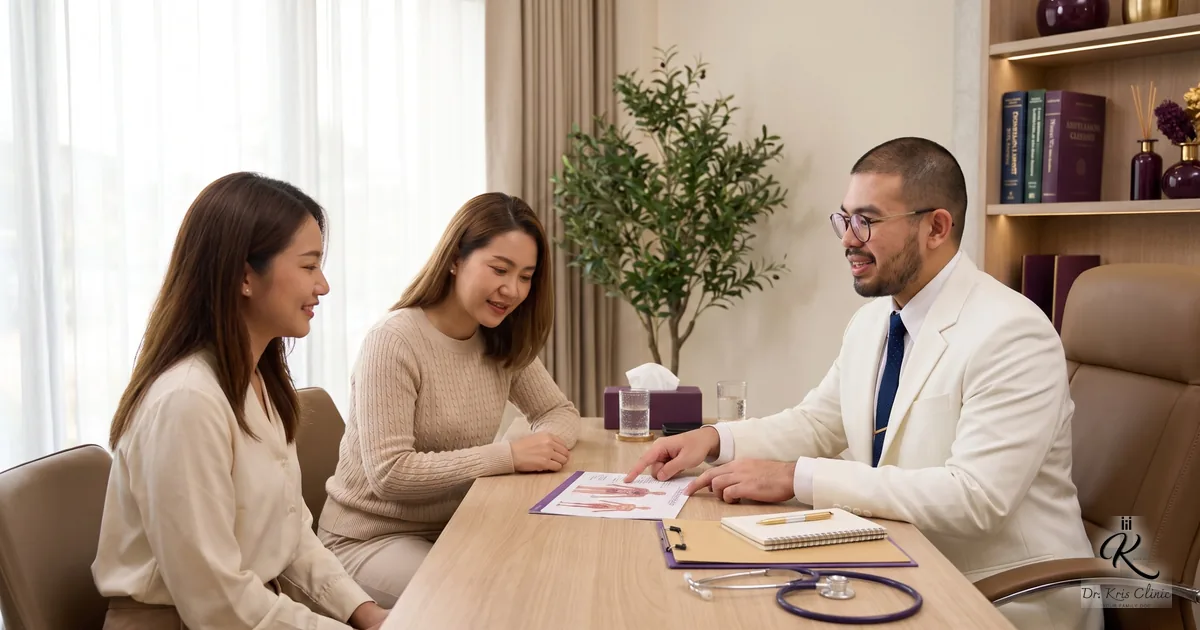
If this causes you distress or affects your relationship, if it started after a new medicine, surgery or with a long-term condition, or if there is also pain, it deserves an assessment. At Dr. Kris Clinic, I talk with you privately and without judgement, work through the causes layer by layer and make a plan that suits you. You can come alone or with your partner, and English-speaking consultations are available in person or online.
Related case stories from Dr. Kris
Dr. Kris Case: She Was So Quiet I Didn't Know How She FeltSilence is not consent; open a safe conversation and make room for the partner to get care tooMedicines and services your doctor may consider
- Doctor consultation, 30–60 min฿990Details & order →
- Couple consultation, 30–60 min฿1,590Details & order →
Prices are per pack. Every medicine is prescribed only after a doctor's assessment; your doctor will advise whether it suits you. See all medicines & services
Want help with this? Three simple steps
Reading is a good start. When you are ready, check where you are, see how a consultation works, then book a time that suits you.
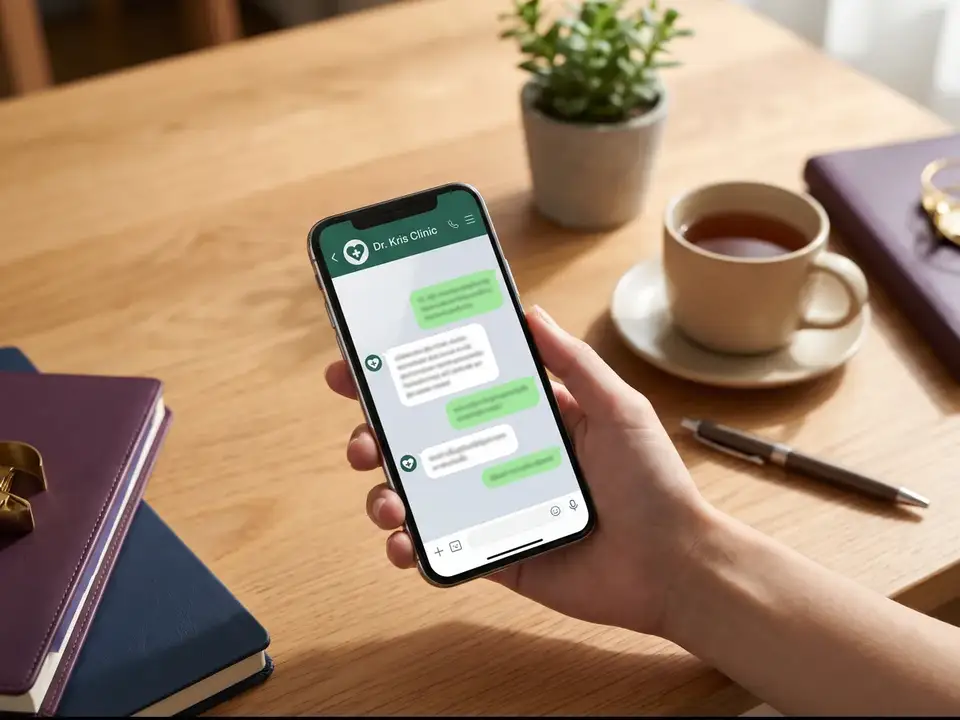 1Free 2-minute self-checkSexual-health self-check — see your result instantly and send it to the doctor if you like.Start the self-check →
 2See the steps and feesIndividual from 990 THB · couple 1,590 THB · 30–60 minutes, at the clinic or online via MCS Telemedicine.How a consultation works →
 3Book with the doctorPick a time online or message us on LINE. Come on your own or with your partner. Payment confirms the booking.Book online →
Self-checks are a guide only and do not replace a doctor's assessment. Outcomes vary from person to person, depending on the severity of symptoms, the complexity of the problem and other factors.
Talk about sexual health without embarrassment
A doctor who listens and assesses body, hormones and relationship. In clinic or online.
Every medicine and service requires a doctor's assessment first.
Frequently asked questions
I have never had an orgasm. Is something wrong with my body?
Usually there is nothing physically wrong. It is most often because you have not yet learned the kind of stimulation that suits you. Structured, step-by-step practice works well in this group.
I can reach orgasm alone but not with my partner. Does that mean I don't love them?
No. This is a very common pattern, usually related to the type of stimulation, anxiety or communication. Telling your partner what you like helps a lot.
If I use a vibrator often, will I lose sensitivity with my partner?
The evidence does not show permanent loss of sensation. Some women may get used to strong stimulation; varying the type and using the device together with your partner can help.
อ่านบทความนี้เป็นภาษาไทย
ไม่ถึงจุดสุดยอด ไม่ค่อยรู้สึก ในผู้หญิง (Female Orgasmic Disorder) →
References
- American Psychiatric Association. DSM-5-TR. 2022 (Female Orgasmic Disorder).
- Herbenick D, Fu TC, Arter J, Sanders SA, Dodge B. Women's experiences with genital touching, sexual pleasure, and orgasm: results from a U.S. probability sample of women ages 18 to 94. J Sex Marital Ther. 2018;44(2):201-212.
- Uloko M, et al. How many nerve fibers innervate the human clitoris? A histomorphometric evaluation of the dorsal nerve of the clitoris. J Sex Med. 2023;20(3):247-252.
- Laan E, Rellini AH, Barnes T. Standard operating procedures for female orgasmic disorder: consensus of the International Society for Sexual Medicine. J Sex Med. 2013;10(1):74-82.
This article is for education and does not replace diagnosis or treatment by a doctor. If you have symptoms or concerns, please see a doctor.