Zinc and Men's Health: Does It Really Help Testosterone and Sperm?
Zinc is often sold as a fix for testosterone, sperm and premature ejaculation. It matters, but it doesn't do everything the ads promise. Here's the honest evidence.


Key points
- Zinc is needed for testosterone production, sperm and immunity, but supplements only raise testosterone in men who are actually deficient.
- The large FAZST trial (JAMA 2020) found zinc plus folic acid did not improve sperm quality or live birth rates; there is no good evidence it helps ED or premature ejaculation.
- Men need about 11 mg a day; don't exceed 40 mg a day long term, as excess causes copper deficiency, anemia and nerve problems.
Zinc is one of the supplements men ask me about most, because ads often say it will "boost testosterone, boost sperm and cure premature ejaculation". I used to write about zinc very positively myself, but after reviewing newer research, let me tell you straight: zinc really is important, but it doesn't do everything the ads claim.
What zinc does in a man's body
Zinc is a mineral the body uses in hundreds of enzymes. Its roles related to men's health include:
- Being part of the process of making testosterone in the testes
- Being highly concentrated in the prostate and semen, where it is used to make sperm and help them move
- Supporting the immune system, wound healing and the senses of taste and smell
The real evidence: what it can and can't do
| Belief | What the evidence says |
|---|---|
| Boosts testosterone | In men who are truly zinc-deficient, supplements can bring hormones back to normal. In men with normal levels, supplements do not raise testosterone meaningfully. |
| Improves sperm quality and fertility | The FAZST study (JAMA 2020), in about 2,400 men whose partners were having fertility treatment, found zinc with folic acid did not improve sperm quality or live birth rates, and caused more digestive side effects. |
| Cures premature ejaculation, firmer erections | There is no good enough evidence. Premature ejaculation and ED have clearer causes and treatments. |
| Reduces acne | There is some evidence that oral zinc helps mild inflammatory acne a little, but it is less effective than standard acne treatments. |
| Prevents prostate enlargement or prostate cancer | No supporting evidence, and some observational studies found that very high doses over the long term may be linked to higher risk. |
| Reduces DHT hair loss | Very weak evidence. |
In short, if your problem is erections, premature ejaculation or wanting a baby, zinc is not the main answer. Reading Erectile dysfunction (ED), Premature ejaculation (PE) and Semen analysis will get you closer to the point.
Genuinely helps
- If you are deficient, supplements can restore normal hormones
- Inflammatory acne: a small benefit
- Immunity and wound healing
Not enough evidence
- Raising testosterone when levels are normal
- Improving sperm quality (FAZST, JAMA 2020)
- Fixing premature ejaculation or ED
- Preventing prostate enlargement or DHT hair loss
Who is at risk of zinc deficiency
- Strict vegetarians or vegans (phytates in grains and beans reduce absorption)
- Heavy drinkers
- People with chronic bowel disease, chronic diarrhea or previous weight-loss stomach surgery
- Poorly controlled diabetes, chronic kidney disease or liver disease
- Older people who eat very little
Possible signs of deficiency include poor appetite, a change in taste, slow wound healing, hair loss, skin rashes and frequent infections, none of which are specific. Blood zinc levels are also hard to interpret, because they change with inflammation and the time of day the blood is taken. So I always look at the history and the whole picture as well.
How much the body needs, and the safe upper limit
- Adult men need about 11 mg a day
- The upper limit not to exceed long term is 40 mg a day (from food and supplements combined)
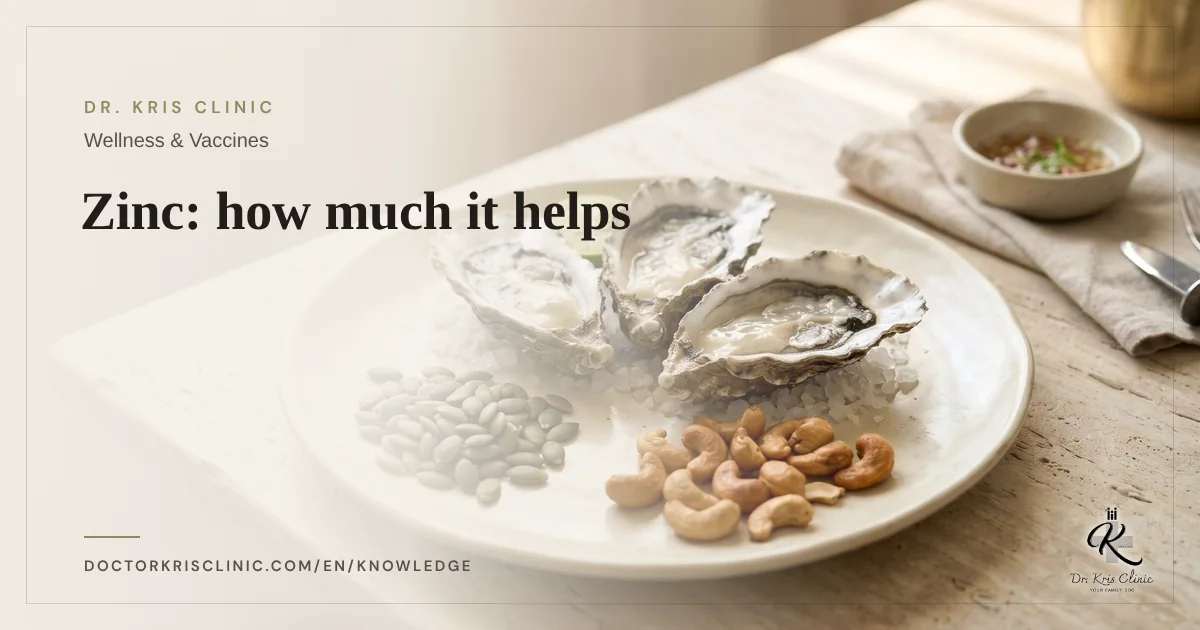
- Six oysters contain more zinc than a whole day's requirement; 90 g of beef has about 4–7 mg; 30 g of pumpkin seeds has about 2 mg
Taking too much causes nausea, vomiting and stomach pain, and high doses for several months compete with copper absorption, leading to anemia, low white blood cells and possible nerve problems. Zinc also reduces the absorption of some antibiotics, so take them at least 2 hours apart.
If you want to look after your testosterone, where to start instead
Factors that affect hormones more than supplements are body weight, waist size, sleep, exercise, stress and chronic illness. See the evidence-based approaches in Optimising testosterone with sleep, food and exercise. If you suspect low testosterone, have a morning blood test done properly; see Testosterone basics every man should know.
For other herbs and supplements marketed for sex, read on in Do herbs really help sexual health?
When to see a doctor
See a doctor if you have symptoms of low testosterone, such as a clear drop in sex drive, fatigue, low mood or loss of muscle, if you have had erection problems for more than 3 months, or if you have been trying for a baby for more than a year without success.
At Dr. Kris Clinic I assess your symptoms, chronic conditions, medicines and the supplements you already take, test hormones or semen when there is a reason, and advise you on what to keep taking and what to stop, so you don't spend money on supplements you don't need.
Want help with this? Three simple steps
Reading is a good start. When you are ready, check where you are, see how a consultation works, then book a time that suits you.
 1Free 2-minute self-checkSexual-health self-check — see your result instantly and send it to the doctor if you like.Start the self-check →
 2See the steps and feesIndividual from 990 THB · couple 1,590 THB · 30–60 minutes, at the clinic or online via MCS Telemedicine.How a consultation works →
 3Book with the doctorPick a time online or message us on LINE. Come on your own or with your partner. Payment confirms the booking.Book online →
Self-checks are a guide only and do not replace a doctor's assessment. Outcomes vary from person to person, depending on the severity of symptoms, the complexity of the problem and other factors.
Worried about sexual performance?
Talk to a doctor in private. We look at physical, hormonal and vascular causes before choosing the treatment that suits you.
Frequently asked questions
Will taking zinc raise my testosterone?
It can if you were deficient to begin with. If your levels are normal, supplements won't raise testosterone meaningfully. Look for the cause of low testosterone first.
Does zinc make it easier to have a baby?
The large FAZST study found that zinc with folic acid did not improve sperm quality or birth rates. Have a semen analysis and assess both partners.
Which type of zinc is absorbed best?
Zinc gluconate, citrate and picolinate are absorbed about equally well. What matters more is keeping the total daily dose under 40 mg and taking it only when there is a reason.
อ่านบทความนี้เป็นภาษาไทย
ซิงก์ (Zinc) กับสุขภาพเพศชาย ช่วยฮอร์โมนและอสุจิได้จริงแค่ไหน →
References
- Schisterman EF, et al. Effect of Folic Acid and Zinc Supplementation in Men on Semen Quality and Live Birth Among Couples Undergoing Infertility Treatment (FAZST). JAMA. 2020;323(1):35-48.
- Prasad AS, et al. Zinc status and serum testosterone levels of healthy adults. Nutrition. 1996;12(5):344-348.
- NIH Office of Dietary Supplements. Zinc: Fact Sheet for Health Professionals (updated 2024).
- Salonia A, et al. EAU Guidelines on Sexual and Reproductive Health. European Association of Urology, 2025.
This article is for education and does not replace diagnosis or treatment by a doctor. If you have symptoms or concerns, please see a doctor.