HPV Vaccine for Women and Men: How Many Doses, What Age, Who Benefits
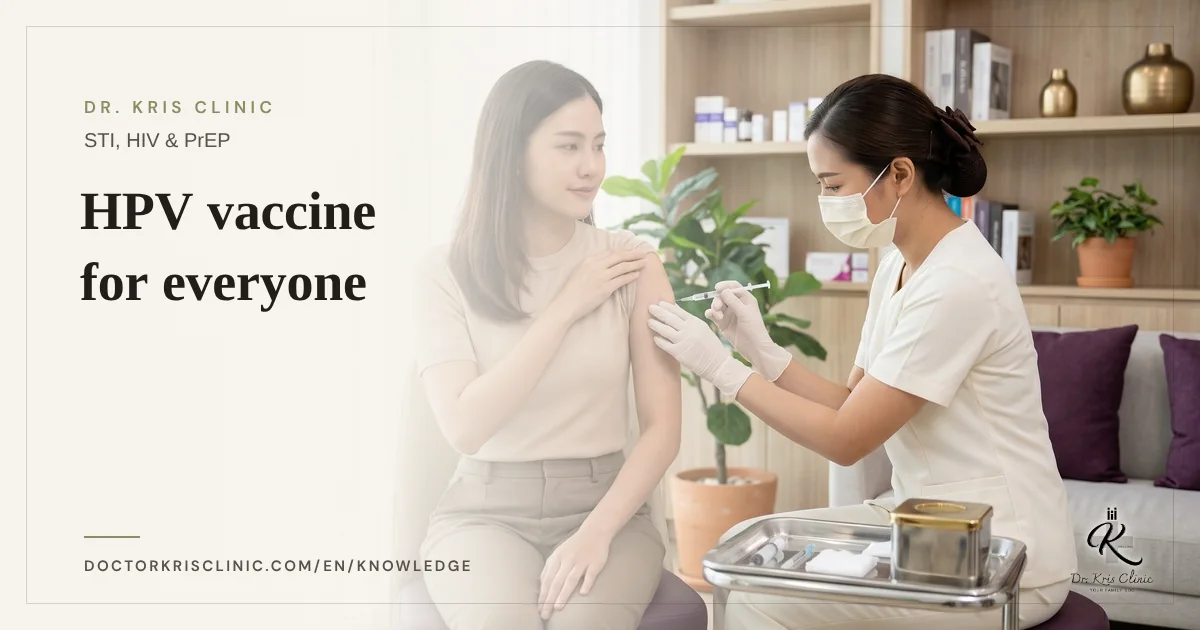
The HPV vaccine is not only for preventing cervical cancer. It also lowers the risk of anal, throat and penile cancer and genital warts, so it benefits people of every gender.

Key points
- HPV causes cervical, anal, oropharyngeal and penile cancer as well as genital warts, so the vaccine benefits both women and men.
- It works best before sexual activity begins. Ages 9–14 need 2 doses; age 15 and over, or anyone with a weakened immune system, need 3 doses.
- You still need cancer screening after vaccination, because the vaccine does not cover every type and does not treat existing infection.
Many people still think of the HPV vaccine as "the cervical cancer vaccine for women" and nothing more. I would like you to see the bigger picture. HPV spreads very easily, and most sexually active people catch it at some point in their lives. The body usually clears it on its own, but some types persist for years and turn into cancer, in women, in men and in people of every gender. That makes the vaccine one of the most worthwhile cancer-prevention tools we have.
What does HPV cause?
- Cervical cancer: almost all cases are caused by high-risk HPV types, especially 16 and 18
- Anal cancer: increasingly common in men who have sex with men and in people living with HIV. Read more in Anal cancer screening
- Oropharyngeal (mouth and throat) cancer: in many countries more common in men than in women
- Cancer of the penis, vagina and vulva
- Genital warts: mostly caused by types 6 and 11. They are not life-threatening, but they come back often and affect confidence
HPV spreads through skin contact in the genital, anal and mouth areas. Condoms lower the risk but not completely, so the vaccine is an important layer of protection. For an overview of prevention, see Common sexually transmitted infections.
What types of vaccine are there?
| Type | HPV types covered | Protects against warts |
|---|---|---|
| Bivalent (2-type) | 16, 18 | No |
| Quadrivalent (4-type) | 6, 11, 16, 18 | Yes |
| 9-valent (e.g. Gardasil 9) | 6, 11, 16, 18, 31, 33, 45, 52, 58 | Yes |
The 9-valent vaccine covers the types responsible for about 90% of cervical cancers, and it is the one most commonly used in clinics today.
How many doses?
According to the product label and commonly used guidelines:
- Ages 9–14: 2 doses, 6–12 months apart
- Age 15 and over: 3 doses, at 0, 1–2 and 6 months
- People with weakened immune systems, including people living with HIV: 3 doses at any age
What about a single dose?
Since 2022, the World Health Organization's position is that for girls and young women aged 9–20, a single dose gives protection close to that of two doses, and it recommends that countries use a one- or two-dose schedule so more people can be reached. For age 21 and over it recommends 2 doses, and for people with weakened immune systems at least 2 doses, ideally 3.
Thailand uses the HPV vaccine in its government programme for girls in Grade 5 (around age 10–11), and has expanded it to girls and women aged 11–20, switching to the 9-valent vaccine with a single-dose schedule in the programme. Eligibility details may change with each year's policy. For adults vaccinated at the clinic, I explain both the label schedule and the latest evidence, and we decide together.
Age 9–14
- 2 doses
- 6–12 months apart
Age 15 and over
- 3 doses
- At 0, 1–2 and 6 months
Weakened immunity / HIV
- 3 doses at any age
- Includes people living with HIV
WHO (2022): in ages 9–20, one dose protects about as well as two. Thailand's government programme uses a single-dose schedule.
Who should be vaccinated?
- Children and teenagers aged 9–14, both girls and boys. This is when the benefit is greatest, because they have not yet been exposed and their immune response is very strong.
- Ages 15–26 who have never been vaccinated or did not finish the series should catch up.
- Ages 27–45: the benefit is smaller because many people have already been exposed, but it can still be considered case by case, for example if you have a new partner, have recently divorced or started a new relationship, are a man who has sex with men, or have several partners.
- Men who have sex with men, transgender women and people living with HIV have a higher risk of anal cancer and benefit even more. See also LGBTQ+ health.
Men who have sex with men, transgender women and people living with HIV benefit most. Keep up regular screening after vaccination.
Questions I often hear in clinic
I am already sexually active. Can I still be vaccinated? Yes. Even if you have already caught some types, the vaccine still protects against the types you have not had. There is no need to test for HPV before vaccination.
I have had warts or an abnormal cervical screening result. Can I be vaccinated? Yes. The vaccine does not treat an existing infection, but it protects against other types, and there is some evidence it may reduce recurrence after treatment of cervical lesions.
Is it safe? The HPV vaccine has been used for almost 20 years, with hundreds of millions of doses given. Common side effects are pain and swelling at the injection site and headache, and some people faint after the injection, so you should sit and rest for 15 minutes. It has not been found to cause infertility.
Can I be vaccinated during pregnancy? It is not recommended during pregnancy. If you find out you were pregnant after a dose, there is no need to worry. Just postpone the remaining doses until after the birth.
Do I still need screening after vaccination?
Yes. The vaccine does not cover every cancer-causing type, and it does not help with infections you already had.
- Women and anyone with a cervix should have cervical cancer screening, such as HPV DNA testing, according to their age. Read more about women's health in Women's sexual health.
- Some men who have sex with men and some people living with HIV may consider anal cancer screening.
Planning your vaccination at the clinic
At Dr. Kris Clinic we offer the HPV vaccine for all genders. I review your past vaccination history, recommend the schedule that suits your age and health, and can plan it together with other checks such as STI testing or starting PrEP, all in a single visit. English-speaking consultations are available.
Want help with this? Three simple steps
Reading is a good start. When you are ready, check where you are, see how a consultation works, then book a time that suits you.
 1Free 2-minute self-checkSexual-health self-check — see your result instantly and send it to the doctor if you like.Start the self-check →
 2See the steps and feesIndividual from 990 THB · couple 1,590 THB · 30–60 minutes, at the clinic or online via MCS Telemedicine.How a consultation works →
 3Book with the doctorPick a time online or message us on LINE. Come on your own or with your partner. Payment confirms the booking.Book online →
Self-checks are a guide only and do not replace a doctor's assessment. Outcomes vary from person to person, depending on the severity of symptoms, the complexity of the problem and other factors.
Adult vaccines at the clinic
Find out which vaccines suit your age, health conditions and travel plans.
Frequently asked questions
Should men get the HPV vaccine?
Yes. HPV causes genital warts and anal, throat and penile cancer in men, and vaccination also helps reduce passing the virus to partners.
I am over 26. Is it still worth it?
The benefit is smaller but still there, especially if you have a new partner or ongoing risk. International guidelines suggest deciding case by case up to age 45.
Is one dose of HPV vaccine enough?
The WHO accepts a single-dose schedule for ages 9–20 in public-health programmes. For adults and people with weakened immune systems, more doses are still recommended. Your doctor can help you choose the right schedule.
I did not finish the series and it has been a long time. Do I have to start again?
No. You do not need to restart. Just carry on with the remaining doses.
อ่านบทความนี้เป็นภาษาไทย
วัคซีน HPV ผู้หญิงและผู้ชาย ฉีดกี่เข็ม อายุเท่าไร ใครได้ประโยชน์ →
References
- World Health Organization. Human papillomavirus vaccines: WHO position paper, December 2022. Wkly Epidemiol Rec 2022;97(50):645-672.
- Meites E, et al. Human Papillomavirus Vaccination for Adults: Updated Recommendations of the Advisory Committee on Immunization Practices. MMWR 2019;68(32):698-702.
- Workowski KA, et al. Sexually Transmitted Infections Treatment Guidelines, 2021: HPV. MMWR Recomm Rep 2021;70(4).
- Bangkok Post. HPV vaccinations for schoolgirls stepped up (Ministry of Public Health 9-valent HPV programme for females aged 11-20).
This article is for education and does not replace diagnosis or treatment by a doctor. If you have symptoms or concerns, please see a doctor.