Penile Nerve Hypersensitivity: Burning or Numbness After an STI Scare
If you still have burning or stabbing pain after negative STI tests, the pain is real, but the cause may be oversensitive nerves rather than a hidden infection.

Key points
- Burning or stabbing pain after negative, proper STI tests is real, and often comes from hypersensitive nerves or tense pelvic muscles.
- Test properly once; repeated testing and repeated antibiotics don't help and can harm.
- Pelvic floor physiotherapy, nerve-pain medicines and managing anxiety help most men over weeks to months.
"Doctor, I've been tested at three places and nothing was found, but it still burns and stings." I hear this very often, especially from men who have had gonorrhoea, chlamydia or a bladder infection that has already been treated. I want to say first that your pain is real; you are not imagining it. But the cause may not be a hidden infection.
What these symptoms look like
- Burning or heat in the urethra even though no infection is found
- Intermittent stabbing or shooting pain at the tip of the penis, the testicles, the perineum or the lower abdomen
- Pain from light touch (allodynia), for example from underwear rubbing
- Some men instead feel numbness, reduced sensation or a crawling feeling
- Needing to urinate often, or feeling the bladder hasn't emptied, even though there is no urine left behind
- Symptoms get worse with stress, sitting for a long time or after ejaculation
Why it still hurts after the infection has gone
1. Oversensitive nerve endings (neuropathic pain)
After inflammation, the nerves around the urethra and penis may "reset" to become more sensitive than before, like a burglar alarm so sensitive it goes off when there's no burglar. The central nervous system can also amplify pain signals, which is called central sensitisation.
2. Tense pelvic floor muscles
When we are in pain or anxious, we often tense the pelvic floor muscles without realising. Tension held for a long time causes pain in itself and can press on nerves. In men this group of symptoms is often called chronic prostatitis or chronic pelvic pain syndrome (CP/CPPS), even though in most cases there is no infection at all.
3. Anxiety and checking yourself
After a sexual risk, many men become very anxious, examining their penis every day, pressing and squeezing it. The more you check, the more you feel; the more you feel, the more you worry. This loop really does make the pain more noticeable. Read more about it in Anxiety and obsessive worry after a sexual risk (STI anxiety).
4. Repeated rounds of antibiotics
Some men buy antibiotics and take them several times on their own. Antibiotics don't help nerves, but they do cause side effects and drug resistance, and some types, such as fluoroquinolones, are also linked to nerve and tendon problems.
- 1Oversensitive nervesThe nervous system amplifies pain signals
- 2Worry about diseaseFear the germ is still hiding
- 3Constant checkingThe more you check, the more you feel
- 4Pelvic floor tensionLong-held tension causes pain and nerve pressure
- 5Repeat tests, antibioticsThey do not help the nerves; the loop continues
Test properly once, then stop
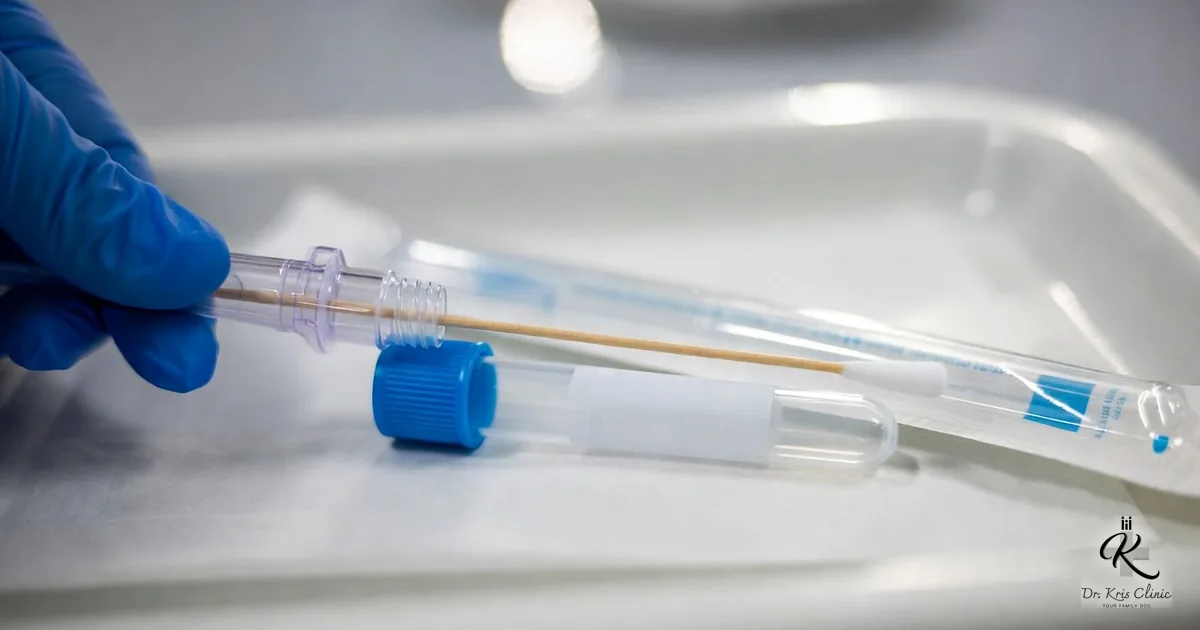
Before concluding that the symptoms come from the nerves, a doctor should first rule out an infection that hasn't been fully treated. Appropriate tests may include:
- Urine test and urine culture
- PCR testing for gonorrhoea, chlamydia, Mycoplasma genitalium and trichomonas. See STI PCR 14-pathogen test
- Blood tests based on risk, such as HIV and syphilis
- A physical examination of the skin, any sores, the prostate and the pelvic floor muscles
- A blood sugar test, because diabetes can cause nerve problems
If the correct tests are negative, testing again and again won't make it go away, and usually keeps the anxiety loop spinning. If you have had gonorrhoea, read about follow-up in Gonorrhoea: symptoms, testing and treatment.
Care and treatment
The EAU guideline on chronic pelvic pain emphasises caring for several aspects at once:
- Understanding: knowing that the symptoms aren't caused by a serious disease genuinely reduces pain.
- Pelvic floor physiotherapy: learning to relax the muscles, not squeeze them more, with an experienced physiotherapist.
- Nerve-pain medicines, such as low-dose amitriptyline, gabapentin or pregabalin, as assessed and prescribed by a doctor; they need to be taken consistently for several weeks.
- Managing anxiety, for example cognitive behavioural therapy (CBT), breathing practice, and cutting down on checking or pressing yourself.
- Adjusting daily life: sit less on hard seats, avoid long bike rides while symptomatic, cut down on coffee, alcohol and very spicy food if they make it worse, and do regular gentle exercise.
- Stop antibiotics that aren't indicated.
Most symptoms improve gradually over months, not days. Patience and consistent care are very important.
Understand it
- Know it is not a serious disease
- Stop antibiotics with no indication
Body
- Pelvic floor relaxation physiotherapy
- Nerve-pain medicine as assessed by your doctor
Mind
- CBT, breathing practice
- Less testing and self-pressing
Daily life
- Less prolonged sitting; avoid long cycling
- Gentle exercise
Most men improve gradually over months, not days.
Sensitivity versus premature ejaculation
Some men use the phrase "oversensitive penis" to mean premature ejaculation, which is a different matter from nerve pain. If your problem is ejaculating quickly, read Premature ejaculation (PE): causes, exercises and treatment.
When to see a doctor promptly
- Fever, chills, back or flank pain
- Unable to pass urine, or blood in the urine
- A swollen, red, hot testicle, or sudden severe testicular pain (go to hospital immediately)
- New sores, blisters or a rash on the genitals. Read Can herpes be treated?
- Anxiety so severe you can't sleep or work, or thoughts of harming yourself: call 1323, Thailand's free 24-hour mental health hotline (Thai language; ask for English support)
How the clinic can help
At Dr. Kris Clinic we take care of complete and appropriate testing, explaining your results clearly, treating nerve pain and supporting you with anxiety after a risk, without judgement. You can see us in Surat Thani or online, consultations in English are available, and we refer you to a urologist or pelvic floor physiotherapist when needed.
Want help with this? Three simple steps
Reading is a good start. When you are ready, check where you are, see how a consultation works, then book a time that suits you.
 1Free 2-minute self-checkSexual-health self-check — see your result instantly and send it to the doctor if you like.Start the self-check →
 2See the steps and feesIndividual from 990 THB · couple 1,590 THB · 30–60 minutes, at the clinic or online via MCS Telemedicine.How a consultation works →
 3Book with the doctorPick a time online or message us on LINE. Come on your own or with your partner. Payment confirms the booking.Book online →
Self-checks are a guide only and do not replace a doctor's assessment. Outcomes vary from person to person, depending on the severity of symptoms, the complexity of the problem and other factors.
Confidential STI testing
Choose the right tests for your risk and timing; the doctor explains the results and next steps.
Every medicine and service requires a doctor's assessment first.
Frequently asked questions
No infection was found but it still burns. Does that mean a resistant infection is hiding?
If you have been tested properly, for example with PCR covering the important organisms, and the results are negative, the chance of a hidden infection is very low. The symptoms usually come from oversensitive nerves or pelvic floor muscles.
Should I take more antibiotics?
Not without a test result confirming an infection. Repeated antibiotics don't help nerve symptoms and increase side effects and drug resistance.
Can these symptoms go away?
Most men improve with combined care, such as pelvic floor physiotherapy, nerve-pain medicines and managing anxiety, but it usually takes several weeks to months.
อ่านบทความนี้เป็นภาษาไทย
เส้นประสาทน้องชายไวเกิน และอาการชาหรือปวดหลังกังวลเรื่องโรค →
References
- European Association of Urology. EAU Guidelines on Chronic Pelvic Pain. 2025
- Shoskes DA, Nickel JC. Classification and treatment of men with chronic prostatitis/chronic pelvic pain syndrome using the UPOINT system. World J Urol. 2013;31(4):755-760
- Workowski KA, et al. Sexually Transmitted Infections Treatment Guidelines, 2021. MMWR Recomm Rep. 2021;70(4):1-187
- US Food and Drug Administration. FDA Drug Safety Communication: fluoroquinolone antibacterial drugs and disabling side effects. 2016
This article is for education and does not replace diagnosis or treatment by a doctor. If you have symptoms or concerns, please see a doctor.