Delayed or Absent Ejaculation: Causes and How to Manage It
Delayed ejaculation is not a bonus when it causes distress. Learn the medical, medicine-related and psychological causes, and how it can be managed.

Key points
- Delayed ejaculation means very delayed or absent ejaculation with a partner on most occasions for 6 months or more, causing distress.
- Common causes include SSRIs, diabetes, low hormones and very specific masturbation habits.
- No medicine is approved specifically for it; care focuses on the cause, medicine review and sex therapy.
When delayed ejaculation comes up, many people laugh and say, "Lucky you, everyone wants to last longer." But men who actually have it don't feel that way. Some take so long that both they and their partner become tired, sore or lose the mood. Some can't ejaculate inside their partner at all, even though they want a child. Delayed ejaculation is a problem that deserves care just as much as premature ejaculation.
What is delayed ejaculation?
According to DSM-5-TR, delayed ejaculation means ejaculation that is markedly delayed, or does not happen, on almost every occasion of sex with a partner, for at least 6 months, and causes distress, despite adequate stimulation and a desire to ejaculate.
There is no fixed number of minutes. In practice, many men go beyond 25–30 minutes without ejaculating, or stop because they are tired.
Patterns that may occur:
- Can ejaculate during masturbation but not with a partner: the most common
- Cannot ejaculate in any situation (anejaculation)
- Reaching orgasm but no semen comes out: this may be retrograde ejaculation (semen going back into the bladder), which is a different condition
Common causes
Physical causes and medicines
- SSRI and SNRI antidepressants are a very common cause. Read When antidepressants affect your sex life
- Other medicines, such as some antipsychotics, opioid painkillers and some alpha-blocker prostate medicines
- Diabetes, which damages nerves
- Low testosterone or an underactive thyroid. See Symptoms of low testosterone
- Pelvic or prostate surgery, spinal cord injury
- Alcohol and recreational drugs
- Getting older, as nerve sensitivity naturally declines
Behavioural and psychological causes
- Very specific masturbation habits, such as strong pressure or high speed, a particular position, or always needing porn, which means stimulation from a real partner isn't enough
- Performance anxiety, focusing so hard on "having to finish" that you can't
- Fear of pregnancy or infection
- Guilt about sex from your upbringing
- Distance, conflict or reduced attraction with your partner
Body and medicines
- SSRI/SNRI antidepressants
- Diabetes, low testosterone, low thyroid
- Pelvic surgery, alcohol
- Increasing age
Behaviour and mind
- Very specific masturbation style
- Pressure to finish
- Fear of pregnancy or STIs
- Distance from partner
DSM-5-TR definition: almost every time, for at least 6 months, and causing distress.
Effects that are often overlooked
- Both partners become tired, sore or irritated
- Your partner may feel they are not attractive
- The relationship becomes tense and sex gets avoided
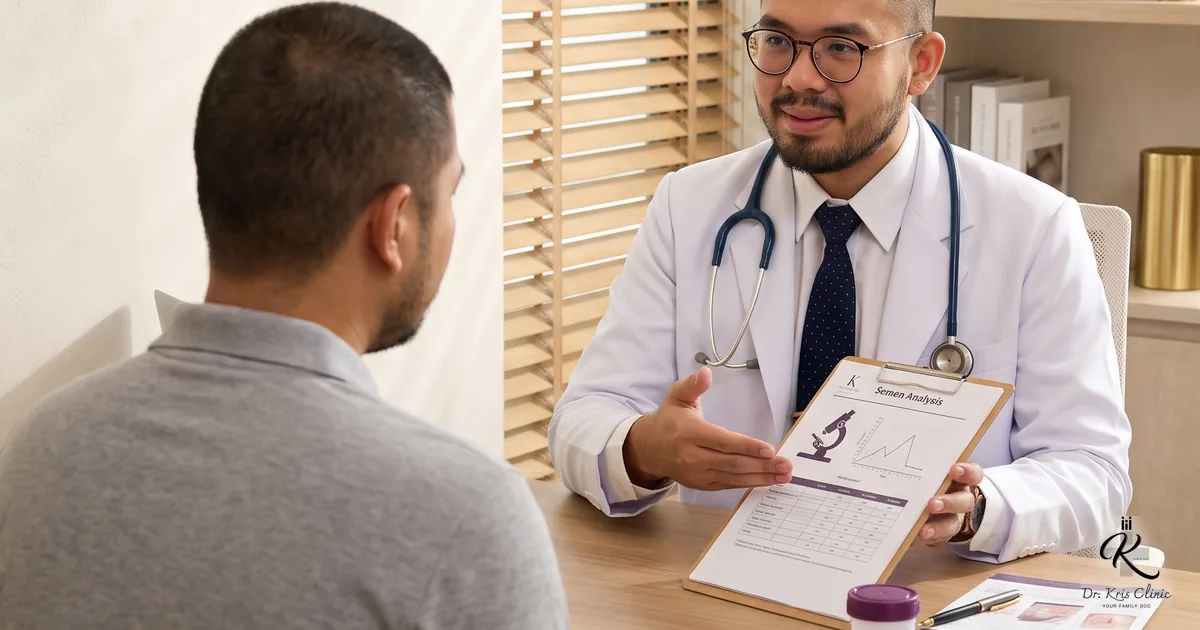
- Couples who want a baby may have trouble conceiving. See Semen analysis
Diagnosis
The doctor takes a detailed history: whether it has been lifelong or came on later, whether it happens in every situation or only with a partner, masturbation patterns, medicines and the relationship. Then comes a physical examination, and possibly blood tests such as blood sugar, testosterone, thyroid and prolactin. If you reach orgasm but no semen comes out, a urine test after orgasm may be done to check for retrograde ejaculation.
Care and treatment
The AUA/SMSNA guideline (2020) states that no medicine is yet approved specifically for delayed ejaculation, so care focuses on the cause:
- Review your medicines with the prescribing doctor, who may lower the dose, switch the medicine or add another. Never stop medicine on your own.
- Treat other conditions, such as controlling diabetes, and treating low testosterone or an underactive thyroid once confirmed.
- Adjust masturbation habits: gradually reduce pressure and speed, use lubricant and rely less on porn, so your body responds to stimulation closer to that of a real partner.
- Sex therapy: reduce anxiety, adjust expectations, communicate with your partner and practise techniques like Sensate Focus.
- Increase stimulation, for example using a vibrator on the genitals, which helps some men.
- Off-label medicines, such as cabergoline or bupropion, have limited evidence, and a doctor will consider them case by case.
- 1Review medicinesWith the prescriber; never stop on your own
- 2Treat other conditionsControl diabetes; treat confirmed hormone or thyroid problems
- 3Adjust masturbationLess pressure and speed, less reliance on porn
- 4Sex therapyReduce anxiety, talk with partner, sensate focus
- 5Other optionsMore stimulation, or medicines as assessed individually
AUA/SMSNA (2020): no medicine is approved specifically for delayed ejaculation.
When to see a doctor, and how the clinic can help
- Delayed ejaculation for several months that causes distress or affects your relationship
- It started after beginning a new medicine
- You also have diabetes, numbness in your hands or feet, or lower desire
- You are planning to have children
- You reach orgasm but no semen comes out, or your urine is cloudy after sex
At Dr. Kris Clinic we assess the physical, medicine-related, hormonal and psychological sides, do blood tests as needed, coordinate with the doctor who prescribes your current medicines, and provide sexology counselling for individuals and couples, at the clinic in Surat Thani or online, with consultations in English available. Read more about when to talk to a sexologist in When to see a clinical sexologist.
Related case stories from Dr. Kris
Dr. Kris Case: Understanding Your Sexual Response Cycle Can HelpCheck physical causes first, then use knowledge of the sexual response cycle to reduce pressureDr. Kris Case: Sex Isn't Perfect Like the Movies, and Needn't BeSexual problems usually have explainable causes; blame-free talk and lower expectations help a great dealMedicines and services your doctor may consider
Prices are per pack. Every medicine is prescribed only after a doctor's assessment; your doctor will advise whether it suits you. See all medicines & services
Want help with this? Three simple steps
Reading is a good start. When you are ready, check where you are, see how a consultation works, then book a time that suits you.
 1Free 2-minute self-checkSexual-health self-check — see your result instantly and send it to the doctor if you like.Start the self-check →
 2See the steps and feesIndividual from 990 THB · couple 1,590 THB · 30–60 minutes, at the clinic or online via MCS Telemedicine.How a consultation works →
 3Book with the doctorPick a time online or message us on LINE. Come on your own or with your partner. Payment confirms the booking.Book online →
Self-checks are a guide only and do not replace a doctor's assessment. Outcomes vary from person to person, depending on the severity of symptoms, the complexity of the problem and other factors.
Confidential consultation with a clinical sexologist
Say what you haven't been able to say to anyone. We listen, assess and plan — or refer when needed.
Every medicine and service requires a doctor's assessment first.
Frequently asked questions
Isn't delayed ejaculation a good thing?
If you and your partner are happy, it is not a problem. But if it takes so long that you get tired or sore, or you can't ejaculate and it distresses you, it is a condition that deserves care.
Does masturbating often cause delayed ejaculation?
Frequency alone is not the main issue. But a style that uses very strong pressure or speed, or always relies on porn, can make it harder to respond to a real partner. This can be adjusted with practice.
Is there a medicine that treats delayed ejaculation directly?
No medicine is approved specifically for it. Doctors focus on the cause, such as adjusting medicines that cause it and treating hormone problems or other conditions, and may use some medicines off-label in selected cases.
อ่านบทความนี้เป็นภาษาไทย
References
- Shindel AW, et al. Disorders of Ejaculation: An AUA/SMSNA Guideline (2020). J Urol. 2022;207(3):504-512
- American Psychiatric Association. Diagnostic and Statistical Manual of Mental Disorders, Fifth Edition, Text Revision (DSM-5-TR). 2022
- European Association of Urology. EAU Guidelines on Sexual and Reproductive Health. 2025
- Abdel-Hamid IA, Ali OI. Delayed ejaculation: pathophysiology, diagnosis, and treatment. World J Mens Health. 2018;36(1):22-40
This article is for education and does not replace diagnosis or treatment by a doctor. If you have symptoms or concerns, please see a doctor.