Healthy Fats: Eating Fat Isn't Wrong, and Understanding HDL and LDL
Your body needs fat for hormones, vitamins and the brain. What matters is which type you choose and what you eat it instead of.

Key points
- LDL is the number with the clearest evidence: lowering it through diet, exercise and medicine when needed really reduces heart attacks and strokes.
- High HDL is not always protective; drugs that raised HDL didn't reduce heart disease, so treat HDL as a sign of overall health, not a target to push up.
- Replace, don't add: swap saturated fats for fish, nuts and unsaturated oils, cut sugar and refined starch, and judge the need for medicine on total cardiovascular risk.
Many of my patients are so afraid of fat that they cut out anything oily, yet keep eating white rice, bread and sweet drinks as before, so their blood results don't improve. The truth is that the body needs fat, to make hormones, absorb vitamins and nourish the brain. What matters is which "type" we choose and what we eat it "instead of".
Blood fats made simple
| Value | What it means |
|---|---|
| LDL ("bad" cholesterol) | Carries cholesterol to build up in artery walls. The higher and longer it stays high, the greater the risk of narrowed arteries in the heart and brain. |
| HDL ("good" cholesterol) | Helps carry cholesterol back to the liver. Low values often go with belly fat, diabetes, lack of exercise and smoking. |
| Triglycerides | Rise with sugar, refined starch, alcohol and excess weight. |
| Total cholesterol | The sum; useful alongside the others, but can't be read on its own. |
LDL
"Bad" cholesterol
- Builds up in artery walls
- Lowering it = fewer heart attacks and strokes
HDL
"Good" cholesterol
- Carries cholesterol back to the liver
- A signal, not a number to push up
Triglycerides
- Raised by sugar, refined starch
- Alcohol, excess weight
Total cholesterol
- A summary figure for context
- Can't be judged alone
A misunderstanding to correct: high HDL doesn't always mean safe
We used to believe that the more you raised HDL, the better for your heart. But large studies of drugs that raise HDL a lot, such as niacin and the CETP inhibitors, did not reduce heart disease, and population studies have found that abnormally high HDL doesn't protect either. HDL is therefore a signal of overall health, not a number to chase upwards.
What has the clearest evidence is lowering LDL, through diet, exercise and medicine when needed, which genuinely reduces the chance of heart attack and stroke.
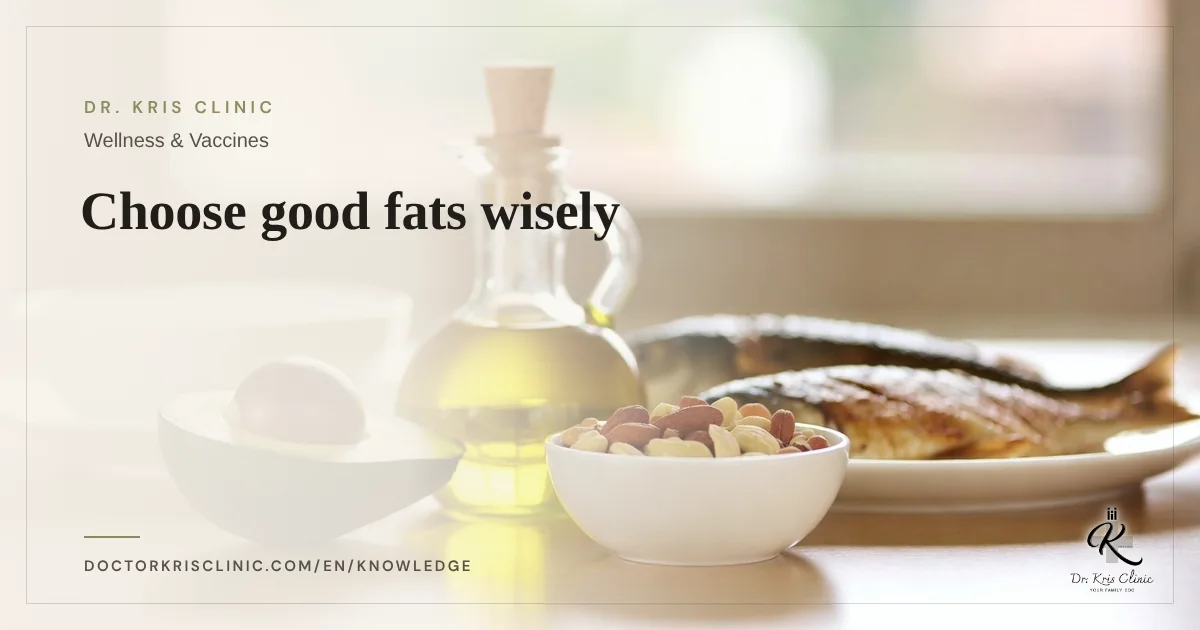
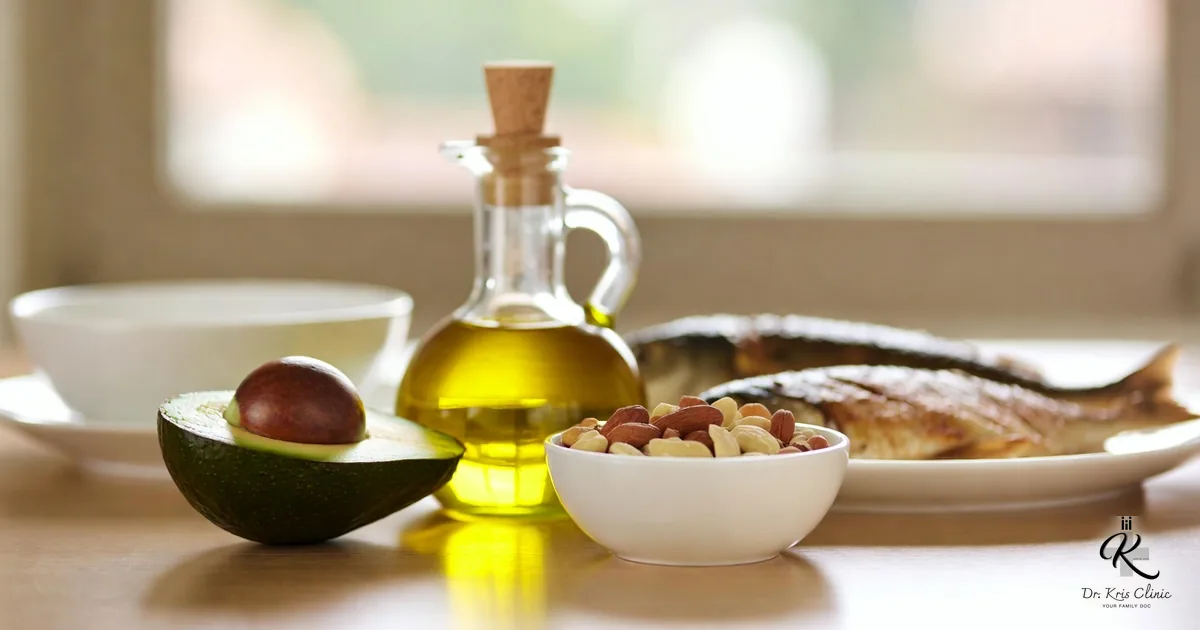
Where healthy fats come from
- Oily sea and freshwater fish such as salmon, sardines, mackerel, snakeskin gourami (pla salid) and snakehead fish. Eat fish at least 2 meals a week for omega-3s, which help lower triglycerides.
- Nuts and seeds: almonds, walnuts, peanuts, pumpkin seeds, sesame; a small handful a day (about 30 g).
- Vegetable oils high in unsaturated fats: olive oil, canola oil, rice bran oil, soybean oil.
- Avocado, if you can find it and like it.
- Soluble fiber: oats, dried beans and apples lower LDL a little, but steadily.
Fats to cut down
- Saturated fat: lard, chicken skin, butter, large amounts of cheese, coconut milk, palm oil and coconut oil can raise LDL. You don't need to cut them to zero, but keep them under 10% of your calories.
- Trans fats from partially hydrogenated oils. Thailand banned their production and import in 2019, but still be careful of food fried repeatedly in old oil.
- Deep-fried food: not just fat, but very high in calories.
- Sugar and refined starch: not fats, but they raise triglycerides and lower HDL.
Choose instead
- Fish, at least 2 meals/week
- A small handful (~30 g) of nuts or seeds daily
- Olive, canola, rice bran, soybean oil
- Soluble fiber: oats, beans
Cut down
- Saturated fat: pork fat, chicken skin, coconut milk
- Trans fat: reused frying oil
- Deep-fried food
- Sugar, refined starch
The principle is to swap, not add, because all fats are high in energy.
Lifestyle changes that help blood fats
- Aerobic exercise of at least 150 minutes a week lowers triglycerides and raises HDL a little.
- Losing 5–10% of body weight improves several blood fats; see Weight-loss pens (GLP-1) for people with a medical indication.
- Quit smoking, which directly damages blood vessels, including those needed for erections; see Vascular causes of ED.
- Limit alcohol, which raises triglycerides.
A Mediterranean-style diet focused on vegetables, fish, nuts and olive oil has evidence from the PREDIMED study that it reduces cardiovascular disease, and it adapts easily to Thai food, such as steamed fish, clear tom yum, gaeng som (sour curry) and stir-fried vegetables with little oil. Read more in Nutrition after 50.
When to test cholesterol, and when you need medicine
Adults should have their blood fats checked from age 20 and then repeat according to risk. These days most people don't need to fast before the test, unless triglycerides are very high or the doctor advises it. See the other recommended tests in Health checkups for working-age adults.
Deciding whether you need cholesterol-lowering medicine isn't based on LDL alone, but on your total risk: age, sex, blood pressure, diabetes, smoking, kidney disease and a family history of early heart disease. If LDL is very high (for example over 190 mg/dL), think about inherited high cholesterol and test family members too.
At Dr. Kris Clinic I help interpret your cholesterol results, assess your cardiovascular risk and plan meals that work in daily life. If you have chest pain or tightness, breathlessness, sudden weakness in an arm or leg or a drooping face, call 1669 (Thailand's medical emergency number) immediately.
Want help with this? Three simple steps
Reading is a good start. When you are ready, check where you are, see how a consultation works, then book a time that suits you.
 1Free 2-minute self-checkSexual-health self-check — see your result instantly and send it to the doctor if you like.Start the self-check →
 2See the steps and feesIndividual from 990 THB · couple 1,590 THB · 30–60 minutes, at the clinic or online via MCS Telemedicine.How a consultation works →
 3Book with the doctorPick a time online or message us on LINE. Come on your own or with your partner. Payment confirms the booking.Book online →
Self-checks are a guide only and do not replace a doctor's assessment. Outcomes vary from person to person, depending on the severity of symptoms, the complexity of the problem and other factors.
Preventive health care
Plan check-ups, nutrition and supplements that fit your age and lifestyle.
Frequently asked questions
My HDL is low. What should I do?
Focus on exercise, weight loss, quitting smoking and cutting sugar and refined starch. More important than raising HDL is controlling LDL and your overall heart risk.
Is coconut oil good for the heart?
Coconut oil is high in saturated fat and can raise LDL. It shouldn't be your main oil for heart health, though using some for flavor is fine.
Do I need to fast before a cholesterol test?
Usually not. A non-fasting result can be used to assess risk, unless triglycerides are very high or your doctor asks you to fast to confirm.
How many eggs can I eat a day?
Most people can eat one egg a day as part of a balanced diet. Total saturated fat affects LDL more. People with diabetes or very high LDL should ask their doctor.
อ่านบทความนี้เป็นภาษาไทย
กินไขมันไม่ใช่เรื่องผิด ถ้าเลือกไขมันดีเป็น และเข้าใจค่า HDL LDL →
References
- Sacks FM, et al. Dietary Fats and Cardiovascular Disease: A Presidential Advisory From the American Heart Association. Circulation. 2017;136:e1-e23.
- Estruch R, et al. Primary Prevention of Cardiovascular Disease with a Mediterranean Diet Supplemented with Extra-Virgin Olive Oil or Nuts (PREDIMED). N Engl J Med. 2018;378:e34.
- Mach F, et al. 2019 ESC/EAS Guidelines for the management of dyslipidaemias. Eur Heart J. 2020;41:111-188.
- Grundy SM, et al. 2018 AHA/ACC Guideline on the Management of Blood Cholesterol. Circulation. 2019;139:e1082-e1143.
This article is for education and does not replace diagnosis or treatment by a doctor. If you have symptoms or concerns, please see a doctor.