Nutrition After 50: Keep Your Muscle, Bones and Brain Strong
After 50 the body changes quietly. Eating less to control weight can cost you more muscle than fat, so the aim is to eat on target, not just eat less.



Key points
- Protein is the nutrient people over 50 most often lack: aim for about 1.0–1.2 g per kg per day, spread across meals, together with strength training (check first if you have kidney disease).
- Get calcium, fiber (25–30 g a day), vegetables, fruit and healthy fats mainly from food, and limit salt, sugar, alcohol and processed meat.
- Unintended weight loss, trouble swallowing, slowing walking speed or frequent falls are reasons to see a doctor.
After 50 the body changes quietly. Muscle declines little by little, bones thin, metabolism slows and appetite may fall. Many people choose to "eat less" to control their weight, which, if done the wrong way, loses more muscle than fat. That's why I prefer to say "eat on target" rather than "eat less".
The goals of eating after 50
- Keep muscle mass and strength and prevent muscle wasting (sarcopenia), which raises the risk of falls and dependence on others
- Look after your bones and reduce fractures
- Control blood pressure, blood sugar, cholesterol and waist size
- Look after your brain, mood and sleep
- For men, this also includes blood vessel health and sexual function, which go hand in hand with the heart
1. Protein: the nutrient people this age often don't get enough of
The PROT-AGE study group on nutrition in older people recommends about 1.0–1.2 g of protein per kilogram of body weight per day for healthy older adults, and possibly more for people with chronic illness or recovering from illness. For example, someone weighing 70 kg should get about 70–85 g a day.
- Spread it across every meal, about 25–30 g per meal, rather than packing it into one
- Good sources: fish, eggs, chicken, tofu, soybeans, milk, yogurt, dried beans
- Whey protein helps people who can't get enough from food, but isn't necessary for everyone
Protein works best together with strength (resistance) training at least 2 days a week. See more about muscle and hormones in How much can TRT build muscle, and how to build muscle properly.
Amount
- 1.0–1.2 g/kg/day (PROT-AGE)
- 70 kg ≈ 70–85 g/day
Spread across meals
- 25–30 g per meal
- Better than one big meal
Good sources
- Fish, eggs, chicken, tofu
- Milk, yogurt, dried beans
Pair with strength training
- At least 2 days/week
Caution
- Chronic kidney disease: ask your doctor before increasing
2. Calcium and vitamin D
Men aged 51–70 need about 1,000 mg of calcium a day; women after menopause and everyone over 70 need about 1,200 mg. Focus on food, such as milk, yogurt, firm tofu, small fish eaten whole and green leafy vegetables. Vitamin D comes from sunlight and food; supplements should be considered case by case. Details are in Calcium, zinc and vitamin D.
3. Fiber, vegetables and fruit
Aim for 25–30 g of fiber a day to help bowel movements, lower LDL, control blood sugar and reduce the risk of colorectal cancer.
- Swap white rice at some meals for brown rice, Riceberry rice or mixed rice
- Fill at least half your plate with vegetables at every meal
- Eat 2–3 portions of fruit a day, choosing ones that aren't very sweet. If you have diabetes, be careful with very sweet fruits such as durian, longan and ripe mango.
4. Healthy fats
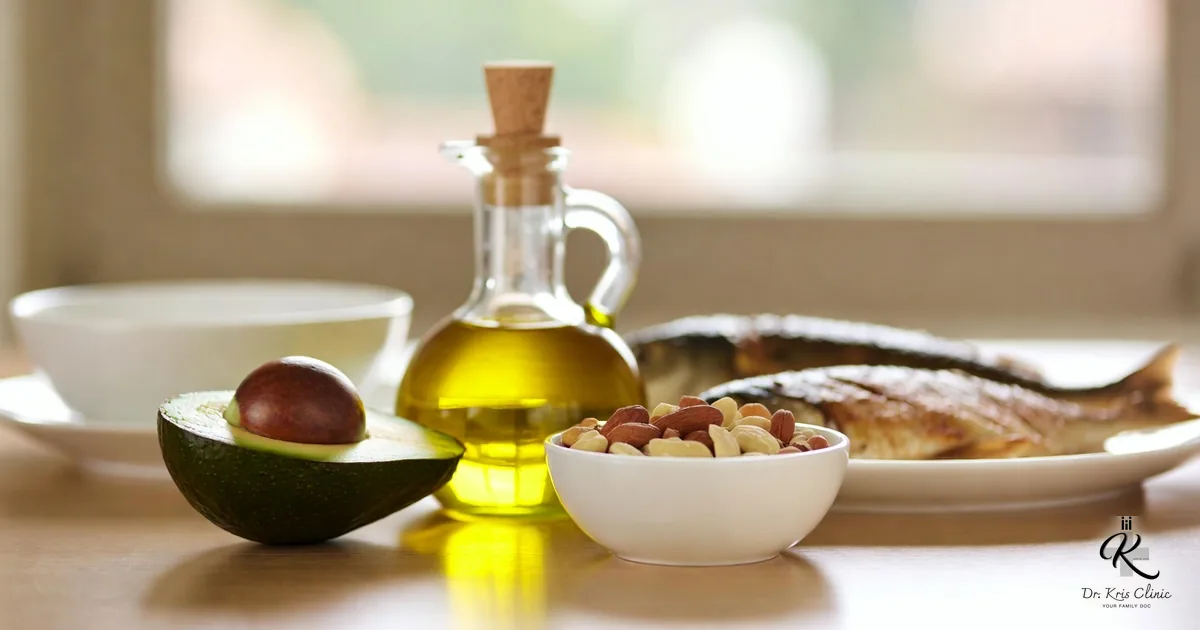
Eat fish at least 2 meals a week, a small handful of nuts, and use good vegetable oils instead of lard or coconut milk. Read more in Healthy fats: how to choose.
5. What to limit
| What to limit | Target |
|---|---|
| Salt and sodium | No more than 2,000 mg sodium a day (about 1 teaspoon of salt). Watch fish sauce, sauces, seasoning powders, instant noodles and processed food. |
| Sugar | No more than 6 teaspoons a day. Watch iced coffee, milk tea and fruit juice. |
| Alcohol | The less the better. The World Health Organization states there is no truly safe level for health. If you drink, no more than 1 standard drink a day, with alcohol-free days. |
| Fried food and processed meat | Sausages, ham, Thai pork roll (moo yor) and Chinese sausage (kun chiang) should be occasional. |
Add more
- Protein at every meal
- Fiber 25–30 g/day; half the plate vegetables
- Fish 2 meals/week; a small handful of nuts
- Calcium from food, and regular fluids
Limit
- Sodium ≤ 2,000 mg/day (~1 teaspoon of salt)
- Sugar ≤ 6 teaspoons/day
- Alcohol: the less the better
- Fried food, processed meat: only occasionally
6. Water, and the small things that matter
Older people feel less thirsty, so drink water at regular times and aim for pale yellow urine, unless your doctor has told you to limit fluids, for example with heart failure or some stages of kidney disease. Problems with teeth, gums and dentures also reduce how much protein you can eat, so have a dental check at least once a year.
About antioxidants and supplements
Vegetables, colorful fruit, green tea and nuts are good foods, but high-dose antioxidant pills have not been proven to slow ageing or prevent cancer, and some increase risk in certain groups. Read more in Vitamin level testing: is it necessary?
When to see a doctor
- Unintended weight loss of more than 5% in 6–12 months
- Loss of appetite, trouble swallowing, chronic bloating, blood in the stool
- Walking more slowly, difficulty getting up from a chair, frequent falls
- Several chronic diseases, or taking many medicines and being unsure what you can eat
At Dr. Kris Clinic I assess your nutrition, muscle mass and chronic conditions, then plan meals that fit your real life, including talking about hormones and sexual health at this age. English-speaking consultations are available. Read on in Men's health after 50: what to look after.
Want help with this? Three simple steps
Reading is a good start. When you are ready, check where you are, see how a consultation works, then book a time that suits you.
 1Free 2-minute self-checkSexual-health self-check — see your result instantly and send it to the doctor if you like.Start the self-check →
 2See the steps and feesIndividual from 990 THB · couple 1,590 THB · 30–60 minutes, at the clinic or online via MCS Telemedicine.How a consultation works →
 3Book with the doctorPick a time online or message us on LINE. Come on your own or with your partner. Payment confirms the booking.Book online →
Self-checks are a guide only and do not replace a doctor's assessment. Outcomes vary from person to person, depending on the severity of symptoms, the complexity of the problem and other factors.
Preventive health care
Plan check-ups, nutrition and supplements that fit your age and lifestyle.
Frequently asked questions
I'm 50. How much protein should I eat a day?
Most healthy older adults need about 1.0–1.2 g per kg per day, spread across meals. If you have kidney disease, have a doctor assess you first.
Do I need whey protein?
Not if you can get enough from food. Whey helps people who eat little or have a poor appetite. Choose an unsweetened type and take your chronic conditions into account.
Is intermittent fasting suitable after 50?
Some people manage it, but watch out for too little protein, low blood sugar if you take diabetes medicines, and muscle loss. Talk to a doctor first, especially if you have a chronic illness.
อ่านบทความนี้เป็นภาษาไทย
อาหารสำหรับวัย 50+ กินอย่างไรให้กล้ามไม่หาย กระดูกไม่พรุน สมองยังดี →
References
- Bauer J, et al. Evidence-based recommendations for optimal dietary protein intake in older people: a position paper from the PROT-AGE Study Group. J Am Med Dir Assoc. 2013;14(8):542-559.
- Cruz-Jentoft AJ, et al. Sarcopenia: revised European consensus on definition and diagnosis (EWGSOP2). Age Ageing. 2019;48(1):16-31.
- World Health Organization. Guideline: Sodium intake for adults and children. 2012; and WHO statement on alcohol: no safe level of drinking for health. Lancet Public Health. 2023.
- Department of Health, Ministry of Public Health, Thailand. Dietary guidelines for good health for Thai people (the 9 nutrition principles) and Dietary Reference Intake for Thais, 2020 (in Thai).
This article is for education and does not replace diagnosis or treatment by a doctor. If you have symptoms or concerns, please see a doctor.