Sexual Sadism Disorder: How BDSM Differs from Sexual Violence
Being the dominant partner in consensual BDSM is not a disorder, but being aroused by the suffering of someone who has not consented is dangerous. This article explains the line and the way forward.


Key points
- Being the controlling partner (dominant) in BDSM between consenting adults is not a disorder.
- ICD-11 uses the name Coercive Sexual Sadism Disorder to stress that the condition is about acts towards non-consenting people, which is sexual violence.
- If you notice your desires starting to cross the line of consent, seek help now, before anyone is harmed.
The word "sadist" is used so loosely in everyday speech that it has lost its meaning. Some people call a partner who likes to tease them a sadist, and some worry they are abnormal because they like to take the lead in bed. Medically, there is a clear dividing line here: consent. Being the controlling partner in BDSM that everyone has agreed to is one kind of sexual preference. Being aroused by the pain or fear of someone who has not consented is a condition that is dangerous to others.
This article is part of the Paraphilic Disorders series and is best read together with Sexual masochism disorder and consensual BDSM.
DSM-5-TR and ICD-11 criteria
DSM-5-TR (2022) diagnoses sexual sadism disorder when:
- There is intense, recurrent sexual arousal from the physical or psychological suffering of another person, lasting at least 6 months.
- The person has acted on these urges with a non-consenting person, or the urges cause clinically significant distress or impairment in daily life.
Clinicians may add the specifiers "in a controlled environment" or "in full remission" (no acting on urges and no distress for at least 5 years).
ICD-11 goes further and uses the name 6D33 Coercive Sexual Sadism Disorder. It is used only when there is a pattern of sexual arousal from inflicting suffering on a non-consenting person, and the person has acted on it or is markedly distressed by it. Sadomasochism practised with consenting adults is not considered a disorder (Krueger et al., 2017).
A preference vs a condition that needs treatment
| A consensual dominant preference | Signs of a condition that needs treatment |
|---|---|
| Always agreeing limits in advance | Arousal depends on the other person "not wanting it" or being genuinely afraid |
| Respecting the stop signal immediately | Wanting to continue even when the other person asks you to stop |
| Caring about your partner's pleasure and safety | Escalating violence to get the same feeling |
| Looking after each other afterwards | Fantasies of hurting unaware people, and starting to plan or look for opportunities |
| Normal life, no distress | Distress, being afraid of yourself, or relationships breaking down again and again |
A Canadian survey (Joyal & Carpentier, 2017) found that sadistic desires were clearly less common than masochistic ones (about 7% compared with about 24%), and that most of them were fantasies or consensual play, not violence.
Consensual preference
- Limits always agreed beforehand
- Stop signals respected at once
- Cares about partner's pleasure and safety
- Aftercare, and an ordinary life
Should be treated
- Aroused by the other person's real reluctance or fear
- Wants to continue even when asked to stop
- Violence keeps escalating
- Starts planning or seeking chances with unaware people
ICD-11 uses 6D33 Coercive Sexual Sadism Disorder only when it involves non-consenting people.
Without consent, it is sexual violence
Whatever name it goes by, physically or psychologically hurting another person in a sexual way without their consent is violence and a crime. "Consent" obtained through threats, emotional or financial pressure, or while the other person is drunk or unconscious is not consent. The same principle applies to touching strangers without consent and to other paraphilias involving non-consenting people. With children, there is no situation in which consent is possible.
If you are a partner who feels forced, hurt or unable to say no, that is not BDSM. It is relationship violence. You can get help from 1300 (Thailand's social assistance hotline) or call the police on 191 in an emergency.
Risk assessment
Assessment is done by an experienced doctor, and when there is a risk to others, a psychiatrist should be involved. The assessment covers:
- The nature of the fantasies, and whether they involve consenting or non-consenting people
- Whether there has been planning, seeking opportunities or acting on them
- Co-occurring issues such as alcohol or substance use, difficulty controlling anger, or personality factors
- How the person feels about other people's suffering, and their motivation to change
Nature of fantasies
- Do they involve consenting people or not
Actions
- Any planning or seeking of opportunities
- Or have they already acted
Co-existing issues
- Alcohol or substances
- Anger control
Protective factors
- Feeling for others' suffering
- Motivation to change
If risk to others is high, a psychiatrist should be involved.
Treatment
Psychotherapy is the foundation of care at every level.
- CBT to understand triggers and distorted thinking, and to practise controlling urges.
- A relapse-prevention plan and the Good Lives Model, which helps build meaningful life goals without harming anyone.
- Building empathy and skills for consensual relationships.
- Treating co-occurring conditions, especially substance use and mood problems.
Medication: the WFSBP (2020) guidelines grade treatment by severity and risk to others. Where there are intense fantasies or a high risk of sexual violence, a psychiatrist may consider testosterone-lowering medication alongside psychotherapy. This requires informed consent and close monitoring for side effects. It is not a treatment to be used outside a psychiatrist's care.
Where to get help
If you are frightened by your own thoughts, that is a good sign that you still want to protect others. Use that feeling as the push to seek help.
- Talk confidentially with a doctor or clinical sexologist. See When to see a clinical sexologist.
- 1323, Thailand's free mental-health hotline, open 24 hours (Thai language; ask for English support).
- In an emergency, 191 (police) or 1669 (medical).
Dr. Kris Clinic offers confidential initial consultations and risk assessment, at the clinic or online and in English, with referral to a psychiatrist or specialist treatment team. Consultations are confidential, except when someone else is in immediate danger. For consensual, safe preferences, read about talking with your partner in Sexual fantasies: are they normal?, and see Family therapy for couples who want to work on their relationship together.
Want help with this? Three simple steps
Reading is a good start. When you are ready, check where you are, see how a consultation works, then book a time that suits you.
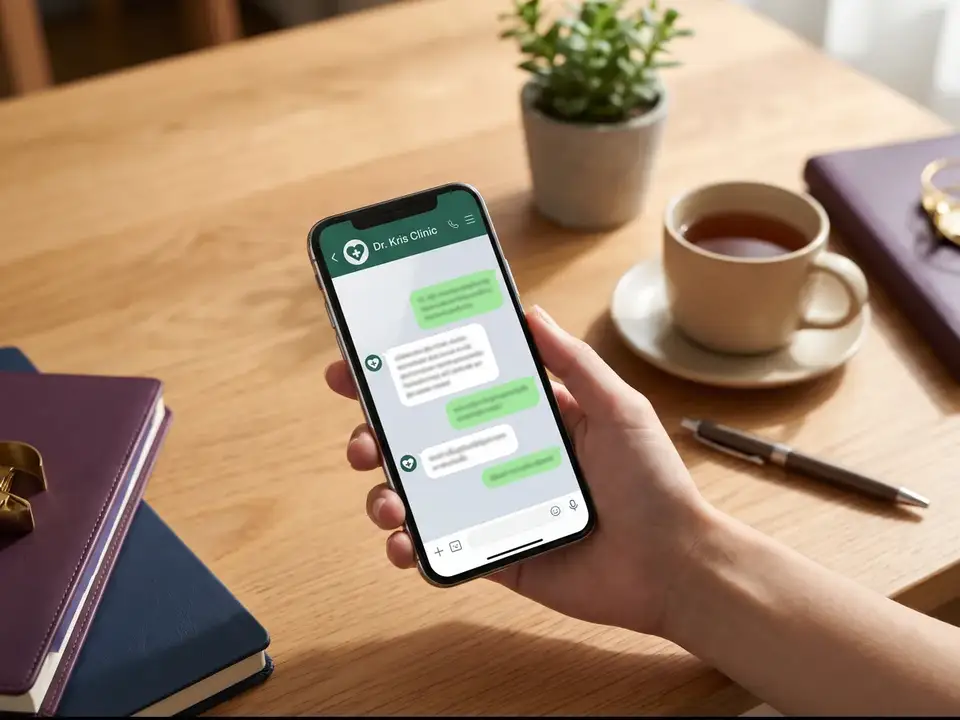 1Free 2-minute self-checkSexual-health self-check — see your result instantly and send it to the doctor if you like.Start the self-check →
 2See the steps and feesIndividual from 990 THB · couple 1,590 THB · 30–60 minutes, at the clinic or online via MCS Telemedicine.How a consultation works →
 3Book with the doctorPick a time online or message us on LINE. Come on your own or with your partner. Payment confirms the booking.Book online →
Self-checks are a guide only and do not replace a doctor's assessment. Outcomes vary from person to person, depending on the severity of symptoms, the complexity of the problem and other factors.
Confidential consultation with a clinical sexologist
Say what you haven't been able to say to anyone. We listen, assess and plan — or refer when needed.
Every medicine and service requires a doctor's assessment first.
Frequently asked questions
Is it abnormal to like being in control in bed?
No. Not if your partner consents, there are clear limits, the stop signal is respected and no one is distressed.
How is coercive sexual sadism different from sadism in general?
ICD-11 uses this term to make clear that the disorder is arousal from the suffering of non-consenting people. Role-play with a consenting partner is not a disorder.
What should I do if I have violent fantasies but have never acted on them?
Talk confidentially with a doctor now. Therapy helps you manage urges and reduce risk before anyone is harmed.
What if my partner hurts me and says it's BDSM?
If it was not agreed in advance, or you asked them to stop and they didn't, that is violence. You can get help from 1300 or 191.
อ่านบทความนี้เป็นภาษาไทย
ภาวะชอบกระทำ (Sexual Sadism Disorder): BDSM ต่างจากความรุนแรงอย่างไร →
References
- American Psychiatric Association. DSM-5-TR. 2022. Sexual Sadism Disorder.
- World Health Organization. ICD-11 MMS. 6D33 Coercive sexual sadism disorder.
- Krueger RB, Reed GM, First MB, et al. Proposals for Paraphilic Disorders in the ICD-11. Archives of Sexual Behavior. 2017;46(5):1529–1545.
- Joyal CC, Carpentier J. The Prevalence of Paraphilic Interests and Behaviors in the General Population. Journal of Sex Research. 2017;54(2):161–171.
- Thibaut F, et al. The WFSBP 2020 guidelines for the pharmacological treatment of paraphilic disorders. World Journal of Biological Psychiatry. 2020.
This article is for education and does not replace diagnosis or treatment by a doctor. If you have symptoms or concerns, please see a doctor.