Tops Don't Have to Be Masc: Sexual Roles, Personality and Real Appeal
Being a top or bottom isn't tied to masculinity, and using testosterone when your levels are normal won't make you more attractive the way you might hope, but it does carry real risks.



Key points
- Top, bottom and versatile are sexual roles; they say nothing about anyone's masculinity, personality or worth.
- Taking testosterone when your levels are normal is not recommended by medical guidelines and has harms such as infertility, thickened blood and acne.
- Appeal comes from confidence, communication, health and respect for your partner, all of which you can build safely.
Many gay patients come to me with a similar question: "Doctor, I'm a top, but I don't look masculine at all. My voice isn't deep and I'm a bit camp. Can I have hormone injections to look more butch?" I understand that feeling well, because on dating apps and in the gay scene itself there's a strong stereotype that "tops must be masc, muscular and deep-voiced". But before we talk about hormones, let's separate a few things clearly.
Sexual roles aren't personality, and they aren't identity
Top, bottom and versatile describe roles or preferences in sexual activity. They don't say how masculine someone is, and they don't say anything about gender identity.
- Some tops are gentle, camp, softly spoken and into fashion, and they're still great tops.
- Some bottoms are big, muscular and deep-voiced, and that's completely normal.
- Many people change roles depending on their partner and stage of life.
This fits the principle that gender expression is separate from orientation and roles (see gender identity and the axes of gender). Trying to squeeze yourself into a stereotype usually leaves you more stressed and less confident than before.
Sexual role
- Top
- Bottom
- Versatile
Expression
- Masculine
- Feminine
- Neutral or mixed
Build and voice
- Small or large frame
- Deep or high voice
A gentle top is still a good top, and many people switch roles with partners and life stages.
Why is the "tops must be masc" image so much pressure?
This image comes from old ideas that map traditional male–female roles onto relationships between two men, and it's reinforced by porn and by app profiles that say "masc only". As a result, people who don't fit the stereotype feel inferior, which is completely unnecessary stress.
The truth is that everyone likes different things. Plenty of people prefer a top who is gentle, communicates well and pays attention to his partner over one with big muscles or a deep voice.
Can I use testosterone to look more masculine?
This is where I need to be straight with you. If your testosterone level is normal, injecting or applying testosterone to "look masc" is not a treatment, and it is not recommended by the Endocrine Society (2018) or AUA (2018) guidelines. They advise testosterone replacement therapy (TRT) only for people who have symptoms together with blood tests confirming a genuinely low level.
Harms seen when it's used without a deficiency:
- The body stops making its own hormone, the testicles shrink and sperm count falls, which can make it hard to have children.
- Thickened blood (high haematocrit), raising the risk of clots.
- Acne, hair thinning from DHT, and mood swings.
- When you stop, there can be a hormone crash, with fatigue, low mood and reduced sex drive.
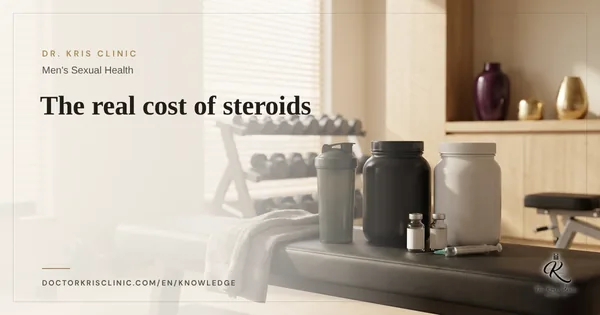
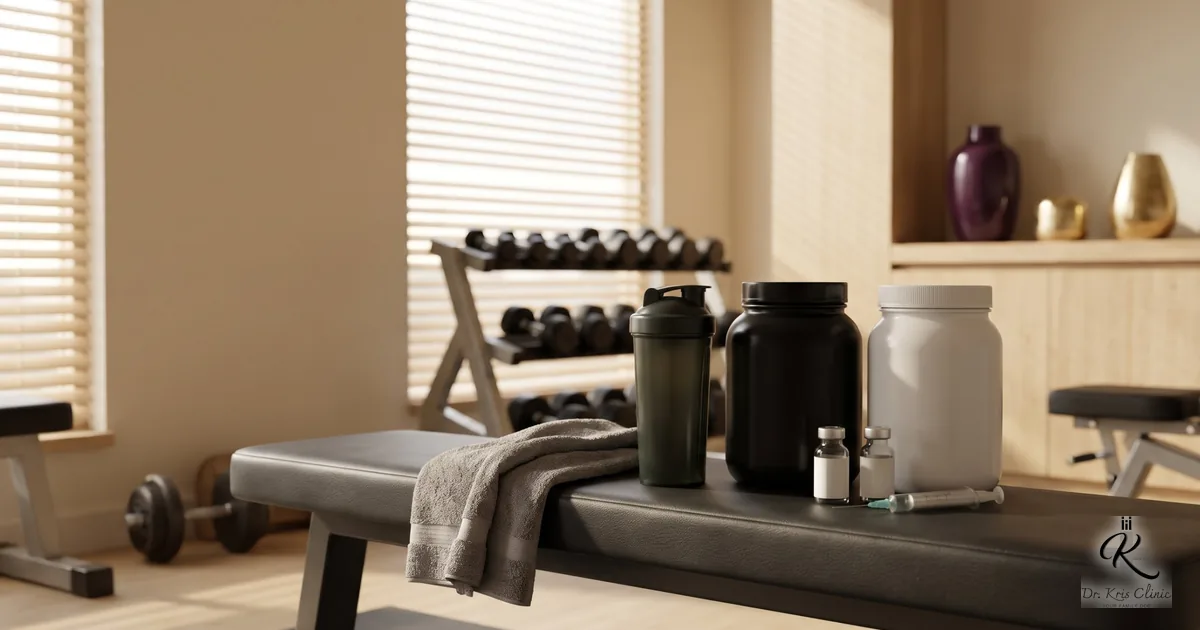
The TRAVERSE trial (2023), which eased concerns about heart risk, studied middle-aged men with genuinely low testosterone given treatment doses. It does not mean that use in men with normal levels, or high doses, is safe. Using steroids or PEDs to build muscle fast is riskier still (read steroids and PEDs).
Normal hormones, but want to look masculine
- Not a treatment; not advised
- Smaller testes, lower sperm count, infertility
- Thick blood, clot risk
- Acne, hair thinning, mood swings
Symptoms + truly low blood level
- TRT is an appropriate treatment
- Blood tests confirm before starting
- Regular follow-up by a doctor
Per Endocrine Society (2018) and AUA (2018) guidance.
Real appeal can be built without changing who you are
What makes someone attractive as a partner isn't just outward masculinity. From talking with many patients, the things people mention most often are:
- Self-confidence, without pretending to be someone else
- Communicating about sex, asking for consent and caring about your partner's feelings
- Good health, clean body odour, and looking after your skin and teeth
- Humour and gentleness
Read more perspectives in what makes a man attractive.
Want a better physique? Build it gradually
If you want muscles or a body shape you like, you can get there without hormones.
- Do weight or resistance training 3–4 days a week, increasing the load gradually.
- Eat enough protein, about 1.2–1.6 g per kg of body weight per day for people who train regularly (if you have kidney disease, check with a doctor first).
- Sleep 7–9 hours, which helps both muscle and hormones.
- Cut down on alcohol and avoid recreational drugs.
- Set goals in months, not weeks.
Details are in how much TRT helps muscle, and building muscle the right way and supporting testosterone through lifestyle.
When to talk with a doctor
- You feel unconfident about yourself or your sexual role to the point that it affects your relationships.
- You have problems with erections, ejaculating too quickly, or sex drive.
- You are using hormones or steroids you bought yourself and want to stop or have your safety checked.
- You want your hormones tested for peace of mind.
At Dr. Kris Clinic, I am a family physician who cares for sexual health and a clinical sexologist. We can talk about your body, hormones and confidence without judgement, at the clinic in Surat Thani or online, with English-speaking consultations available.
Want help with this? Three simple steps
Reading is a good start. When you are ready, check where you are, see how a consultation works, then book a time that suits you.
 1Free 2-minute self-checkSexual-health self-check — see your result instantly and send it to the doctor if you like.Start the self-check →
 2See the steps and feesIndividual from 990 THB · couple 1,590 THB · 30–60 minutes, at the clinic or online via MCS Telemedicine.How a consultation works →
 3Book with the doctorPick a time online or message us on LINE. Come on your own or with your partner. Payment confirms the booking.Book online →
Self-checks are a guide only and do not replace a doctor's assessment. Outcomes vary from person to person, depending on the severity of symptoms, the complexity of the problem and other factors.
Confidential consultation with a clinical sexologist
Say what you haven't been able to say to anyone. We listen, assess and plan — or refer when needed.
Every medicine and service requires a doctor's assessment first.
Frequently asked questions
Is a camp or feminine top abnormal?
Not at all. Sexual role and personality are different things. Feminine tops, masculine bottoms and versatile men are all part of natural diversity.
My hormones are normal, but I want testosterone injections to look more butch. Is that OK?
It isn't recommended. Medical guidelines advise testosterone only for men with a true deficiency. Using it with normal levels risks infertility and thickened blood, and stopping can cause a hormone crash.
How can I tell if my testosterone is really low?
You need symptoms together with blood tests: morning total testosterone measured on at least two occasions, and in some men SHBG or free testosterone too. It shouldn't be diagnosed from body shape or personality.
อ่านบทความนี้เป็นภาษาไทย
เกย์รุกไม่จำเป็นต้องแมน: บทบาททางเพศ บุคลิก และเสน่ห์ที่แท้จริง →
References
- Bhasin S, et al. Testosterone Therapy in Men With Hypogonadism: An Endocrine Society Clinical Practice Guideline. J Clin Endocrinol Metab. 2018;103(5):1715–1744.
- Mulhall JP, et al. Evaluation and Management of Testosterone Deficiency: AUA Guideline. J Urol. 2018;200(2):423–432.
- Lincoff AM, et al. Cardiovascular Safety of Testosterone-Replacement Therapy (TRAVERSE). N Engl J Med. 2023;389(2):107–117.
- Pope HG Jr, et al. Adverse health consequences of performance-enhancing drugs: an Endocrine Society scientific statement. Endocr Rev. 2014;35(3):341–375.
This article is for education and does not replace diagnosis or treatment by a doctor. If you have symptoms or concerns, please see a doctor.