Genderless Fashion: Gender Expression Is Freedom
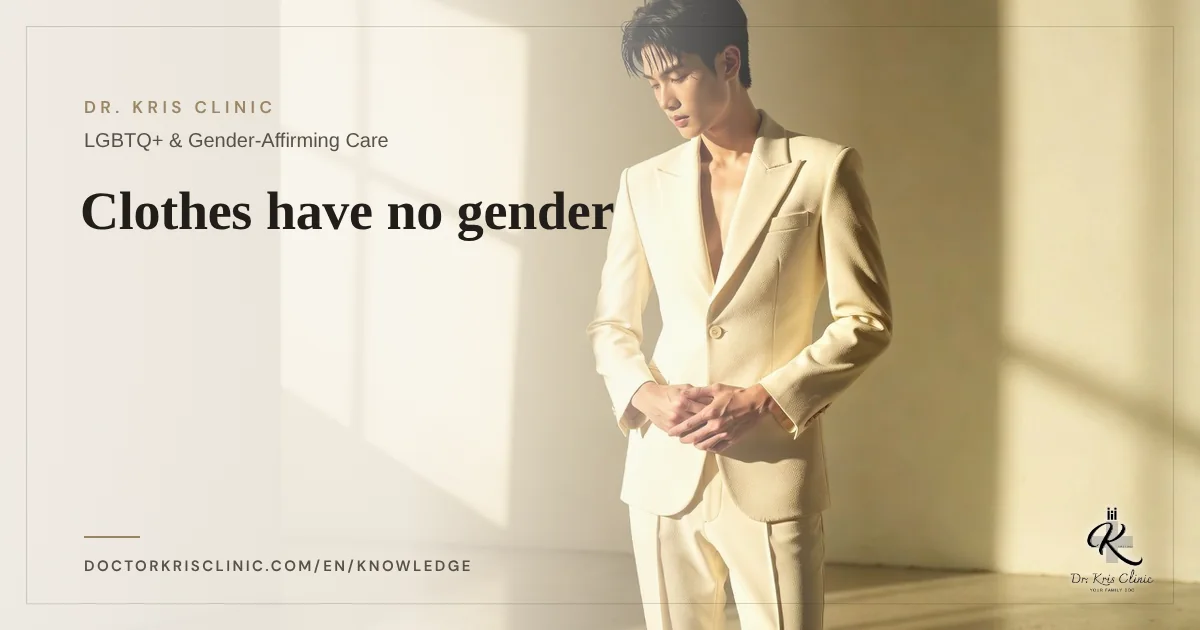
Skirts don't belong only to women, and suits don't belong only to men. Clothing is expression; it doesn't tell you someone's gender identity or sexual orientation.

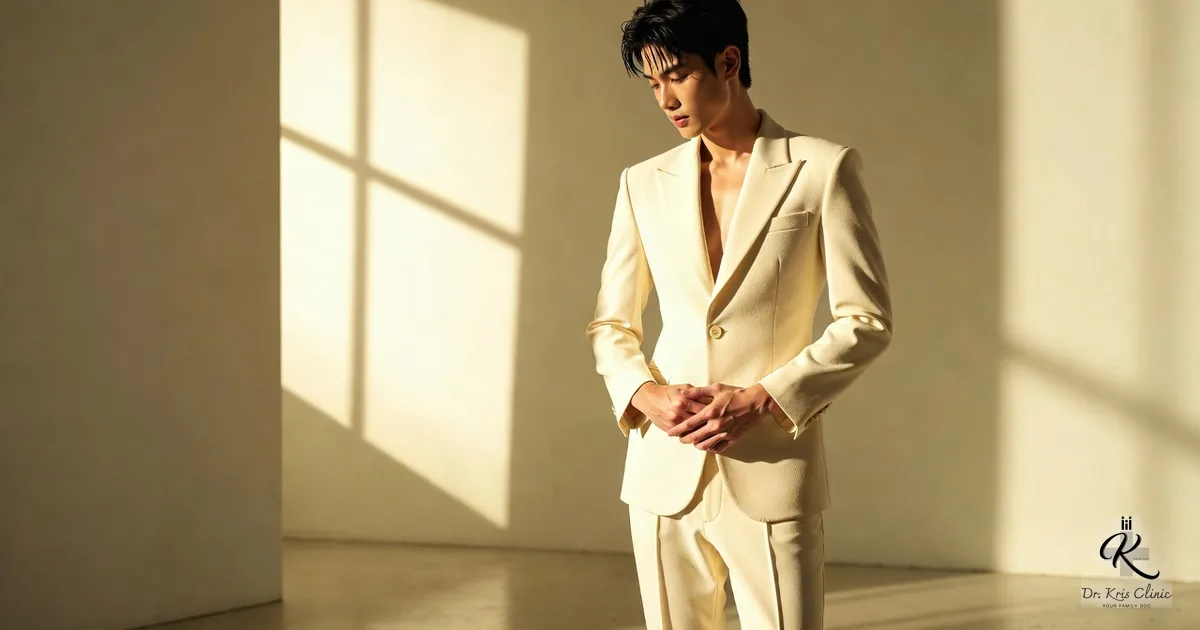
Key points
- Gender expression, such as clothing, hairstyle and mannerisms, is separate from gender identity and sexual orientation.
- Rules about who should wear what change across eras and cultures; they don't come from nature.
- Being able to dress as yourself without being judged on appearance reduces stress and is good for mental health.
I once met a mother who brought in her teenage son because she was worried that he liked pastel clothes, long hair and painted nails. "Doctor, is something wrong with him?" After we talked for a while, it turned out he simply liked that style of fashion. He identified as a boy and had no problem at all. What was really stressing him was the teasing from people around him.
This shows how often we use clothes as a "label" to guess other people's gender or sexuality, even though they tell us far less than we think.
What is gender expression?
Gender expression is how we present ourselves to the world through clothing, hairstyle, makeup, mannerisms, voice or nickname. It may lean towards what society sees as "masculine", "feminine", neutral or a mix.
Expression is one of the axes of gender and is independent of:
- Gender identity: who we feel we are inside
- Sexual orientation: who we are attracted to
- Sex assigned at birth: the body we were born with
A man who likes wearing skirts may be a man attracted to women. A woman who wears suits and short hair may have no wish to be a man (review the different axes in gender identity).
Where do "gendered clothes" come from?
Rules about who should wear what come from history, society and culture, not biology. Some clear examples:
- In 17th- and 18th-century Europe, it was normal for upper-class men to wear high heels, long wigs and stockings.
- In the past, young Western children of both sexes often wore similar dresses. Blue for boys and pink for girls only became widespread in the 20th century.
- In many Asian cultures, men have worn sarongs, wrap skirts or traditional skirt-like garments since ancient times. Thailand has the "chong kraben", a wrapped lower garment worn by both women and men.
- In many countries, women have only been widely accepted wearing trousers in public within the last hundred years or so.
Put simply: clothes "have a gender" because society decides they do, and what society decides can always change.
- 17th-18th centuryMen in heels and long wigs
High-status European men routinely wore heels and stockings
- In the pastYoung children in the same dresses
Western boys and girls were often dressed alike
- 20th centuryBlue for boys, pink for girls
Colour-coding by gender only became widespread in this era
- Under 100 yearsWomen in trousers widely
Many countries only recently accepted it in public
- TodayUnisex and genderless
Many brands and artists proudly dress beyond the frame
Clothes are "gendered" because society says so, not biology. Thailand has the jong kraben, worn by women and men.
Genderless isn't just a trend; it's freedom
Today many clothing brands release unisex or genderless collections, and many artists and idols proudly wear things once seen as "cross-dressing". But behind the trend, the real point is that people should be able to dress in the way that feels like themselves, without waiting for anyone's permission.
For trans and non-binary people, dressing in line with who they are can mean something deeper than fashion, because it helps reduce the sense of mismatch between body and identity (see non-binary, agender and pangender).
How does dressing as yourself relate to health?
From a doctor's point of view, this isn't just about style.
- Having to hide yourself all the time, for example dressing the way others expect even though you feel uncomfortable, is a form of chronic stress.
- Being teased or bullied because of your appearance is linked to depression, anxiety and social withdrawal, especially in teenagers.
- Studies in transgender people have found that being able to use a chosen name and being accepted in daily life are linked to fewer depressive symptoms and less suicidal thinking.
This means that not judging people by their clothes is also one way of caring for the mental health of the people around you.
If you're a parent or someone close
- Recognise that "my child likes dressing this way" doesn't always tell you their gender identity or sexual orientation.
- Ask with curiosity, for example "What do you like about this style?", instead of forbidding or mocking.
- If your child is teased at school, help them find ways to cope, rather than telling them "Stop dressing like that and they'll leave you alone."
- If your child opens up about their identity, listen first and judge later, or better still, don't judge at all.
Read more about talking with your child in sex education for teenagers: a guide for parents.
- 1Separate the issuesClothing doesn't always show identity or orientation
- 2Ask with interest"What do you like about this?" rather than banning or mocking
- 3Help them cope with teasingNot by telling them to stop dressing this way
- 4Listen firstIf they open up about identity, listen; don't rush to judge
When to seek help
If clothing or appearance becomes a source of suffering, for example being bullied to the point of not wanting to go to school or work, serious family conflict, or feeling that your body doesn't match who you are to an unbearable degree, talking with a doctor or sexologist can help. If you have thoughts of harming yourself, call 1323, Thailand's free 24-hour mental-health hotline (Thai language; ask for English support).
At Dr. Kris Clinic, I offer judgement-free counselling on identity, sexuality and family, both individually and as a family (see family therapy), in person in Surat Thani or online, in English if you prefer. If you are thinking about changing your body, read more in gender-affirming hormone therapy.
Want help with this? Three simple steps
Reading is a good start. When you are ready, check where you are, see how a consultation works, then book a time that suits you.
 1Free 2-minute self-checkSexual-health self-check — see your result instantly and send it to the doctor if you like.Start the self-check →
 2See the steps and feesIndividual from 990 THB · couple 1,590 THB · 30–60 minutes, at the clinic or online via MCS Telemedicine.How a consultation works →
 3Book with the doctorPick a time online or message us on LINE. Come on your own or with your partner. Payment confirms the booking.Book online →
Self-checks are a guide only and do not replace a doctor's assessment. Outcomes vary from person to person, depending on the severity of symptoms, the complexity of the problem and other factors.
Confidential consultation with a clinical sexologist
Say what you haven't been able to say to anyone. We listen, assess and plan — or refer when needed.
Frequently asked questions
Does a man who likes wearing skirts mean he's gay or trans?
Not necessarily. Clothing is expression, separate from sexual orientation and identity. A man who likes wearing skirts may be a man attracted to women.
How is genderless fashion different from unisex?
Unisex usually means neutral-cut clothing that anyone can wear, while genderless is a broader idea: no clothing should be tied to a gender, and anyone can wear anything.
My child likes dressing differently from their sex at birth. Should I take them to a doctor?
If your child is happy and well, there's nothing that needs treating. But if your child is distressed or being bullied, or you as a parent are worried to the point that it affects your relationship, family counselling can help.
อ่านบทความนี้เป็นภาษาไทย
เสื้อผ้าไม่มีเพศ: การแสดงออกทางเพศ (Gender Expression) คือเสรีภาพ →
References
- Coleman E, et al. Standards of Care for the Health of Transgender and Gender Diverse People, Version 8. Int J Transgend Health. 2022;23(Suppl 1):S1–S259.
- Russell ST, Pollitt AM, Li G, Grossman AH. Chosen name use is linked to reduced depressive symptoms, suicidal ideation, and suicidal behavior among transgender youth. J Adolesc Health. 2018;63(4):503–505.
- Paoletti JB. Pink and Blue: Telling the Boys from the Girls in America. Indiana University Press; 2012.
- Meyer IH. Prejudice, social stress, and mental health in lesbian, gay, and bisexual populations. Psychol Bull. 2003;129(5):674–697.
This article is for education and does not replace diagnosis or treatment by a doctor. If you have symptoms or concerns, please see a doctor.