Exhibitionistic Disorder: Wanting to Be Seen vs Exposing Others
Wanting to be looked at is common, but exposing your body to someone who did not agree is a violation. This article explains where the line is, the diagnostic criteria and the way forward.

Key points
- Exhibitionistic disorder means sexual arousal from exposing your genitals to an unsuspecting or non-consenting person, lasting at least 6 months.
- Showing your body to a consenting partner in private is not a disorder, but exposure in public to people who did not choose to see it is a violation and against the law.
- CBT and a relapse-prevention plan help, and it is best to seek help before anyone is harmed.
Many people enjoy being seen as attractive. Some like to dress in a way that shows off their figure, and some couples enjoy their partner looking at their body in the bedroom. All of this is an ordinary part of sexuality. But when the excitement comes from making someone who did not choose to see look at your body or genitals, it is no longer a private preference, because another person has been pulled in without their consent.
The clinic's older content once discussed "outdoor exhibitionism" as a form of self-exploration. I want to make this clearer: the thrill of risking that "someone might see" in a public place actually means turning strangers, who may include children, into part of a sexual activity they never agreed to. That is not safe exploration. This article is part of the Paraphilic Disorders series.
What is exhibitionistic disorder?
DSM-5-TR (2022) diagnoses exhibitionistic disorder when:
- There is intense, recurrent sexual arousal from exposing one's genitals to an unsuspecting person, shown through fantasies, urges or behaviour, lasting at least 6 months.
- The person has acted on these urges with a non-consenting person, or the urges cause clinically significant distress or impairment in daily life.
Clinicians also specify whether the arousal comes from exposure to prepubertal children, to adults, or to both. This matters for risk assessment and child protection (see Pedophilic disorder: prevention and getting help). Other specifiers are "in a controlled environment" and "in full remission" (no acting on urges and no distress for at least 5 years). ICD-11 classifies it as 6D30 Exhibitionistic disorder.
DSM-5-TR estimates that the disorder may affect around 2–4% of men, and it is much less common in women.
A preference vs a condition that needs treatment
| Not this disorder | Fits a condition that needs treatment |
|---|---|
| Showing your body to a consenting partner in private | Exposing your genitals to strangers who did not expect it |
| Dressing sexily because you like it | Intending to shock or upset others and being aroused by their reaction |
| Adults who communicate and consent clearly | Sending genital images to people who did not ask, or exposing yourself on camera without the other person's consent |
| Fantasising without acting, with normal daily life | Frequent urges you cannot stop, having been caught or nearly caught |
Sending explicit images to people who did not ask for them (unsolicited explicit images) is a digital-age form of exposure to a non-consenting person, and it may count as sexual harassment under the law.
Not this disorder
- Expression with a consenting partner in private
- Dressing to your taste
- Adults who communicate and clearly consent
- Fantasy that is not acted on
Meets criteria for treatment
- Exposing to unsuspecting strangers
- Arousal from the other person's shock or discomfort
- Sending sexual images to people who didn't ask
- Frequent urges that can't be stopped
The line is people who did not choose to see it and were drawn in without consent.
The impact on victims, and Thai law
People who experience this, especially women and children, often feel shocked, frightened and threatened, and some remain anxious in public places for a long time afterwards. For children, the experience is harmful and they need proper care and support.
Legally, nudity or indecent acts in public are an offence under Section 388 of the Thai Criminal Code. Since 30 December 2025, the amended Criminal Code (Amendment No. 30) has created a specific offence of sexual harassment (Section 284/1). It covers physical acts, gestures and electronic channels, with heavier penalties when the act happens in public, online, or involves a child under 15.
If you have this interest, how can you look after yourself?
Wanting to be looked at is understandable, and it can be met safely within the limits of consenting adults and private spaces: for example, talking with your partner about fantasies, or expressing it with a willing partner. Read more in Sexual fantasies: are they normal and how to talk with your partner, and about consent in Group sex and sex outside the home: consent and safety.
But if the arousal depends on the other person being unaware or not having chosen, that is a sign to seek help. "Safe" alternatives will not satisfy this kind of urge, and the risk usually grows over time.
Assessment and treatment
Assessment is confidential. It covers the pattern, frequency, triggers (such as stress, drinking or loneliness), who is involved, and co-occurring conditions such as depression, anxiety or substance use. Some people also have another paraphilia, such as voyeuristic disorder.
Psychological therapy is the first-line approach.
- CBT to understand the cycle of "trigger, thought, urge, action" and practise breaking it.
- A relapse-prevention plan, for example identifying risky times and places, changing travel routes, managing stress in other ways, and having someone you trust.
- Building empathy for victims and relationship skills, so that sexual needs can be met in consenting relationships.
Medication, such as SSRIs or hormone-lowering drugs, is considered only for some people according to their risk level, following the WFSBP (2020) guidelines, and only under a psychiatrist's care.
- 1TriggerStress, drinking, loneliness
- 2ThoughtsSelf-justifying thinking
- 3UrgeStrengthening desire
- 4ActionThe point to stop and choose another path
Along with a relapse prevention plan and empathy training for those affected.
Where to get help
- Talk confidentially with a doctor or clinical sexologist. See When to see a clinical sexologist.
- 1323, Thailand's free mental-health hotline (Thai language; ask for English support), if you are distressed or afraid you might lose control.
- If you or your child has been a victim, call the police on 191 and get help from 1300 (Thailand's social assistance and child protection hotline).
Dr. Kris Clinic offers clinical sexology consultations, initial screening and referral to a psychiatrist when needed, both at the clinic and online, with English-speaking consultations available. Coming in before anyone is affected is the best decision you can make.
Want help with this? Three simple steps
Reading is a good start. When you are ready, check where you are, see how a consultation works, then book a time that suits you.
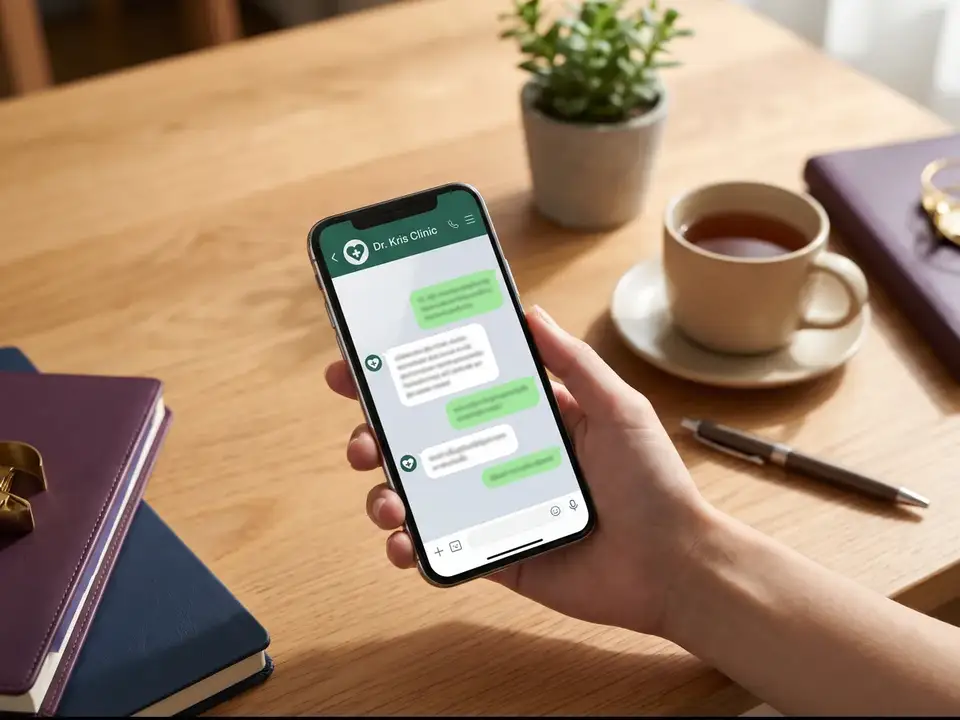 1Free 2-minute self-checkSexual-health self-check — see your result instantly and send it to the doctor if you like.Start the self-check →
 2See the steps and feesIndividual from 990 THB · couple 1,590 THB · 30–60 minutes, at the clinic or online via MCS Telemedicine.How a consultation works →
 3Book with the doctorPick a time online or message us on LINE. Come on your own or with your partner. Payment confirms the booking.Book online →
Self-checks are a guide only and do not replace a doctor's assessment. Outcomes vary from person to person, depending on the severity of symptoms, the complexity of the problem and other factors.
Confidential consultation with a clinical sexologist
Say what you haven't been able to say to anyone. We listen, assess and plan — or refer when needed.
Every medicine and service requires a doctor's assessment first.
Frequently asked questions
Is it abnormal to like showing my body to my partner?
No. If your partner consents and you are in a private space, it is not a disorder. The disorder refers to exposure to people who are unaware or have not consented.
What about sex in an open place where no one can see?
A public place is somewhere other people, including children, may pass by and see without choosing to. That carries a risk both of violating others and of breaking the law. I recommend keeping it to a private space where everyone involved has consented.
What does it count as to send genital photos to someone who didn't ask?
It is exposure to a non-consenting person. It makes the recipient feel harassed and may count as sexual harassment under Thai law in force since late 2025.
Can this condition be treated?
CBT and a relapse-prevention plan help people control the behaviour well. The earlier you start, the better it works.
อ่านบทความนี้เป็นภาษาไทย
ภาวะชอบเปิดเผยอวัยวะเพศ (Exhibitionistic Disorder) และการชอบโชว์ →
References
- American Psychiatric Association. DSM-5-TR. 2022. Exhibitionistic Disorder.
- World Health Organization. ICD-11 MMS. 6D30 Exhibitionistic disorder.
- Joyal CC, Carpentier J. The Prevalence of Paraphilic Interests and Behaviors in the General Population. Journal of Sex Research. 2017;54(2):161–171.
- Thibaut F, et al. The WFSBP 2020 guidelines for the pharmacological treatment of paraphilic disorders. World Journal of Biological Psychiatry. 2020.
- Thai Criminal Code, Section 388, and the Act Amending the Criminal Code (No. 30) B.E. 2568 (2025), Section 284/1 (in Thai)
This article is for education and does not replace diagnosis or treatment by a doctor. If you have symptoms or concerns, please see a doctor.