
How feminising hormones work
For trans women and transfeminine people, gender-affirming hormone therapy usually uses estradiol, the same estrogen the female body produces, with androgen suppression when needed, tailored to each person's goals and safety.[1]
In Thailand and elsewhere, many trans women start by buying contraceptive pills or hormones on their own, often at a young age. Understanding the difference between safer and riskier regimens matters a great deal.
Why the right regimen matters
An appropriate regimen achieves the changes you want safely and sets realistic expectations.[1] Some medicines commonly used without supervision carry unnecessary risk, especially contraceptive pills containing ethinyl estradiol, which raises clot risk more than estradiol.
Very high doses do not reliably make breasts grow faster or larger, but they do increase clot risk and other side effects.
Every path is valid
Using gender-affirming hormones is not a measure of mental illness, and needs vary with goals and access to care.[3] Some people want full physical change, some only certain changes, and some do not want hormones at all.
Expected changes
Estradiol and androgen suppression affect breasts, fat, skin and sexual function.[1],[2]
- In the first few months: softer, less oily skin, reduced libido and morning erections, and early breast growth that may be tender.
- Over months to years: continued breast growth, usually reaching its full extent over two to three years; fat moving to hips and thighs; reduced muscle; finer body hair; smaller testes.
- What hormones do not change: they do not raise the pitch of the voice and do not remove established facial hair. Voice training and hair removal are helpful additions.
- Fertility: sperm production falls sharply and may not fully recover.
What is assessed before choosing a regimen
Your doctor reviews your goals, personal and family history of blood clots, smoking, medical conditions such as liver disease, migraine and heart disease, current medicines including self-sourced hormones, and fertility plans.[1],[2]
Blood tests depend on the regimen, such as estradiol and testosterone levels, and potassium and kidney function for people taking spironolactone. The Endocrine Society recommends estradiol in the premenopausal female range and testosterone in the female range.[2]
Choosing and monitoring a regimen
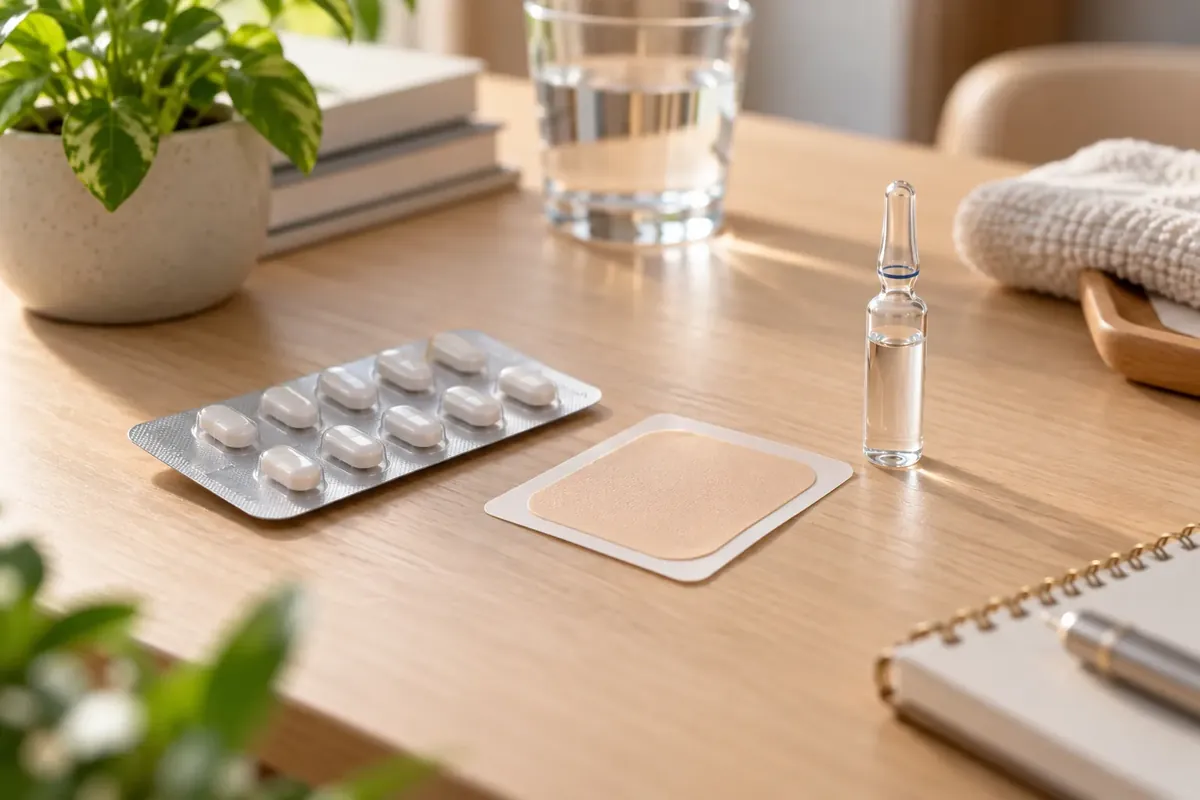
Estradiol comes as tablets, gels or patches, and injections. The choice depends on clot risk, medical history, other medicines and practical follow-up.[1],[2]
Androgen-lowering medicines such as spironolactone or cyproterone acetate are not needed in the same way by everyone, and are usually unnecessary after removal of the testes. Each has its own side effects, so the lowest effective dose should be used under medical monitoring.[1],[2]
Contraceptive pills are not a substitute. Pills containing ethinyl estradiol are not recommended for gender-affirming therapy, because they increase clot risk and their levels cannot be measured to guide dosing.[1],[2]
Discuss fertility first. Anyone who may want biological children should consider banking sperm before starting hormones.[1]
How we care for you at Dr. Kris Clinic
We care for trans women with respect, using your chosen name and pronouns, privately, in English or Thai. We plan a regimen that fits your goals and risks, order only necessary blood tests, and follow you up regularly.
If you already use contraceptive pills or self-sourced hormones, we will help you move to a safer regimen without judgement. If you would like advice on sperm banking or surgery, we can arrange referral.
Frequently asked questions
Can I use the contraceptive pill instead of hormones?
It is not recommended. Contraceptive pills contain ethinyl estradiol, which raises clot risk more than estradiol, and levels cannot be monitored.
When will my breasts grow?
Growth usually begins in the first few months and reaches its full extent over about two to three years. Final size varies.
Will hormones raise my voice?
No. Voice training with a specialist can help.
I smoke. Can I take hormones?
Smoking greatly raises clot risk. Try to stop, and your doctor may choose a lower-risk route such as gel or patches.
Transfeminine hormones should be chosen and monitored with a doctor so that the changes you want happen safely.[1] Contraceptive pills containing ethinyl estradiol are not a substitute for gender-affirming hormone therapy.
Talk to a doctor about this
Confidential care in Surat Thani, the mainland gateway to Koh Samui, Koh Phangan and Koh Tao. Tue–Fri 17:00–20:00 · Sat–Sun 10:00–15:00 (UTC+7)
Book a visit LINE @dr.krisclinic WhatsAppYour appointment is confirmed once the booking system or the clinic confirms it.

Dr. Krida Uakridathikarn (Dr. Kris)
Board-certified family physician with certificate training in clinical sexology and sexual medicine. He works at Suratthani Hospital and provides sexual health, hormone and LGBTQ+ inclusive care at Dr. Kris Clinic. Profile and CV
References
- WPATH Standards of Care, Version 8 (2022)
- Endocrine Society: Gender Dysphoria/Gender Incongruence (2017)
- WHO: Gender incongruence and transgender health in ICD-11
Keep reading
Main guide: Gender-affirming care
 Preparing for Gender-Affirming Hormone Therapy (GAHT)
 Testosterone for Trans Men and Transmasculine People
 Oral, Transdermal and Injectable Estrogen: How They Differ and Which Is Safer
This article is general education, not personal medical advice or a promise of results. Diagnosis and treatment require assessment by a doctor. Content reflects the cited sources as of the update date.