Estrogen comes in several forms
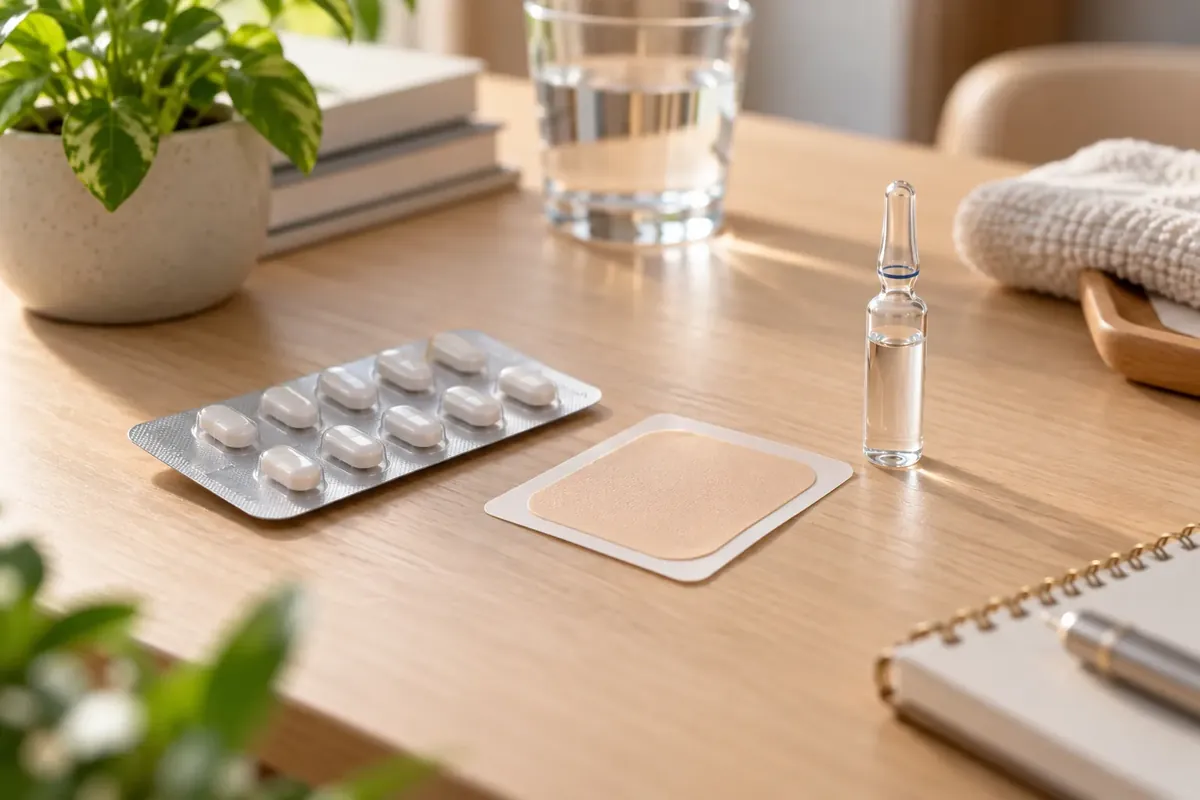
Estradiol, the main estrogen used in gender-affirming care for trans women, comes as tablets, as transdermal gels or patches, and as intramuscular injections. Each is absorbed differently and produces a different pattern of blood levels.[1]
No route is best for everyone. The choice depends on health risks, daily life and what is available locally.[1],[2]
Why the route matters
Routes differ not only in convenience but in risk, especially the risk of blood clots, the most important side effect of estrogen.[1] Each route also produces a different rise-and-fall pattern, which affects how people feel and how treatment is monitored.
The choice is individual
Using gender-affirming hormones is not a measure of mental illness, and needs vary with goals and access.[4] Available products also vary between countries. In Thailand, tablets are the easiest to obtain, while gels and patches may cost more and be harder to find.
How each route works
Oral estradiol passes through the liver before reaching the circulation (first-pass). The liver is exposed to high estrogen levels, which increases production of clotting proteins, so clot risk is higher than with transdermal routes.[1],[2] The same principle is seen in menopause hormone therapy, where NICE guidance notes that transdermal estrogen carries a lower clot risk than oral.[3]
Transdermal gel or patches are absorbed through the skin directly into the bloodstream without first passing the liver, with fairly steady levels. This makes them a good choice for people at higher clot risk, such as older people or smokers.[1],[2]
Injectable estradiol produces high levels after an injection that then fall, so levels fluctuate more. Some people notice mood or symptoms changing with the cycle.[1],[2]
What is assessed before choosing
Your doctor reviews personal and family history of blood clots, migraine (especially with aura), smoking, age and conditions such as liver disease, high blood pressure and heart disease.[1],[2]
Blood tests must be timed to the route: for injections, the time since the last dose matters, and with gel, blood should not be drawn near the application site, which gives a falsely high result.[2]
Choosing and switching routes safely
Doses cannot be converted one-to-one, because each route is absorbed differently. Switching should be planned with your doctor, with hormone levels rechecked afterwards.[1],[2]
Factors that favour transdermal estradiol include older age, smoking, a history of clots, migraine or liver disease. People without these risk factors may use tablets appropriately with monitoring.[1],[2]
Use verifiable medical supplies. Licensing and availability differ between countries. Use medicines from a verifiable medical source rather than unregulated products such as injections bought online of unknown origin.[1]
How we care for you at Dr. Kris Clinic
We explain the pros and cons of each route in the context of your health and lifestyle, assess clot risk and help choose a route that is safe and practical, in English or Thai. If you want to switch, we plan the change and time follow-up blood tests correctly.
If you are using injections from another source, we will review them without judgement and help make your treatment safer.
Frequently asked questions
Which route works best?
All routes work well at appropriate doses. The main differences are risk, convenience and how much levels fluctuate.
Why might my doctor suggest patches or gel?
They bypass the liver, so clot risk is lower than with tablets, which suits smokers, older people or those with other risk factors.
Can I inject at home?
Use only medicines your doctor prescribes and learn the correct technique. Do not buy injections of unknown origin.
Is a higher estradiol level better?
No. Very high levels raise clot risk without reliably improving changes. The aim is the guideline range.
Each estrogen route has different risks and conveniences, so choose based on individual risk and goals.[1] Never convert doses between routes yourself, and switch only according to a plan agreed with your doctor.
Talk to a doctor about this
Confidential care in Surat Thani, the mainland gateway to Koh Samui, Koh Phangan and Koh Tao. Tue–Fri 17:00–20:00 · Sat–Sun 10:00–15:00 (UTC+7)
Book a visit LINE @dr.krisclinic WhatsAppYour appointment is confirmed once the booking system or the clinic confirms it.

Dr. Krida Uakridathikarn (Dr. Kris)
Board-certified family physician with certificate training in clinical sexology and sexual medicine. He works at Suratthani Hospital and provides sexual health, hormone and LGBTQ+ inclusive care at Dr. Kris Clinic. Profile and CV
References
- WPATH Standards of Care, Version 8 (2022)
- Endocrine Society: Gender Dysphoria/Gender Incongruence (2017)
- NICE NG23: Menopause—identification and management; recommendations
- WHO: Gender incongruence and transgender health in ICD-11
Keep reading
Main guide: Gender-affirming care
 Preparing for Gender-Affirming Hormone Therapy (GAHT)
 Testosterone for Trans Men and Transmasculine People
 Hormones for Trans Women and Transfeminine People: Safe Regimens and What to Expect
This article is general education, not personal medical advice or a promise of results. Diagnosis and treatment require assessment by a doctor. Content reflects the cited sources as of the update date.