

How erections and the heart are linked
Many men are surprised when a doctor asks about blood pressure, blood sugar and cholesterol during a consultation about erections. Medically, the two topics are closely connected. An erection is a vascular event: with sexual stimulation, the arteries of the penis must widen quickly so blood can rush in. If the artery lining is not working well, not enough blood arrives and the erection is weaker or does not last.[1]
The European Association of Urology (EAU) guideline states that ED significantly increases the risk of cardiovascular disease, coronary heart disease, stroke and atrial fibrillation, and shares their risk factors.[1] For some men, then, ED is not only about sex. It is the first door showing that it is time to look after the blood vessels of the whole body.
Why this matters
The helpful side of this connection is that ED often brings men to a doctor who would otherwise never have a check-up. Many working-age men do not know they have high blood pressure, rising blood sugar or abnormal cholesterol, because these conditions are usually silent. New ED is therefore an opportunity to uncover hidden cardiovascular risk before a serious event.[1]
The reverse is also true: improving vascular health often improves erections. Men who feel little motivation to stop smoking or exercise for their heart often find new motivation when they learn the same steps help sexual performance. The two goals point the same way.
How common is it, and how to read the numbers
ED becomes more common with age and with each additional vascular risk factor, such as diabetes, high blood pressure, high cholesterol, smoking and obesity.[1] It is important to read this correctly: having ED does not mean you already have heart disease, and the prevalence of ED is not the prevalence of coronary disease.
What matters in practice is that ED in younger and middle-aged men without another clear cause deserves a serious vascular risk assessment. In older men with several conditions, ED is usually one part of a wider picture that needs ongoing care.
The shared mechanism
The inner lining of blood vessels, the endothelium, produces nitric oxide, which tells the vessel to relax. When this lining is damaged by high glucose, high blood pressure, cholesterol, tobacco smoke or chronic inflammation, vessels widen less well. This is called endothelial dysfunction, and it happens throughout the body at the same time.[1],[2]
Penile arteries are smaller than coronary arteries, so reduced blood flow often shows there first while the larger heart arteries are still silent. As fatty plaque (atherosclerosis) builds up, the effects can extend to the heart and brain.[1],[2] Erections that weaken gradually in every situation are the pattern that should make doctors think about a vascular cause.
Which checks are needed
Assessment starts with a careful history: the pattern of ED, smoking, physical activity, medical conditions, medicines, family history of heart disease, and any symptoms that might suggest heart disease, such as chest pain or breathlessness on exertion.[1],[2]
Recommended basic checks include blood pressure, weight and waist measurement, fasting glucose or HbA1c, and a lipid profile if these have not been done in the past 12 months.[1] With this information, the doctor estimates overall cardiovascular risk and judges whether the heart is fit enough for sexual activity.
Not everyone needs specialised tests such as an exercise stress test or coronary calcium scan. These are reserved for people with symptoms or high risk, based on clinical judgement.[1],[2] Anyone with chest pain or unstable heart disease should have a cardiac assessment before ED treatment begins.
Caring for the heart and erections together
Lifestyle change gives the best return. Regular exercise and weight loss improve erectile function, according to high-level evidence.[1] The World Health Organization recommends that adults do at least 150–300 minutes of moderate-intensity activity a week, plus muscle-strengthening on at least two days.[3] Stopping smoking, drinking less alcohol and sleeping well also help blood vessels recover.
Treat related conditions consistently. Taking blood pressure, diabetes and cholesterol medicines as prescribed slows damage to blood vessels. If you suspect one of your regular medicines is affecting erections, do not stop it yourself; ask your doctor whether it can be adjusted.
ED medicines are safe for most men. PDE5 inhibitors such as sildenafil and tadalafil can be used by men with stable heart disease after assessment, but must never be combined with nitrates or nicorandil, used for angina, because blood pressure can fall severely.[1],[2]
How we care for you at Dr. Kris Clinic
As family physicians, we see ED as part of whole-person health. Men who consult us about erections have their blood pressure checked, weight and waist assessed, and only the blood tests that matter. We then explain your heart risk in plain language, in English or Thai.
If we find risk, we plan care for both issues together: treatment for ED, realistic lifestyle goals, and ongoing monitoring of blood pressure or glucose. If further cardiac testing is needed, we arrange an appropriate referral.
Frequently asked questions
Does ED mean I already have heart disease?
No. ED does not establish heart disease, but it is a signal to assess vascular risk properly, including blood pressure, glucose, cholesterol and smoking.
I have heart disease. Can I use ED medication?
Most men with stable heart disease can, after medical assessment. They must never be combined with nitrates or nicorandil.
Does exercise really help erections?
Yes. Regular exercise and weight loss improve erectile function according to medical evidence, and they protect the heart at the same time.
Does everyone need a stress test?
No. Specialised tests are only for people with symptoms or high risk, as judged by the doctor.
ED does not establish heart disease, but it is an important opportunity for appropriate vascular risk assessment.[1] Looking after blood pressure, glucose, cholesterol, physical activity and smoking helps both the heart and sexual function at the same time.
Talk to a doctor about this
Confidential care in Surat Thani, the mainland gateway to Koh Samui, Koh Phangan and Koh Tao. Tue–Fri 17:00–20:00 · Sat–Sun 10:00–15:00 (UTC+7)
Book a visit LINE @dr.krisclinic WhatsAppYour appointment is confirmed once the booking system or the clinic confirms it.

Dr. Krida Uakridathikarn (Dr. Kris)
Board-certified family physician with certificate training in clinical sexology and sexual medicine. He works at Suratthani Hospital and provides sexual health, hormone and LGBTQ+ inclusive care at Dr. Kris Clinic. Profile and CV
References
- EAU Guidelines 2026: Management of Erectile Dysfunction
- Chung et al. USANZ/AChSHM ED guideline. Med J Aust. 2022;217:318–324. doi:10.5694/mja2.51694
- WHO: Physical activity recommendations
Keep reading
Main guide: Men's sexual health
 Erectile Dysfunction (ED): Causes, Tests and Treatments That Work
 What Morning Erections Tell You About Your Health
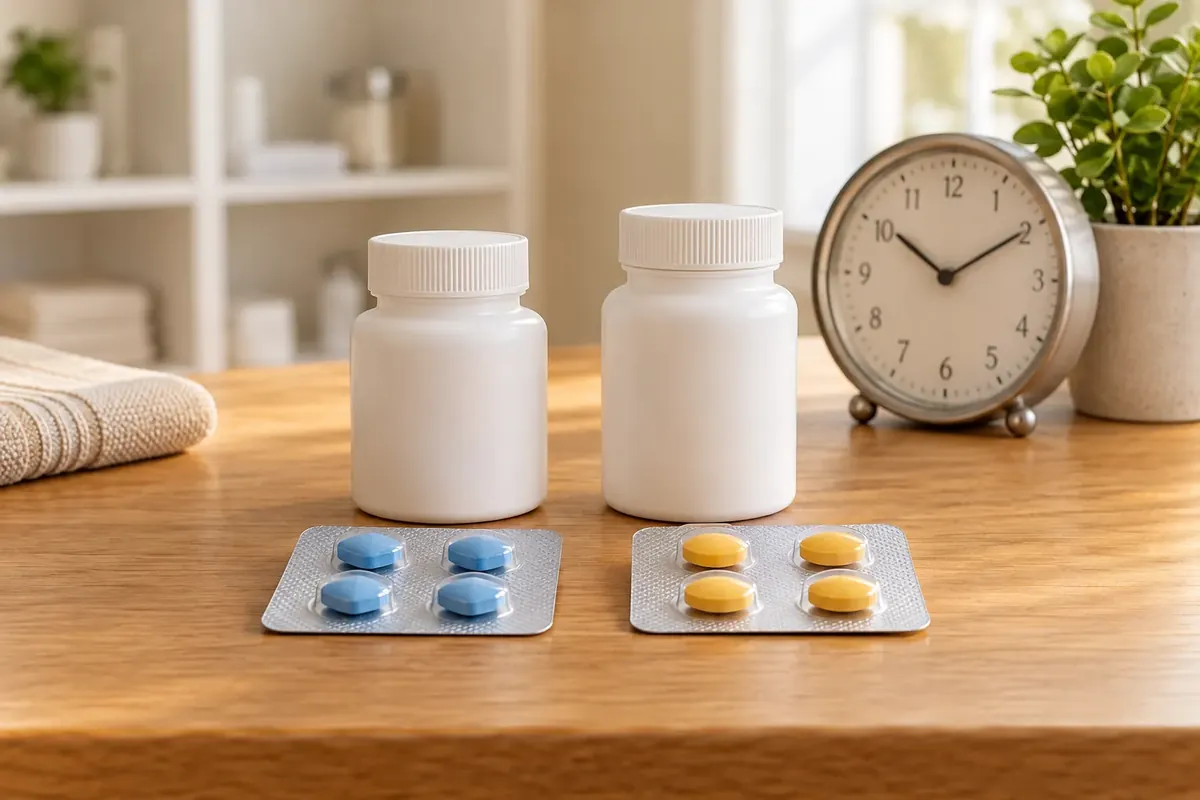 Tadalafil vs Sildenafil: How They Differ and How to Choose
This article is general education, not personal medical advice or a promise of results. Diagnosis and treatment require assessment by a doctor. Content reflects the cited sources as of the update date.