DHT and Genetic Hair Loss: Does Hair PRP Really Work?
Hair loss worries many men who rarely talk about it. Understanding how DHT works helps you choose treatments that really work and avoid wasting time.



Key points
- In genetically sensitive follicles, DHT shrinks hair over time (androgenetic alopecia); people with thinning hair usually don't have higher hormones, but more sensitive follicles.
- Finasteride and minoxidil (topical or low-dose oral) have the best evidence and need 6–12 months to judge; finasteride has sexual and mood side effects to know about, and halves PSA.
- Hair PRP may help density slightly to moderately and works best as an add-on; DHT shampoos, biotin and most hair supplements don't help genetic hair loss.
Hair loss is something many men worry about but rarely talk about. Some start noticing in their 20s that their hairline is receding or the crown is thinning, then begin buying shampoos and supplements of every brand. I'd like you to understand the mechanism first, because it will help you choose what actually works and not waste your time.
What is DHT, and how is it related to hair loss?
DHT (dihydrotestosterone) is a hormone the body converts from testosterone using the enzyme 5-alpha reductase. DHT is several times more potent than testosterone and plays a role in the development of the male genitals, the prostate and body hair.
In people with sensitive genetics, hair follicles at the front and crown of the scalp respond to DHT by gradually shrinking (miniaturization). The growth phase gets shorter, and hairs become thinner and shorter until the follicle stops working. This condition is called androgenetic alopecia (genetic, hormone-related hair thinning), and it affects both men and women.
The key point is that people with thinning hair don't have higher hormone levels than others; their hair follicles are more sensitive. In people using TRT or masculinizing hormones, DHT rises along with testosterone, so thinning may happen faster if the genetic tendency is already there.
- 1TestosteroneThe male hormone in the body
- 25-alpha reductaseEnzyme that turns testosterone into DHT
- 3Sensitive folliclesFront and mid-scalp, in genetically prone people
- 4Follicles shrinkShorter growth cycle; finer, shorter hair (miniaturization)
- 5Follicles go dormantIf left untreated
People with thinning hair don't have higher hormones; their follicles are more sensitive.
Rule out other types of hair loss first
Not all hair loss comes from DHT. A doctor should rule out other treatable causes, such as:
- Hair shedding after illness, high fever, surgery or severe stress (telogen effluvium), which affects the whole scalp and usually recovers on its own
- Iron deficiency or thyroid problems
- Patchy hair loss (alopecia areata)
- Secondary syphilis, which causes a "moth-eaten" patchy hair loss; see Syphilis: symptoms, stages and testing
- Fungal infection of the scalp, or hair loss from tight hairstyles (traction alopecia)
Treatments with good evidence
| Treatment | How it works | Good to know |
|---|---|---|
| Oral finasteride 1 mg | Blocks 5-alpha reductase, reducing scalp DHT by about 60–70% | Stops shedding in most men and regrows hair in many. Must be taken continuously; if stopped, thinning returns within 6–12 months. |
| Topical minoxidil 5% | Widens blood vessels and lengthens the growth phase | Shedding may increase temporarily in the first 2–8 weeks. Must be used every day. |
| Low-dose oral minoxidil | Same mechanism, more convenient | Supporting evidence has grown a lot recently. Off-label use; may cause body hair growth, palpitations or swelling. Must be under a doctor's care. |
| Dutasteride | Blocks 5-alpha reductase more broadly | Used off-label in some cases; stays in the body for a long time |
| Hair transplant | Moves follicles from the back of the head | Suitable once thinning is stable; medicine is still needed to keep existing hair |
Most treatments need at least 6–12 months before you can judge the result. Taking photos from the same angle every 3 months tracks progress better than your impression.
Finasteride: side effects you need to know
Finasteride has good evidence, but there are side effects you should know about before starting:
- Sexual effects, such as lower desire, weaker erections and less semen, occur in a minority and usually improve when the medicine is stopped. There are reports of some people whose symptoms persist after stopping, which is still being studied.
- Mood: in 2025 the European Medicines Agency (EMA) reviewed the data and concluded that suicidal thoughts are a possible side effect of oral finasteride. Users should keep an eye on their mood, and if they feel depressed or have thoughts of self-harm, stop the medicine and see a doctor immediately (in Thailand, call the free 24-hour mental-health hotline 1323; Thai language, ask for English support).
- PSA levels fall by about half, so always tell your doctor when your prostate is checked.
- Anyone who is pregnant should not handle broken or crushed tablets, as this may affect the genitals of a male baby.
Read more, including its use in trans women, in What is finasteride? If you already have erection problems, talk to a doctor before starting and read Erectile dysfunction (ED).
Hair PRP: how much does it help?
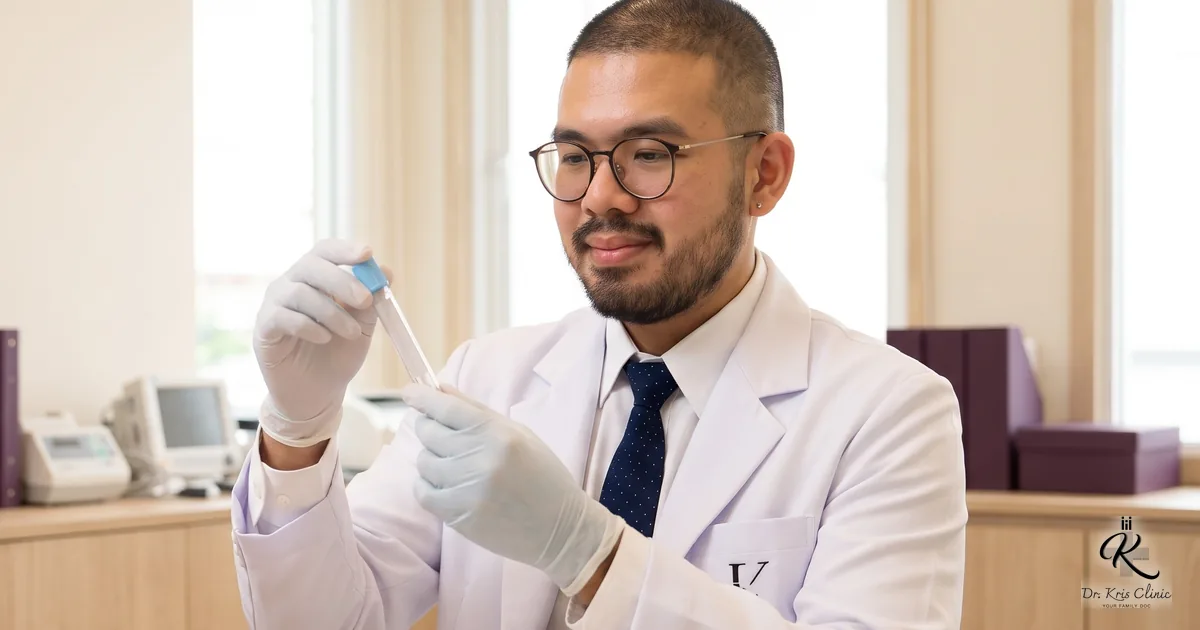
PRP (platelet-rich plasma) means taking your own blood, spinning it to separate concentrated platelets, and injecting them into the scalp so the growth factors support the hair follicles.
What the evidence says:
- Several small studies and pooled analyses found that PRP may increase hair density slightly to moderately
- But preparation methods, concentration, number of sessions and intervals vary widely, which makes comparison difficult, and there is still no single standard
- Results are usually not permanent and need repeating periodically
- Typically it is done once a month for 3–4 sessions, then boosted every 3–6 months
So I suggest PRP is best used as an add-on to medicine, or for people who can't use medicine. It shouldn't replace treatments with better evidence. Side effects are usually minor, such as pain, swelling and bruising. People with low platelets, on blood thinners, or with a scalp infection shouldn't have it. The thinking is similar to PRP for ED: there is hope, but we still need stronger evidence.
Things that don't really help
DHT-blocking shampoos, biotin, collagen and most hair supplements have no evidence of helping genetic hair thinning, except in people who are genuinely deficient in a nutrient. High-dose biotin also interferes with blood tests; see Vitamin level testing: is it necessary?
Good evidence
- Oral finasteride
- Topical minoxidil
- Hair transplant, once thinning has stabilized
Add-on / under medical care
- Hair PRP: small to moderate benefit
- Low-dose oral minoxidil
- Dutasteride in some cases
Little benefit
- Anti-DHT shampoos
- Biotin, collagen
- Most hair supplements
Judge results after at least 6–12 months. All medicines as assessed by your doctor.
When to see a doctor
See a doctor if your hair is falling out unusually fast, in patches, with a rash, itching or scaling of the scalp, together with other symptoms such as weight change, fatigue or a body rash, or if your hair thinned quickly after starting hormones.
At Dr. Kris Clinic I assess the type of hair loss, do blood tests when needed, explain the pros and cons of each medicine, and coordinate this with your hormone treatment. All medicine is used as assessed and prescribed by a doctor. English-speaking consultations are available.
Medicines and services your doctor may consider
Prices are per pack. Every medicine is prescribed only after a doctor's assessment; your doctor will advise whether it suits you. See all medicines & services
Want help with this? Three simple steps
Reading is a good start. When you are ready, check where you are, see how a consultation works, then book a time that suits you.
 1Free 2-minute self-checkSexual-health self-check — see your result instantly and send it to the doctor if you like.Start the self-check →
 2See the steps and feesIndividual from 990 THB · couple 1,590 THB · 30–60 minutes, at the clinic or online via MCS Telemedicine.How a consultation works →
 3Book with the doctorPick a time online or message us on LINE. Come on your own or with your partner. Payment confirms the booking.Book online →
Self-checks are a guide only and do not replace a doctor's assessment. Outcomes vary from person to person, depending on the severity of symptoms, the complexity of the problem and other factors.
Worried about sexual performance?
Talk to a doctor in private. We look at physical, hormonal and vascular causes before choosing the treatment that suits you.
Every medicine and service requires a doctor's assessment first.
Frequently asked questions
Do I have to take finasteride for life?
You need to keep taking it to maintain the result. If you stop, the hair you regained usually falls out again within 6–12 months. Plan long term with your doctor.
I'm on TRT. Can I use finasteride as well?
Some people can, based on a doctor's assessment. You need to discuss sexual and mood side effects, and PSA must be monitored and interpreted correctly.
How many hair PRP sessions do I need?
Usually it starts with one session a month for 3–4 sessions, then a booster every 3–6 months. Results vary from person to person, and it is best combined with medicine.
Do DHT-blocking shampoos help?
The evidence is very weak. Most shampoos don't stay on the scalp long enough to reduce DHT. They may help a little with dandruff or oiliness.
อ่านบทความนี้เป็นภาษาไทย
References
- Kanti V, et al. Evidence-based (S3) guideline for the treatment of androgenetic alopecia in women and in men - short version. J Eur Acad Dermatol Venereol. 2018;32(1):11-22.
- European Medicines Agency, PRAC. Finasteride- and dutasteride-containing medicinal products: Article 31 referral, measures to minimise risk of suicidal thoughts. May 2025.
- Gupta AK, et al. Efficacy of platelet-rich plasma in androgenetic alopecia: a systematic review and meta-analysis. J Cosmet Dermatol. 2019;18(1):14-25.
- Vañó-Galván S, et al. Safety of low-dose oral minoxidil for hair loss: a multicenter study of 1404 patients. J Am Acad Dermatol. 2021;84(6):1644-1651.
This article is for education and does not replace diagnosis or treatment by a doctor. If you have symptoms or concerns, please see a doctor.